
The isle of Patmos
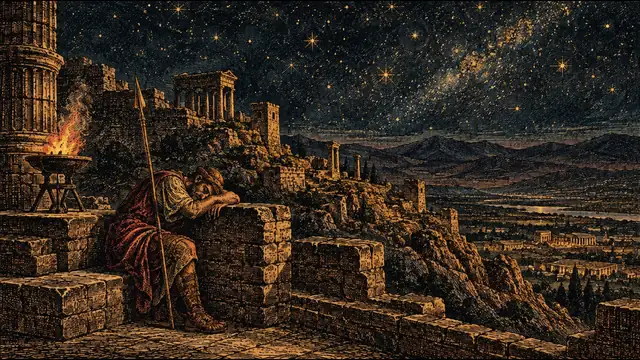
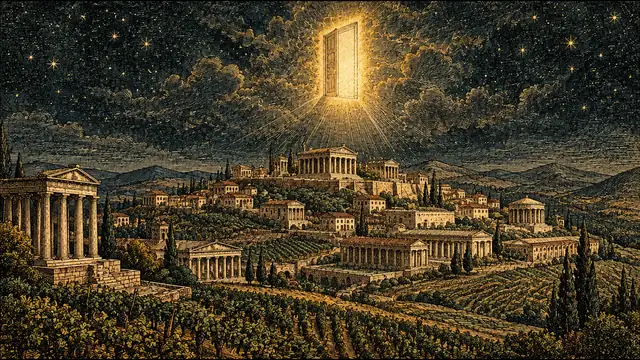
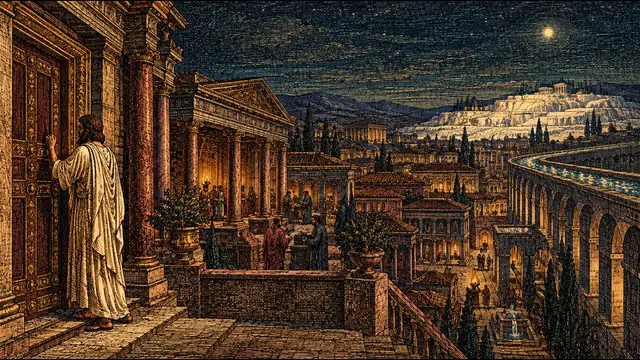
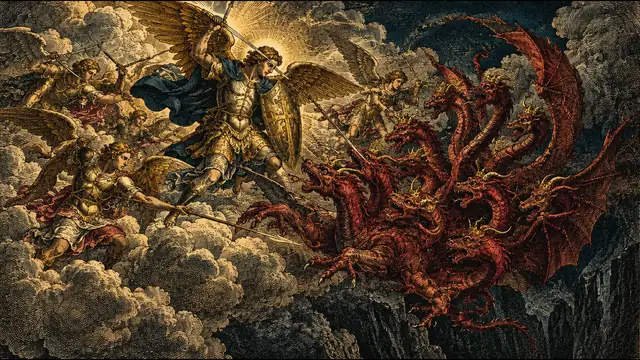
On Patmos, John was told to write what he saw in a book and send it to the seven churches of Asia.
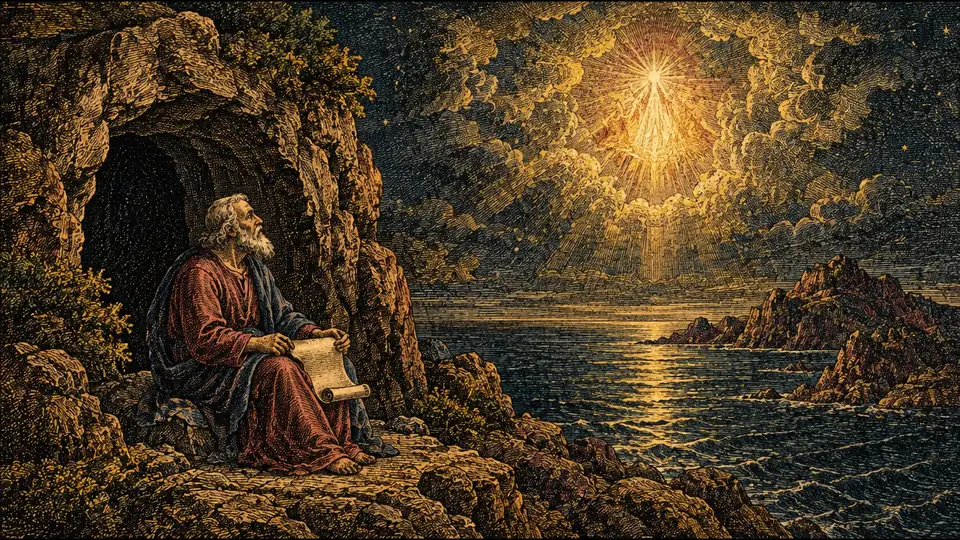
Press play: the paintings change with the story and the words come as the narrator reads them. The whole story is written out below.
Now playing: The isle of Patmos
The whole story
John, their brother and companion in tribulation, was in the isle that is called Patmos, for the word of God and the testimony of Jesus. On the Lord’s day he heard behind him a great voice as of a trumpet, and turning, saw one like unto the Son of man among seven golden candlesticks, his eyes as a flame of fire and his voice as the sound of many waters.
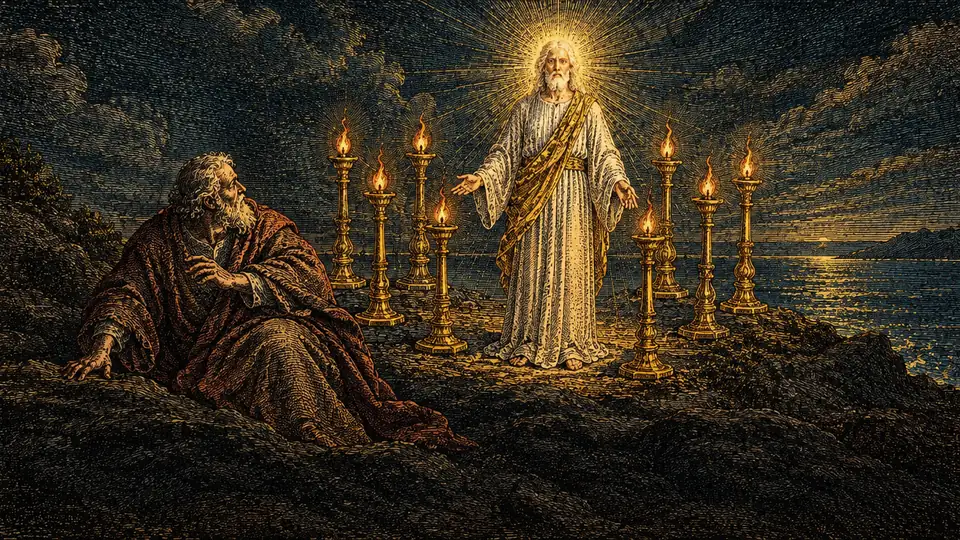
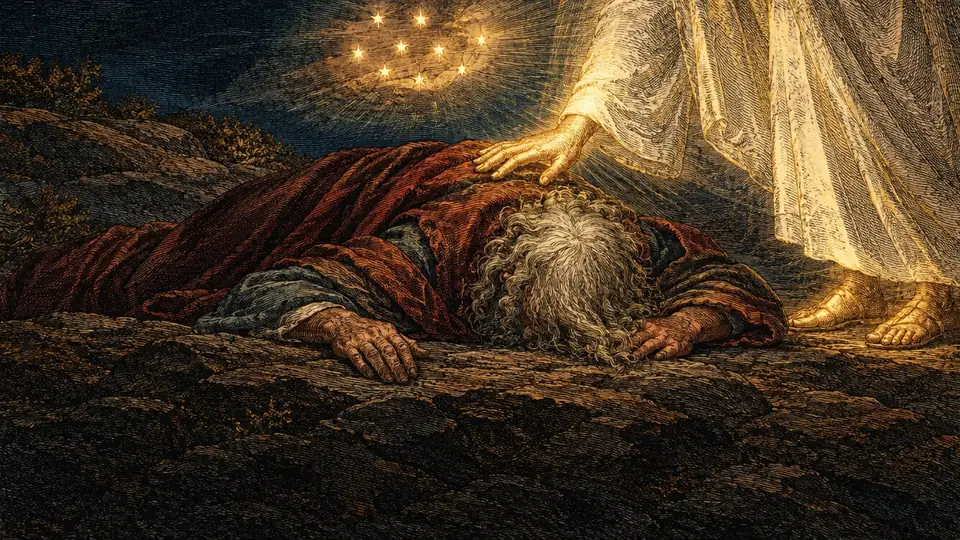
He fell at his feet as dead, and he laid his right hand upon him, saying, “Fear not; I am the first and the last” (Revelation 1:17). The seven stars in his hand were the angels of the seven churches and the candlesticks were the churches themselves, and John was told to write “the things which thou hast seen, and the things which are, and the things which shall be hereafter” (Revelation 1:19).
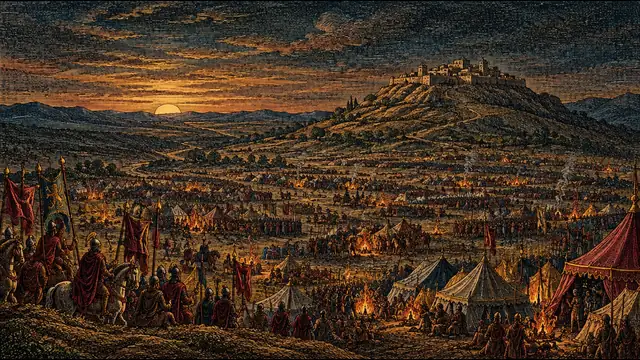
Early writers say John was banished to Patmos under the emperor Domitian and freed after his death in AD 96. The Cave of the Apocalypse, where he is said to have seen the visions, lies halfway up the hill, and above it the fortified Monastery of Saint John, founded in 1088, crowns the island’s main town.
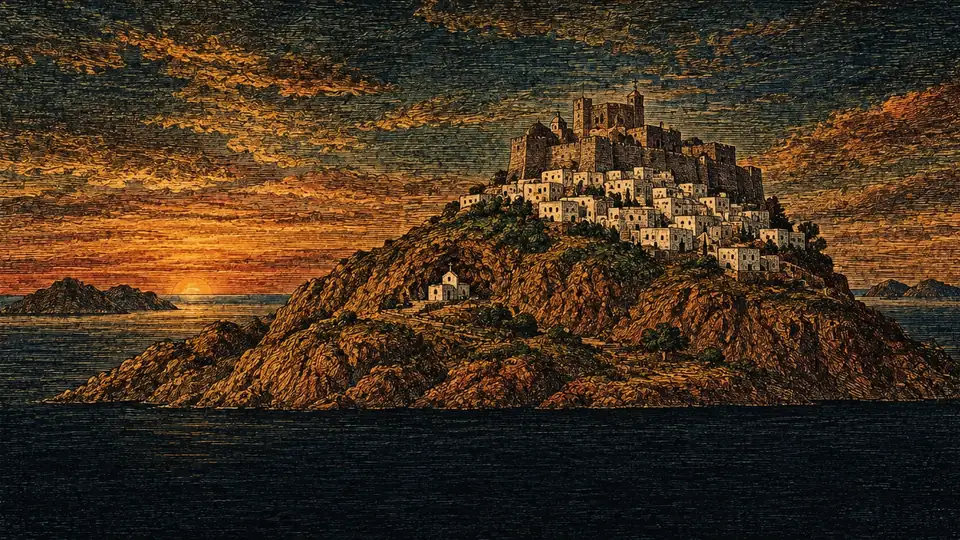
I John, who also am your brother, and companion in tribulation, and in the kingdom and patience of Jesus Christ, was in the isle that is called Patmos, for the word of God, and for the testimony of Jesus Christ.
Revelation 1:9, KJV
Where it happened
Patmos, Greece.
A small island of the Dodecanese; the Cave of the Apocalypse is shown on the hill above the harbor.
Every story stands at its place on the Worldwide Watch map: the Bible’s world, on the map.
More from Revelation
Revelation
Sources and editorial method
Research and editorial references used for this page include:
- The King James Bible, as published by bible-api.com
- The Book of Enoch, translated by R. H. Charles (1917), Project Gutenberg
Every story is told from the King James Bible, and from the Book of Enoch in R. H. Charles’s translation (1917) where a story names it. Every quotation was checked word for word against those texts. Where a place is not known, the page says so. The paintings and the narration were made for the house.

