
Armageddon
Revelation gathers the kings of the earth to a place called in the Hebrew tongue Armageddon.
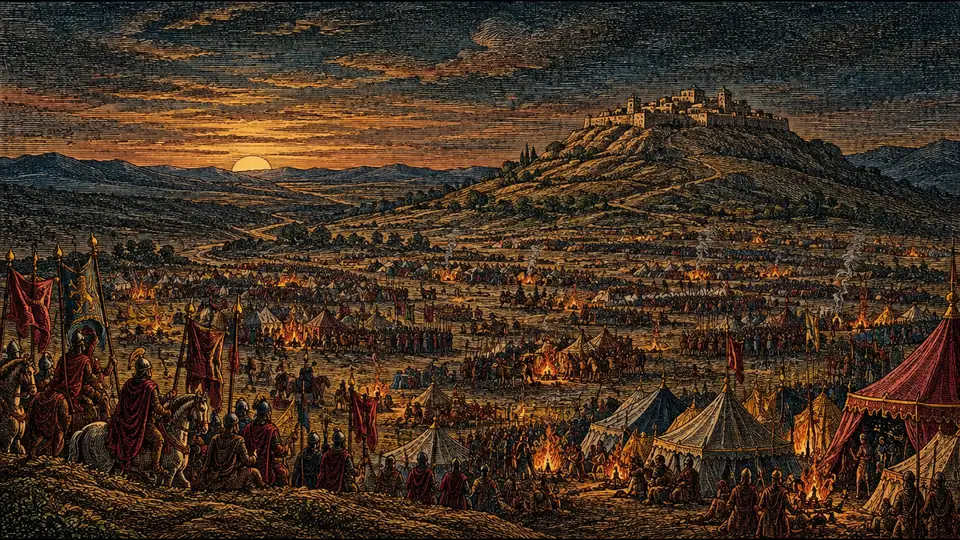
Press play: the paintings change with the story and the words come as the narrator reads them. The whole story is written out below.
Now playing: Armageddon
The whole story
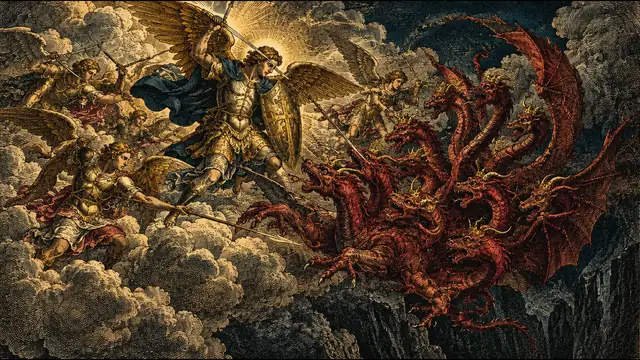
Revelation’s sixth bowl dries up the great river Euphrates, that the way of the kings of the east might be prepared. Three unclean spirits like frogs come out of the mouths of the dragon, the beast and the false prophet, spirits of devils working miracles, which go forth unto the kings of the earth to gather them to the battle of that great day of God Almighty.
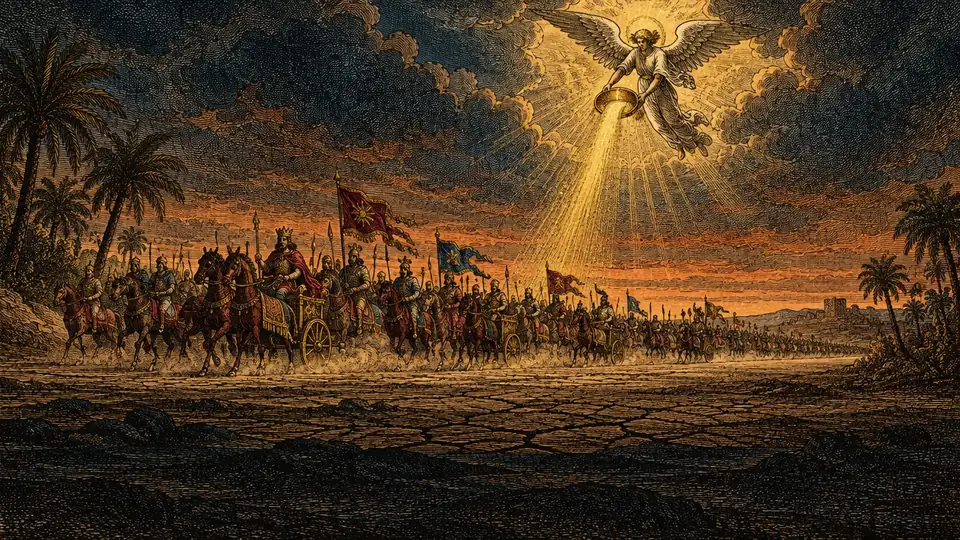
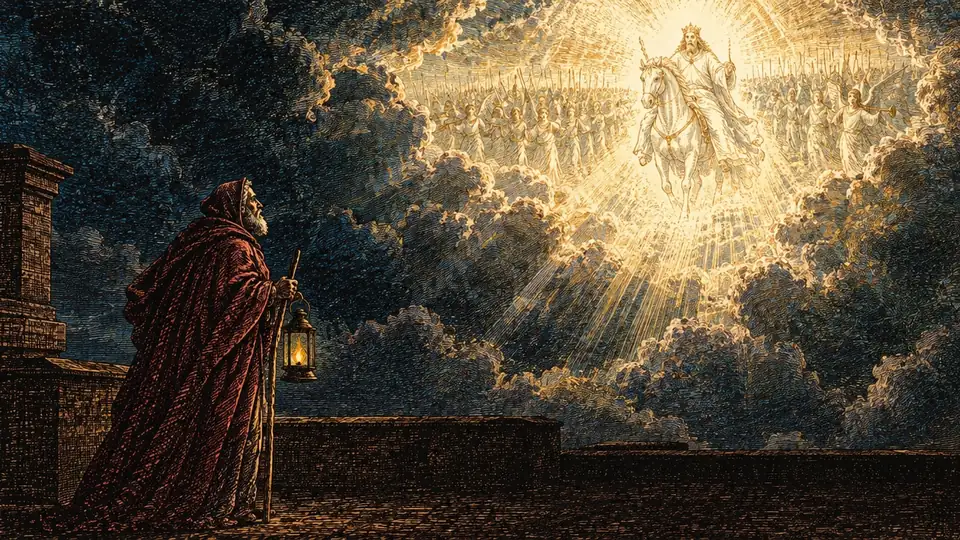
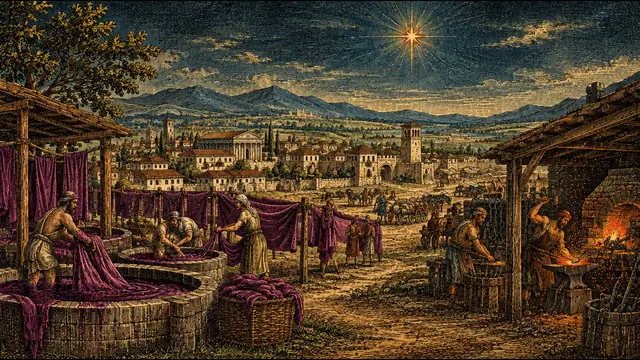
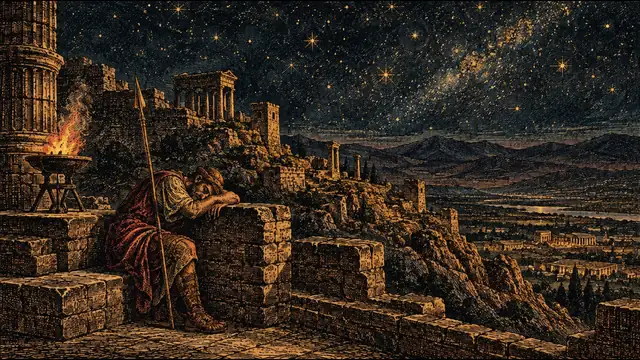
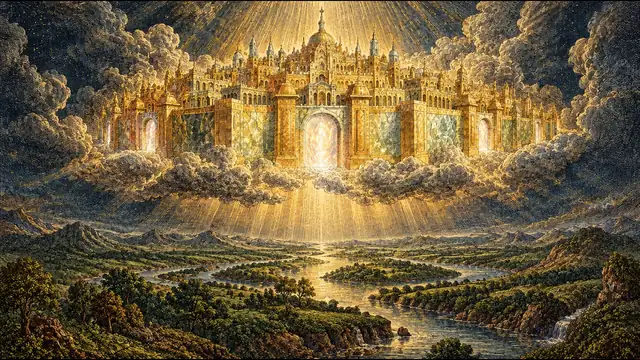
In the middle of the warning comes a word to the faithful: “Behold, I come as a thief. Blessed is he that watcheth, and keepeth his garments” (Revelation 16:15). Then the kings are gathered to Armageddon, and later John sees heaven opened and a rider on a white horse, called Faithful and True, whose sword is the word of his mouth.
The name is usually read as Har-Megiddo, the hill of Megiddo, a fortress above the valley of Jezreel where armies fought from the days of the pharaoh Thutmose the Third to the twentieth century. Its mound holds some twenty layers of cities, with pillared buildings once called stables and a great water system. Scripture sets no date for the battle.
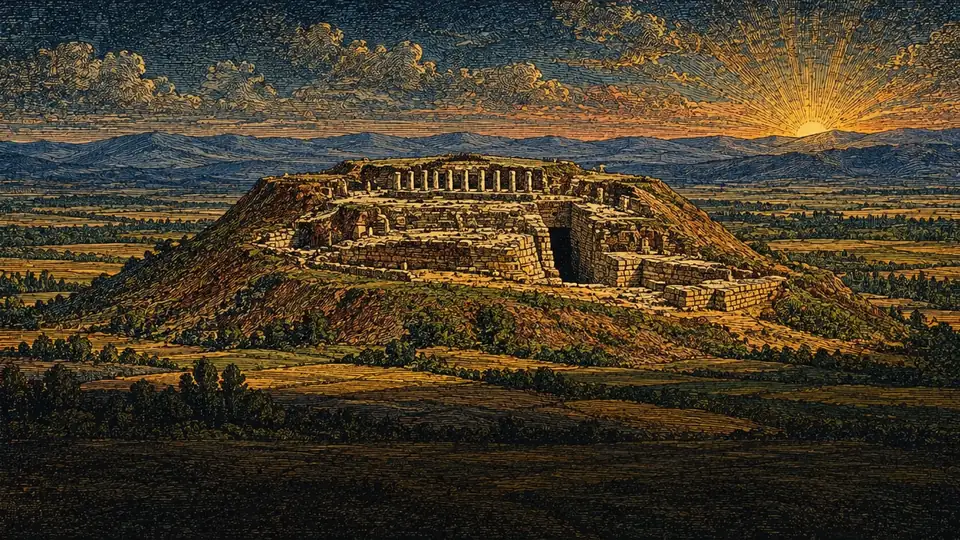
And he gathered them together into a place called in the Hebrew tongue Armageddon.
Revelation 16:16, KJV
Where it happened
Megiddo, Tel Megiddo, Israel (site likely).
Armageddon is usually read as Har-Megiddo, the hill of Megiddo, above the valley of Jezreel where many old battles were fought.
Every story stands at its place on the Worldwide Watch map: the Bible’s world, on the map.
More from Revelation
Revelation
Sources and editorial method
Research and editorial references used for this page include:
- The King James Bible, as published by bible-api.com
- The Book of Enoch, translated by R. H. Charles (1917), Project Gutenberg
Every story is told from the King James Bible, and from the Book of Enoch in R. H. Charles’s translation (1917) where a story names it. Every quotation was checked word for word against those texts. Where a place is not known, the page says so. The paintings and the narration were made for the house.

