
Pergamoswhere Satan’s seat is
To Pergamos, which held fast where Satan’s seat is, and where Antipas died a faithful martyr.
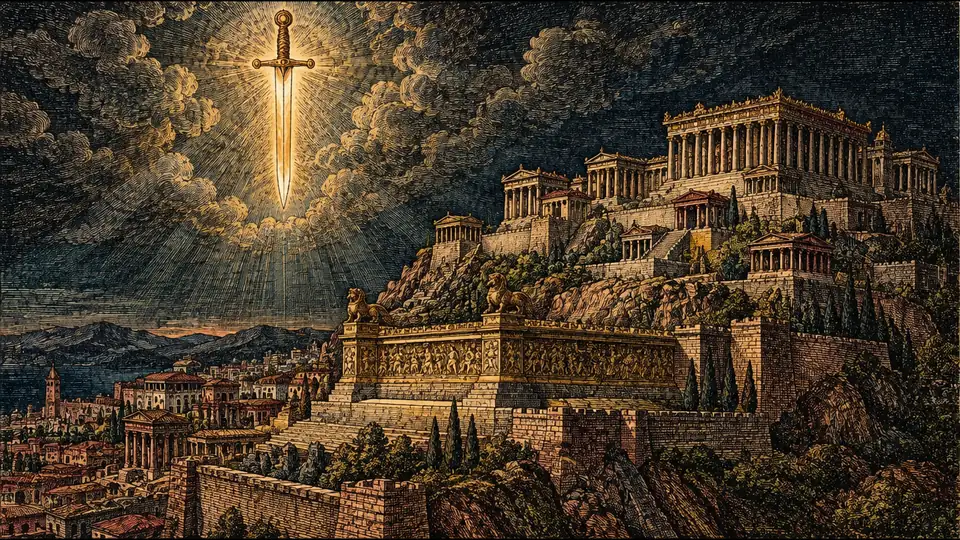
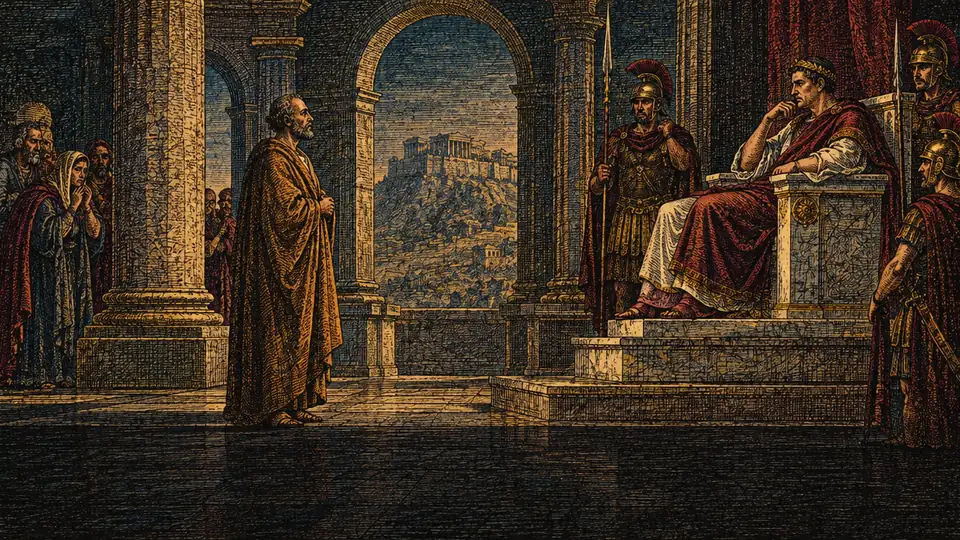
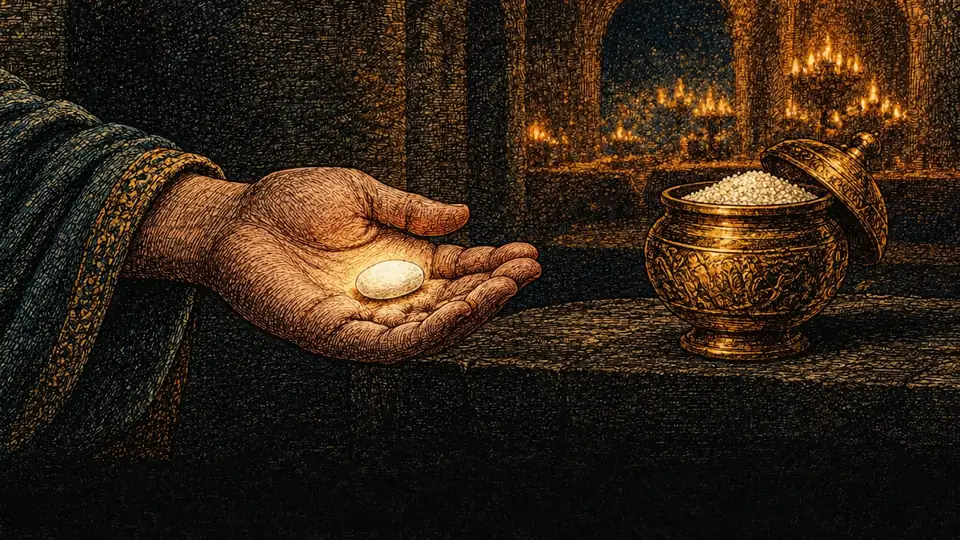
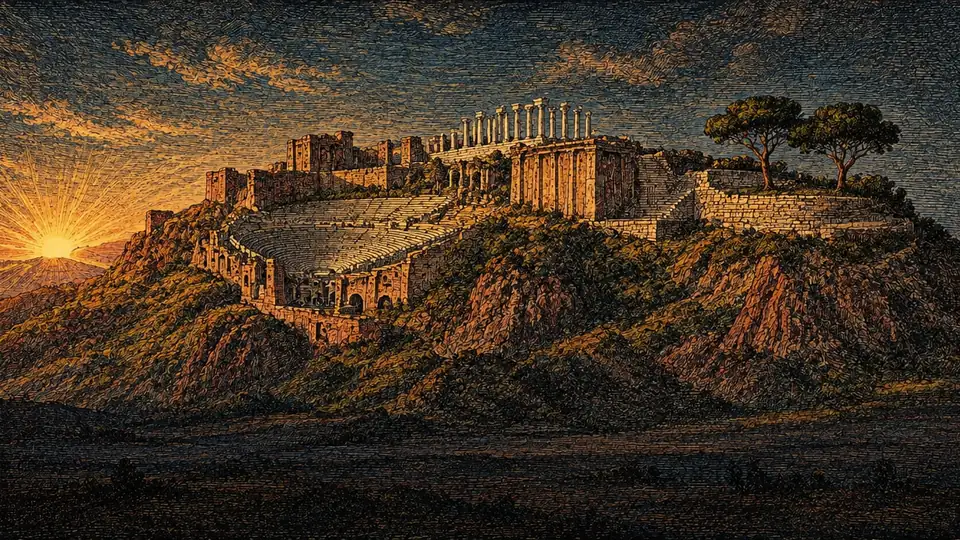
Press play: the paintings change with the story and the words come as the narrator reads them. The whole story is written out below.
Now playing: Pergamos: where Satan’s seat is
The whole story
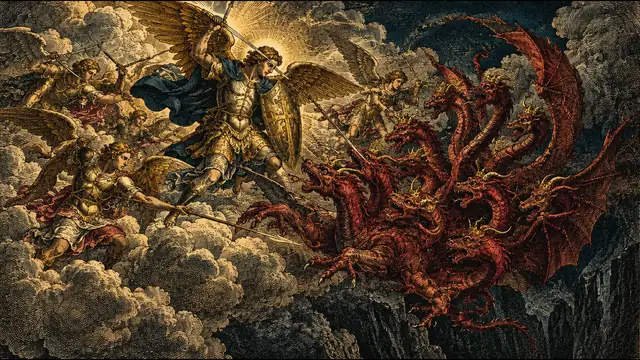
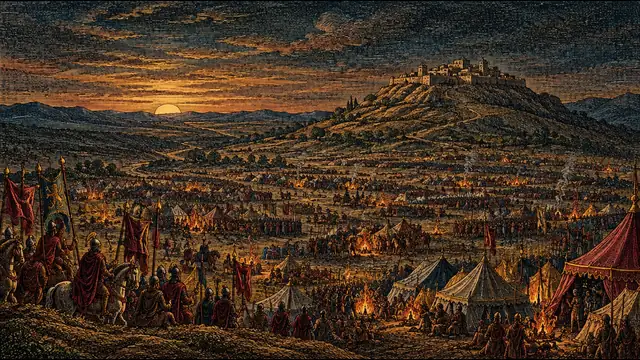
To Pergamos he speaks as the one with the sharp sword with two edges. The church held fast his name where Satan’s seat is, and did not deny the faith even when Antipas, his faithful martyr, was slain among them. Yet some held the doctrine of Balaam, who taught Balac to cast a stumblingblock before Israel, and some the doctrine of the Nicolaitans.
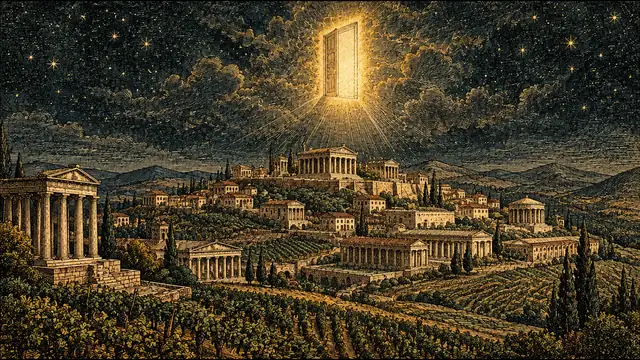
The promise is the hidden manna and a white stone, and in the stone a new name written, which no man knoweth saving he that receiveth it. In the ancient world a white stone could be a token of acquittal in a court or a ticket of admission to a feast, and readers have taken it both ways.
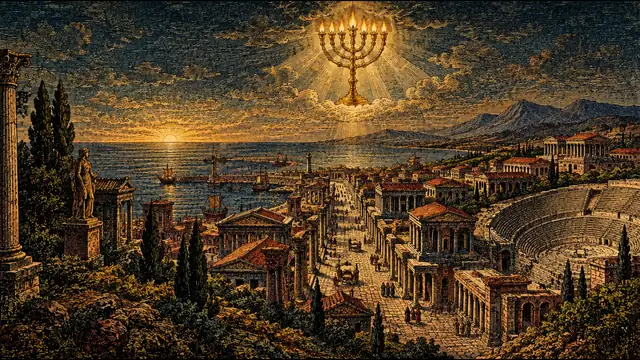
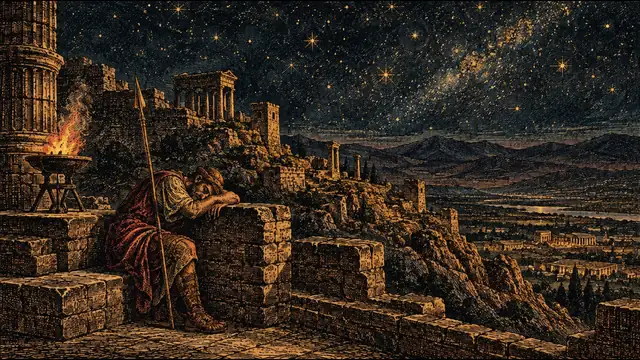
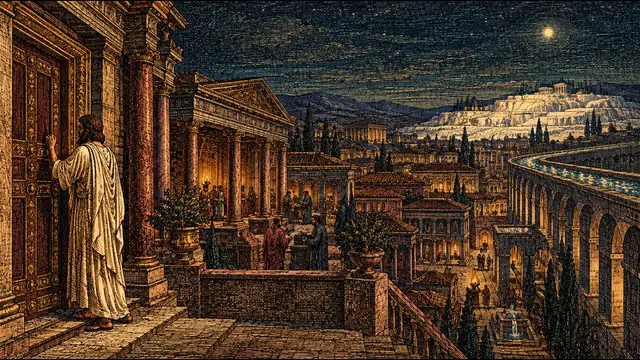
Pergamum was a royal city whose library rivaled Alexandria’s, and parchment is named after it. On its steep acropolis stood the great altar of Zeus, now rebuilt in Berlin, and the first temple in Asia for the worship of the emperor Augustus; either may be Satan’s seat. Tradition remembers Antipas as its bishop, though the letter says nothing more of him.
I know thy works, and where thou dwellest, even where Satan’s seat is: and thou holdest fast my name, and hast not denied my faith, even in those days wherein Antipas was my faithful martyr, who was slain among you, where Satan dwelleth.
Revelation 2:13, KJV
Where it happened
Pergamos, Bergama, Turkey.
Bergama, in western Turkey. Its great altar of Zeus, now in Berlin, is one common reading of Satan’s seat; the temple of the emperor’s worship is another.
Every story stands at its place on the Worldwide Watch map: the Bible’s world, on the map.
More from Revelation
Revelation

Sources and editorial method
Research and editorial references used for this page include:
- The King James Bible, as published by bible-api.com
- The Book of Enoch, translated by R. H. Charles (1917), Project Gutenberg
Every story is told from the King James Bible, and from the Book of Enoch in R. H. Charles’s translation (1917) where a story names it. Every quotation was checked word for word against those texts. Where a place is not known, the page says so. The paintings and the narration were made for the house.

