
Ram Dass
1931 to 2019
Who was Ram Dass, and what is truly known of them?
What is known
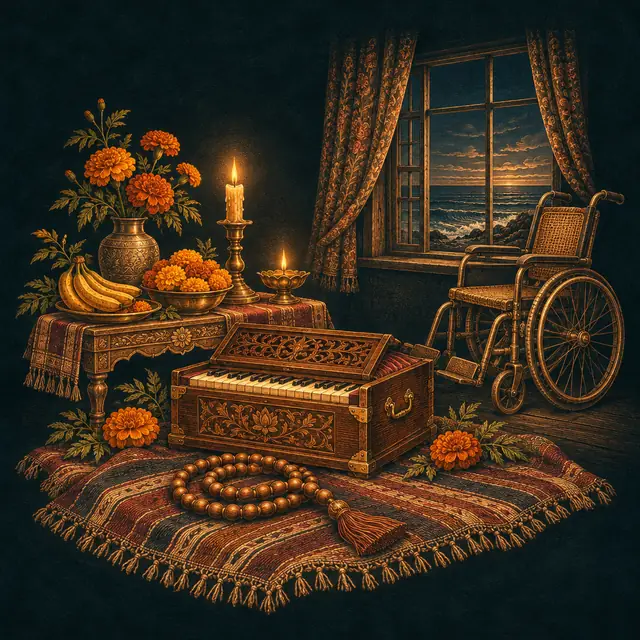
Born Richard Alpert near Boston, the son of a lawyer who was president of a railway. He took a doctorate in psychology at Stanford and from 1958 taught at Harvard, where with Timothy Leary he ran studies of psilocybin and LSD; the university dismissed him in 1963 for giving a drug to an undergraduate. In 1967 he travelled to India and in the Himalayan foothills met the teacher Neem Karoli Baba, who gave him the name Ram Dass, servant of Ram. Be Here Now (1971) carried his account to a wide public. He helped to found the Hanuman Foundation, with its work among prisoners and the dying, and in 1978 the Seva Foundation, which funds eye surgery in poor countries. A stroke in 1997 left him partly paralysed; he went on teaching from Maui, where he died on 22 December 2019.
The teaching
Taught from his own books, above all Be Here Now (1971), Grist for the Mill (1977) and How Can I Help? (1985).
Be here now
Ram Dass's teaching is in the title of his book. Awakening happens only in the present moment, and the mind, forever replaying the past and rehearsing the future, keeps a person out of it. The practice is to come back, again and again, to here and now, not as an idea but in the breath, the body and the people in front of one. From there he teaches the witness: a quiet awareness that can watch thoughts, feelings and roles come and go without being caught in them, and without judging them.
Love, serve, remember
He gives his teacher's instruction as the heart of the way: love everyone, serve everyone, remember God. Love is the path of devotion, bhakti, which he learned through Neem Karoli Baba and through Hanuman, the monkey god whose whole being is service to Ram; to see the beloved in everyone is its fulfilment. Service is the path of action, karma yoga, done without seeking reward. Remembrance is the repeating of the name of God, Ram, through the day, until the name repeats itself.
Soul, ego and roles
He teaches three levels of identity. The ego is the self of roles, son, professor, patient, the one who worries how it is doing. The soul is the witness behind the roles, which takes birth and passes through a life as an actor plays a part. Beyond the soul is awareness itself, one with all. Roles are to be played fully and well, as a part on a stage, without forgetting who is playing them.
Grist for the mill
Everything, he teaches, is grist for the mill: pleasure and pain, success and failure, desire and boredom, the parts of life that seem spiritual and the parts that do not. Nothing has to be shut out or escaped. Each experience belongs to the curriculum of awakening, and the question is not how to be rid of it but how to use it to see more truly.
Coming down
His own path began with drugs, and his teaching about them is mostly about their limit. They opened doors, he said, but every visit ended: one always came down, and the question that took him to India was how to stay. He found the answer in practice, devotion and service, not in chemicals. The house adds what his story needs: those drugs are unlawful in most places and carry real risks to mind and body, and nothing here is a guide to them.
How can I help?
Helping, he teaches with Paul Gorman, goes wrong when it comes from a role. The helper who needs to be the helper keeps the other in the role of the helped, and both are trapped; the helper who acts from duty or guilt burns out. True help begins in presence: a quiet mind, listening, and the knowledge that the one being helped is not other than oneself. Then helping becomes a meeting, and the helper receives as much as they give.
Conscious dying
Much of his later work was with the dying. To sit with the dying is to be fully present and unafraid, so that they are not alone with their fear; to help them let go rather than hold on; and to treat death as a passage and not a failure. In Still Here he turned the same teaching on ageing and on his own stroke, which he called fierce grace: a loss that taught him to receive help, to slow down and to live from the soul rather than the role.
The cookbook
The last part of Be Here Now is a cookbook for a sacred life, a gathering of practices from many traditions: repeating a mantra, meditation, gentle breath practices, postures, a simple diet, devotional singing, the string of prayer beads, the bond of guru and disciple, and preparation for dying. He offers them as recipes to try, keeping what works and leaving the rest, with the ordinary cautions of any teacher: nothing forced, the breath never strained, and a guide for anything strong.
Orders and memberships
None. He was a devotee of Neem Karoli Baba, a Hindu teacher who founded temples to Hanuman and left no formal order. Born and brought up Jewish, he spoke in later life of returning to that inheritance alongside his Hindu practice.
The legend
That Neem Karoli Baba read his thoughts about his dead mother at their first meeting, and later swallowed a large dose of LSD with no effect. Both are his own telling, and no independent record of either exists. Sayings shared under his name are often shortened from longer talks.
Their works
- Be Here NowBook, 1971
His account of his journey from Harvard psychologist to devotee of Neem Karoli Baba, with a long illustrated middle section of teachings. It sold widely and shaped the spiritual search of a generation. It is his best known book.
Ask the Oracle about it - The Psychedelic ExperienceBook, 1964
A manual for drug sessions written with Timothy Leary and Ralph Metzner, based on the Tibetan Book of the Dead. It was a key text of the psychedelic years. It belongs to his time at Harvard.
Ask the Oracle about it - Grist for the MillBook, 1977
A book written with Stephen Levine, drawn from his talks, on using every part of life, its pleasures and its sufferings, as part of the spiritual path. It was widely read in the 1970s. It shows his teaching after Be Here Now.
Ask the Oracle about it - Miracle of LoveCollection, 1979
Stories about Neem Karoli Baba gathered by Ram Dass from the Indians and Westerners who knew him. It is a tribute to his teacher and the fullest collection of tales about him. The wonders in it are given on the word of those who told them.
Ask the Oracle about it - How Can I Help?Book, 1985
A book with Paul Gorman on service and compassion, and on how helping can go wrong. It grew from his work with the dying and with prisoners through the Hanuman Foundation. It is among the most practical of his books.
Ask the Oracle about it - Still HereBook, 2000
A book on ageing, change and dying, finished after the stroke of 1997 that left him partly paralysed. It is frank about his own frailty and dependence on others. It is one of the last books he wrote.
Ask the Oracle about it
How the house tells a life
This life is told from the record, with what is documented, what is legend and what was forged kept apart. A membership in an order is stated only where documents show it. A person’s chart explains none of their deeds.
The arts it feeds
Lives near it in time
Thinkers and teachers
Mircea EliadeAlan WattsDavid BohmIan StevensonB. K. S. IyengarIdries ShahCarlos CastanedaLouise HayThich Nhat HanhRobert GreeneJoe DispenzaSantos BonacciThe whole tree

