
Seasons and sky
Season Length Asymmetry
Direct answer
Season Length Asymmetry is the unequal duration of the four astronomical seasons caused mainly by Earth's changing orbital speed along its elliptical orbit.
Season Length Asymmetry is the unequal time between successive equinoxes and solstices.
$0 today, then $12/month after 7 days. Cancel anytime.
At a glance
- Found in
- Seasons & Earth Almanac
- Related
- Earth-Sun Distance Cycle, Equilux, Astronomical Season, Equinox
Season Length Asymmetry is the unequal time between successive equinoxes and solstices.
A Sun-Earth orientation for seasonal, atmospheric, tidal, and terrestrial terms.
What does your own chart say about you?
Choose love, work or purpose. Your reading is written from your chart. Your reading uses your own birth details.
Walk through Alex’s whole example first
 The Road of AgesSee the turning points of your whole life, from your birth date
See your road's shape
The Road of AgesSee the turning points of your whole life, from your birth date
See your road's shape
Prefer to explore first?
 The Road of AgesThe turning points of your whole life, from your own chart
Walk my road
The Road of AgesThe turning points of your whole life, from your own chart
Walk my road
Free, by email
Your daily Almanac letter
One short letter at 7 each morning: the day’s theme read for your own chart, and one thing to do with it.
The story behind Season Length Asymmetry
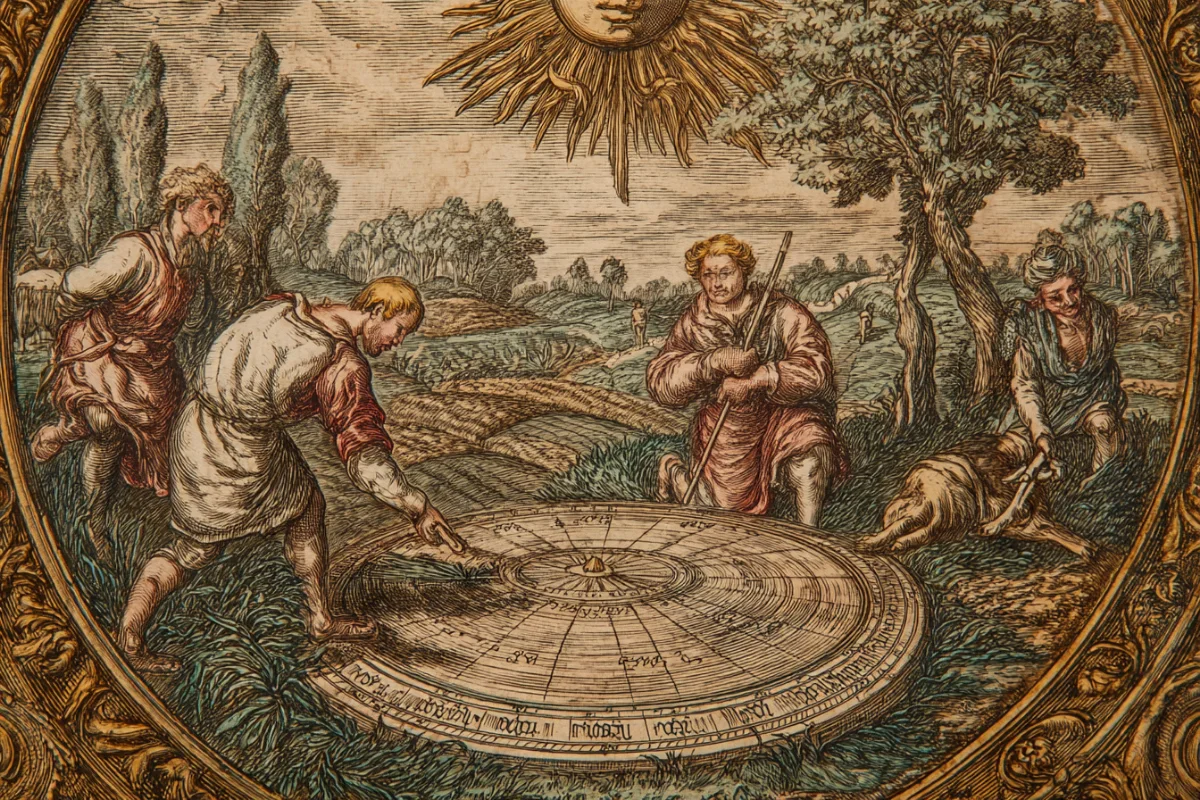
Kepler second law supplied the dynamical explanation for unequal seasonal intervals already visible in careful solar calendars.
Why Season Length Asymmetry matters
Earth moves faster near perihelion and slower near aphelion, so seasonal quarters are not all the same number of days.
How to read Season Length Asymmetry
Season Length Asymmetry comes up when comparing equinox-to-solstice intervals or explaining why calendar seasons differ in duration.
Season Length Asymmetry in practice: an example
Northern Hemisphere spring and summer together currently last longer than autumn and winter because aphelion falls during northern summer.
Where readings of Season Length Asymmetry go wrong
It is a mistake to infer warmer weather from a longer astronomical season; climate response depends on many local and planetary factors.
Sources and editorial method
Research references used for this entry include:
- U.S. Naval Observatory: The Seasons and the Earth's Orbit - Official explanation of axial tilt, solstices, equinoxes, perihelion, aphelion, and seasonal sunlight.
- U.S. Naval Observatory: Astronomical Almanac Glossary - Reference definitions for astronomical periods, coordinates, dates, and time scales.
- Source
- The Great Almanac Dictionary
- Category
- Seasons & Earth Almanac
- Last updated
- 2026-09-26
Compare the four seasonal intervals
A definition tells you what it is; your own birth chart tells you what it means for you. The Oracle casts your real chart and answers for your love, your work, and your year ahead, in conversation. It opens with the 7-day Seeker trial.
Speak with the OracleRelated terms
More in Seasons & Earth Almanac
From the reference page to your own chart
Every word here
is in your own chart.
- A personal reading about love, work or purpose, written from your chart
- A practical next step to consider
- It opens with 7 days free, with the AI Oracle and daily guidance
$0 today, then $12/month after 7 days. Cancel anytime.
Common questions
What is Season Length Asymmetry?
Season Length Asymmetry is the unequal duration of the four astronomical seasons caused mainly by Earth's changing orbital speed along its elliptical orbit.
What do people get wrong about Season Length Asymmetry?
It is a mistake to infer warmer weather from a longer astronomical season; climate response depends on many local and planetary factors.
Free, by email
The Almanac, in your inbox at 7
One short letter at 7 each morning: the day’s theme read for your own chart, and one thing to do with it.