

The inner life
Samatha
Direct answer
Samatha: Samatha, Pali for calm, is the Buddhist practice of settling attention on a single object until the mind grows still, the partner of insight meditation.
$0 today, then $19/month after 7 days. Cancel anytime.
At a glance
- Also called
- shamatha, calm abiding, shamatha meditation
- Found in
- Consciousness & Spiritual Psychology
- Related
- Vipassana, Mindfulness, Zazen, Breath Awareness
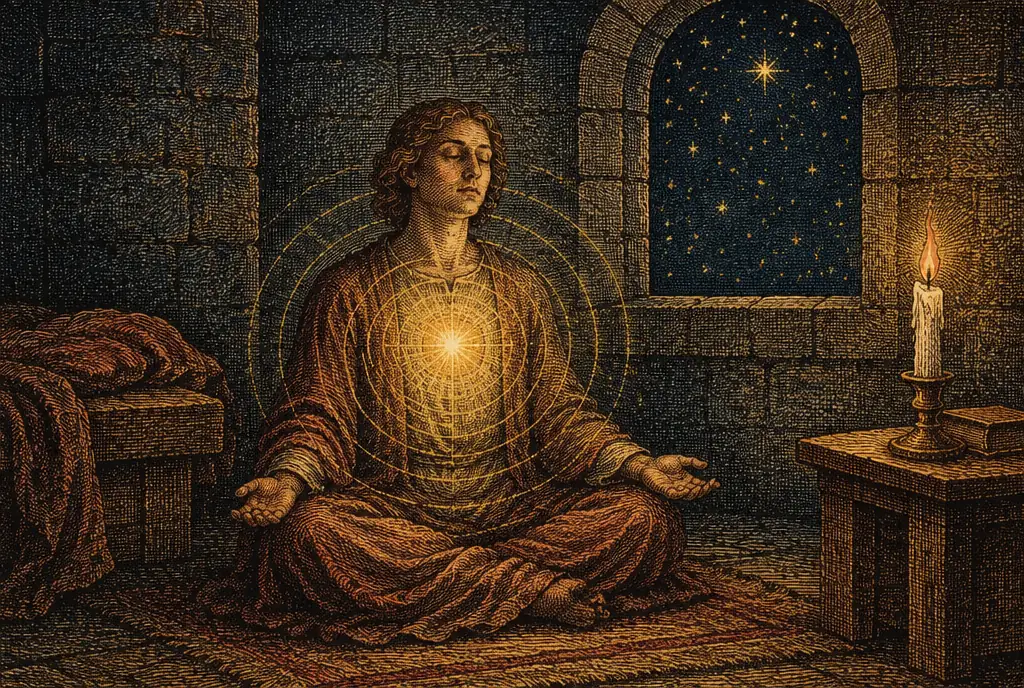
Samatha, Pali for calm, is the Buddhist practice of settling attention on a single object until the mind grows still, the partner of insight meditation.
A plain educational schematic; it does not diagnose a condition or replace professional care.
Understand the chapter you are in.
Your life’s turning points, measured from your birth.
Walk through Alex’s whole example first


Prefer to explore first?
 The Road of AgesThe turning points of your whole life, from your own chart
Walk my road
What does samatha mean?
Samatha means calm or tranquillity. In Buddhist teaching it names the side of meditation that steadies the mind: attention is placed on one object, most often the breath, and brought back each time it wanders, until distraction thins and the mind rests there without strain. The Sanskrit form is shamatha, and Tibetan teachers call it shiné, calm abiding.
The traditions pair it with vipassana, insight. Calm is said to make the mind fit for looking, and insight to do the looking. Schools differ on the order: some build deep calm first, others teach the two together from the first day.
On the tree of the hidden arts: Meditation.
What sets Samatha apart
Samatha is defined by what it leaves out: it does not analyse, label or investigate. The whole method is one object and a return to it. Progress is measured by how long attention stays without a break and how little effort the staying takes, which is why the Tibetan scheme draws it as an elephant slowly turning from black to white on a winding road. Its fruit in the Pali texts is the set of absorptions called jhana.
- Language: Pali samatha; Sanskrit shamatha; Tibetan shiné (zhi gnas), calm abiding
- Paired with: vipassana, insight
- Objects: forty listed in the Visuddhimagga, fifth century
- Tibetan scheme: nine stages of resting the mind
- Hindrances named: five: desire, ill will, dullness, restlessness and doubt
Often mistaken for something else: Vipassana watches whatever arises and asks what it is like; samatha stays with one thing and lets everything else go by.
The story behind Samatha
The early discourses name calm and insight as two qualities to be developed together. Buddhaghosa's Visuddhimagga, written in Sri Lanka in the fifth century, lists forty objects for calm practice, from coloured discs to the breath. In Tibet the path is taught as nine stages of resting the mind, a scheme drawn from Indian sources such as Kamalashila's Stages of Meditation of the eighth century.
Why Samatha matters
The word marks the difference between steadying the mind and examining it, two tasks that many modern courses teach under the single name of mindfulness.
How to read Samatha
Teachers speak of samatha when the aim of a sitting is steadiness itself: one object, a gentle return, and a longer stretch of unbroken attention.
Samatha in practice: an example
A sitter counts ten breaths, loses the count at four, notices, and begins again at one without scolding herself.
Where readings of Samatha go wrong
Deep calm is pleasant, and the texts themselves warn against mistaking it for the end of the path.
Sources and editorial method
This entry summarizes the tradition in the Almanac's own words; where no source is listed, it is an editorial summary rather than a primary text, and symbolic readings are named as the tradition's, not as fact.
- Source
- The Great Almanac Dictionary
- Category
- Consciousness & Spiritual Psychology
- Aliases
- samatha meditation, shamatha, calm abiding, samatha meaning, shamatha meditation
- Last updated
- 2026-09-26
See Samatha in your personal almanac
A definition tells you what it is; your own birth chart tells you what it means for you. The Oracle casts your real chart and answers for your love, your work, and your year ahead, in conversation. It opens with the 7-day Oracle trial.
Speak with the OracleRelated terms
More in Consciousness & Spiritual Psychology
- Spiritual Awakening
- Übermensch
- Archetype
- COINTELPRO
- Ego Death
- Hot Reading
- Loving-Kindness
- Peak Experience
From the reference page to your own chart
Every word here
is in your own chart.
- Your life’s turning points, measured from your birth
- A practical next step to consider
- It opens with 7 days free: the AI Oracle on thirty hidden arts, and your daily horoscope
$0 today, then $19/month after 7 days. Cancel anytime.
Common questions
What does samatha mean?
It is a Pali word for calm or tranquillity. As a practice it means resting attention on one chosen object so that the mind becomes collected and still. The Sanskrit spelling is shamatha.
What is the difference between samatha and vipassana?
Samatha steadies attention on one object and aims at stillness. Vipassana observes changing experience and aims at understanding it. Buddhist teachers treat them as two parts of one training, not as rivals.
What objects are used in samatha meditation?
The breath is the most common. Buddhaghosa's fifth-century manual lists forty, including coloured discs called kasinas, the qualities of the Buddha, and goodwill towards all beings.


