

The inner life
Law of Attraction
Direct answer
Law of Attraction: The law of attraction is the teaching that like draws like, so that what a person habitually thinks and feels brings matching people and events into their life.
$0 today, then $19/month after 7 days. Cancel anytime.
At a glance
- Also called
- like attracts like
- Found in
- Consciousness & Spiritual Psychology
- Related
- Manifestation, New Thought, Affirmation, Visualisation
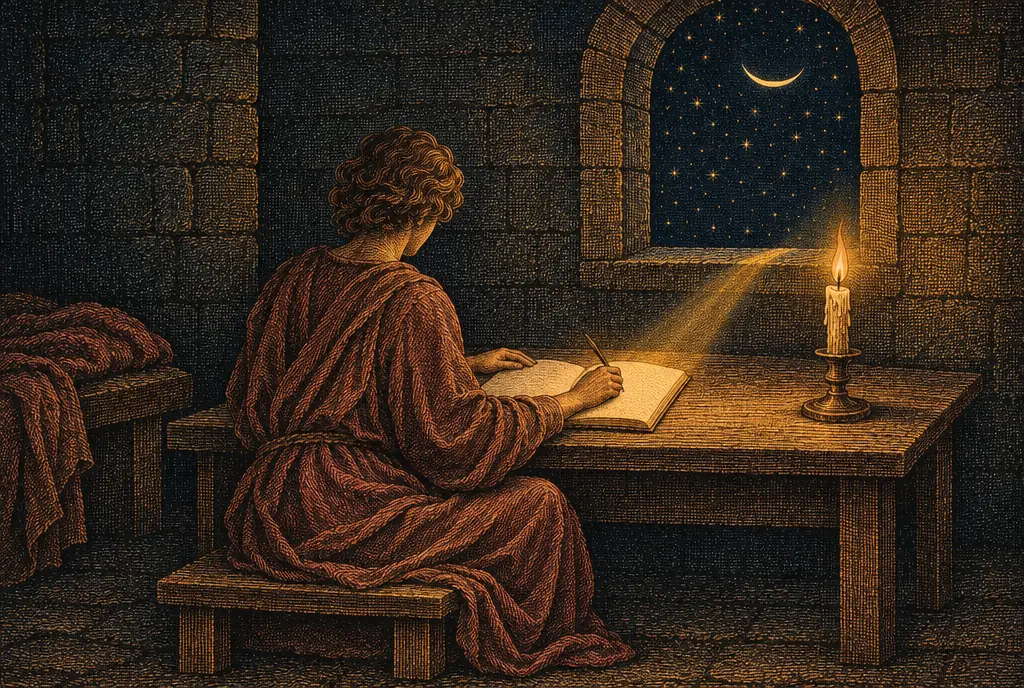
The law of attraction is the teaching that like draws like, so that what a person habitually thinks and feels brings matching people and events into their life.
A plain educational schematic; it does not diagnose a condition or replace professional care.
Understand the chapter you are in.
Your life’s turning points, measured from your birth.
Walk through Alex’s whole example first


Prefer to explore first?
 The Road of AgesThe turning points of your whole life, from your own chart
Walk my road
What is the law of attraction?
The law of attraction holds that thoughts are forces and that each draws its like: dwell on plenty and plenty comes, dwell on lack and lack comes. Its teachers call it a law in the sense that gravity is one, always at work whether or not it is believed.
Law of Attraction is a belief of the New Thought movement and not a finding of science. Physics has no such law, and no experiment shows thoughts drawing events. What research does support is narrower: a clear aim directs attention and effort, and people act on what they expect. The teaching's hard edge, that misfortune is drawn by wrong thinking, is rejected here.
On the tree of the hidden arts: Imagination and intention.
What sets Law of Attraction apart
Its teachers present it as physics, and the borrowed words are the mark of it: vibration, frequency, magnetism. Atkinson's 1906 book argued that thoughts are vibrations as real as light and that like vibrations draw together. No such effect has been measured. The teaching also carries a corollary its critics single out: if good thoughts bring good events, then misfortune must have been thought into being, which lays the blame for sickness and poverty on those who suffer them.
- In a book title: W. W. Atkinson, Thought Vibration or the Law of Attraction in the Thought World, 1906
- Movement: New Thought, United States, later nineteenth century
- Core formula: like attracts like; thoughts become things
- Popular books: The Science of Getting Rich (1910), Think and Grow Rich (1937), The Secret (2006)
- Standing in science: no law of physics; no experiment shows thoughts drawing events
Often mistaken for something else: The law of assumption is Neville Goddard's teaching that an imagined state held as true becomes fact; the law of attraction says thoughts pull matching things toward the thinker. Neither has evidence as a law.
The story behind Law of Attraction
The idea grew from the American mental-healing movement of the nineteenth century. New Thought writers such as Prentice Mulford used the phrase from the 1880s, and William Walker Atkinson made it a title in 1906 with Thought Vibration or the Law of Attraction in the Thought World. Wallace Wattles, Napoleon Hill and others repeated it, and the film and book The Secret (2006) carried it across the world.
Why Law of Attraction matters
Law of Attraction is the root idea of nearly all modern manifestation advice, so knowing its source lets a reader weigh that advice.
How to read Law of Attraction
Readers who keep the practice treat it as a discipline of attention: name the aim, picture it, then take the first step toward it.
Law of Attraction in practice: an example
A reader who keeps a clear aim in view may notice an opening they would once have walked past; the noticing is the part that can be shown.
Where readings of Law of Attraction go wrong
Nothing bad that happened to a person was attracted by their thoughts, and the teaching never replaces medical care or practical steps.
Sources and editorial method
This entry summarizes the tradition in the Almanac's own words; where no source is listed, it is an editorial summary rather than a primary text, and symbolic readings are named as the tradition's, not as fact.
- Source
- The Great Almanac Dictionary
- Category
- Consciousness & Spiritual Psychology
- Aliases
- the law of attraction, law of attraction meaning, like attracts like, law of attraction origin
- Last updated
- 2026-09-26
See Law of Attraction in your personal almanac
A definition tells you what it is; your own birth chart tells you what it means for you. The Oracle casts your real chart and answers for your love, your work, and your year ahead, in conversation. It opens with the 7-day Oracle trial.
Speak with the OracleRelated terms
More in Consciousness & Spiritual Psychology
- Overtone singing
- Remote Viewing
- Somatic Grounding
- Transcendental Meditation
- Clairsentience
- Dream Control
- Gong
From the reference page to your own chart
Every word here
is in your own chart.
- Your life’s turning points, measured from your birth
- A practical next step to consider
- It opens with 7 days free: the AI Oracle on thirty hidden arts, and your daily horoscope
$0 today, then $19/month after 7 days. Cancel anytime.
Common questions
What is the law of attraction?
It is the belief that like draws like: that a person's dominant thoughts and feelings bring matching events. It comes from the New Thought movement and was given its name by writers of the 1880s; William Walker Atkinson made it a book title in 1906.
Is the law of attraction real?
Not as a law of nature. No experiment shows thoughts drawing events. What is supported is that a clear goal steers attention and effort, so people who hold one tend to act on it and to notice chances.
Who invented the law of attraction?
No single person. It grew among American New Thought teachers in the later nineteenth century. Atkinson, Wallace Wattles and Napoleon Hill spread it in the early twentieth, and The Secret revived it in 2006.


