

The inner life
Ian Stevenson
Direct answer
Ian Stevenson (1918 to 2007) was a psychiatrist at the University of Virginia who collected and investigated cases of young children who said they remembered a previous life.
$0 today, then $19/month after 7 days. Cancel anytime.
At a glance
- Also called
- twenty cases suggestive of reincarnation, children who remember previous lives
- Found in
- Consciousness & Spiritual Psychology
- Related
- Reincarnation, Past Life, Cryptomnesia, Xenoglossy
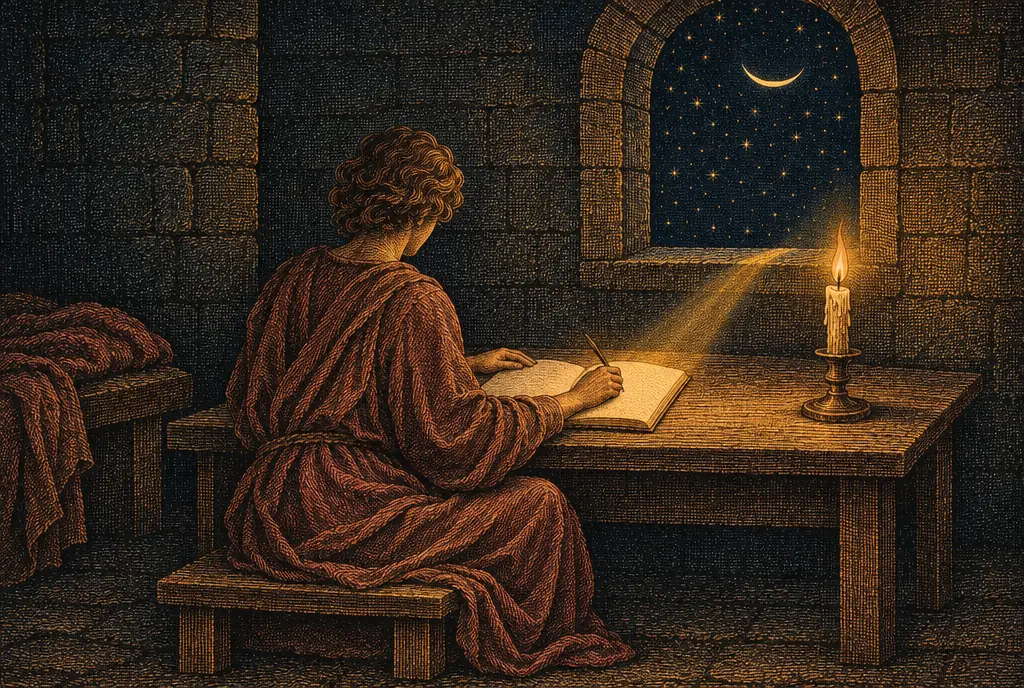
Ian Stevenson (1918 to 2007) was a psychiatrist at the University of Virginia who collected and investigated cases of young children who said they remembered a previous life.
A plain educational schematic; it does not diagnose a condition or replace professional care.
Understand the chapter you are in.
Your life’s turning points, measured from your birth.
Walk through Alex’s whole example first


Prefer to explore first?
 The Road of AgesThe turning points of your whole life, from your own chart
Walk my road
Who was Ian Stevenson?
Ian Stevenson was born in Montreal, trained in medicine at McGill University and became head of psychiatry at the University of Virginia in 1957. From the early 1960s he gave most of his time to one question. He travelled to India, Sri Lanka, Lebanon, Turkey, Alaska and elsewhere to interview children who, usually between the ages of two and five, talked about another family and another death.
His method was that of a case investigator. He recorded what the child was reported to have said, tried to trace a dead person who matched and listed the points that agreed and those that did not. In later work he documented birthmarks and birth defects that he believed corresponded to wounds on the earlier person. He wrote that the cases were suggestive of reincarnation and never claimed more.
On the tree of the hidden arts: Past lives and karma.
What sets Ian Stevenson apart
Stevenson's work is marked by a pattern he found repeating across countries. The children began to speak of another life almost as soon as they could talk and stopped by about seven. The life described was nearly always recent and ordinary, and it had ended violently or suddenly in a large share of cases. Many children showed fears or tastes that fitted the manner of death. He published the awkward details too, including cases where the two families already knew each other and cases he judged weak.
- Lived: 1918, Montreal, to 2007, Charlottesville, Virginia
- Post: professor of psychiatry, University of Virginia, from 1957
- Cases on file: about 2,500, gathered over some forty years
- First major book: Twenty Cases Suggestive of Reincarnation, 1966
- Birthmark study: Reincarnation and Biology, two volumes, 1997
- His own verdict: suggestive of reincarnation, not proof of it
Often mistaken for something else: Regression therapists ask adults under hypnosis to produce a past life; Stevenson recorded what young children said unprompted, and treated hypnotic material as unreliable.
The story behind Ian Stevenson
Twenty Cases Suggestive of Reincarnation appeared in 1966. Money from Chester Carlson, the inventor of xerography, allowed Stevenson to found a research unit at Virginia in 1967, which continues as the Division of Perceptual Studies. Reincarnation and Biology, his two-volume study of birthmarks, followed in 1997. Critics, among them the philosopher Paul Edwards, objected that families had often met before he arrived, that interpreters were used and that questions could lead.
Why Ian Stevenson matters
His files are the most serious body of evidence offered for reincarnation, so any fair discussion of the question has to deal with them.
How to read Ian Stevenson
Both sides cite him: believers for the number and detail of the cases, sceptics for the weaknesses that his own careful reporting makes visible.
Ian Stevenson in practice: an example
In a typical file a small child names a town the family says she has never visited, and Stevenson lists which of her statements fit a person who died there and which do not.
Where readings of Ian Stevenson go wrong
The cases rest on testimony gathered after the event, mostly in cultures that expect rebirth. They remain disputed and unproven.
Sources and editorial method
This entry summarizes the tradition in the Almanac's own words; where no source is listed, it is an editorial summary rather than a primary text, and symbolic readings are named as the tradition's, not as fact.
- Source
- The Great Almanac Dictionary
- Category
- Consciousness & Spiritual Psychology
- Aliases
- ian stevenson reincarnation, ian stevenson research, twenty cases suggestive of reincarnation, children who remember previous lives, ian stevenson birthmarks
- Last updated
- 2026-09-26
See Ian Stevenson in your personal almanac
A definition tells you what it is; your own birth chart tells you what it means for you. The Oracle casts your real chart and answers for your love, your work, and your year ahead, in conversation. It opens with the 7-day Oracle trial.
Speak with the OracleRelated terms
More in Consciousness & Spiritual Psychology
- Meaning-Making
- Premonitions Bureau
- Secure Attachment
- Spiritual Emergency
- Virtù and Fortuna
- Avoidant Attachment
- Confirmation Bias
- Energy Body
From the reference page to your own chart
Every word here
is in your own chart.
- Your life’s turning points, measured from your birth
- A practical next step to consider
- It opens with 7 days free: the AI Oracle on thirty hidden arts, and your daily horoscope
$0 today, then $19/month after 7 days. Cancel anytime.
Common questions
Who was Ian Stevenson?
He was a Canadian-born psychiatrist, professor at the University of Virginia School of Medicine, who from the 1960s until his death in 2007 investigated children's claims to remember earlier lives.
Did Ian Stevenson prove reincarnation?
No, and he did not say he had. He described his strongest cases as suggestive. Mainstream science has not accepted them as evidence, chiefly because they depend on recollected testimony.
What did Stevenson think of hypnotic regression?
He distrusted it. He held that hypnosis encourages invented scenes, and he based his work on the spontaneous statements of small children and not on adults under hypnosis.


