

The inner life
Premonitions Bureau
Direct answer
Premonitions Bureau: The Premonitions Bureau was a project begun in London in 1967 by the psychiatrist John Barker and the Evening Standard to record the public's forebodings before events and check them afterwards.
$0 today, then $19/month after 7 days. Cancel anytime.
At a glance
- Also called
- john barker premonitions, aberfan premonitions, central premonitions registry
- Found in
- Consciousness & Spiritual Psychology
- Related
- Premonition, Precognition, Confirmation Bias, File-Drawer Problem
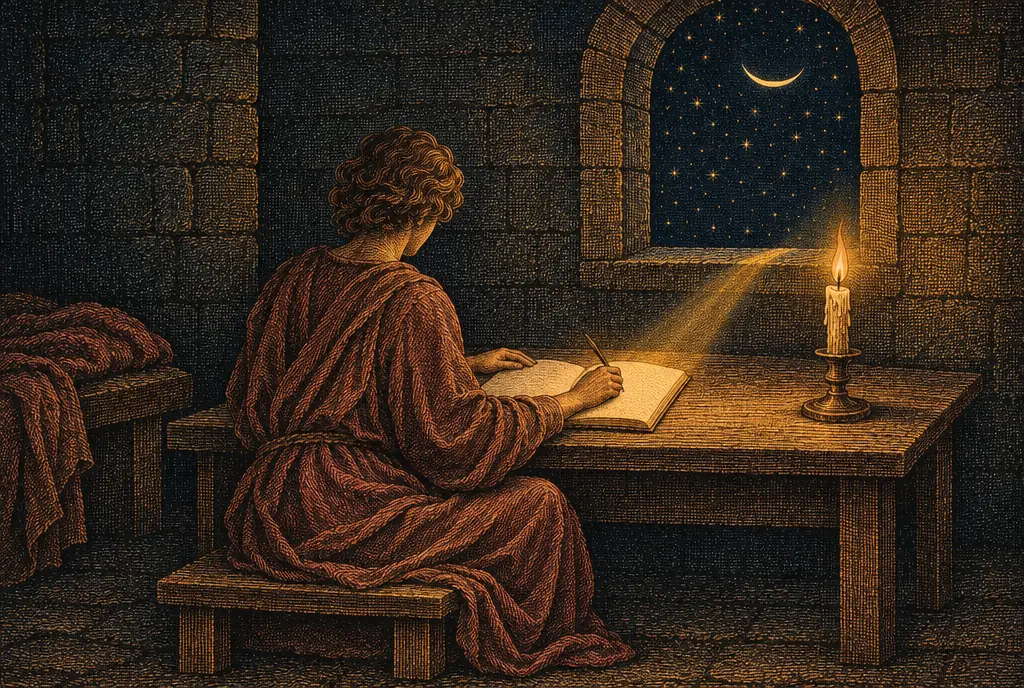
The Premonitions Bureau was a project begun in London in 1967 by the psychiatrist John Barker and the Evening Standard to record the public's forebodings before events and check them afterwards.
A plain educational schematic; it does not diagnose a condition or replace professional care.
Understand the chapter you are in.
Your life’s turning points, measured from your birth.
Walk through Alex’s whole example first


Prefer to explore first?
 The Road of AgesThe turning points of your whole life, from your own chart
Walk my road
What was the Premonitions Bureau?
The idea was simple and sound. If some people do sense disasters before they happen, the way to find out is to collect their forebodings first, stamp each with the date and time, and only then see what follows. Readers of the Evening Standard were invited to telephone or write in with any premonition, and each was filed and later compared with the news. Barker hoped that a working bureau might one day give warning.
The results were thin. Many hundreds of forebodings were logged, and only a small share could be matched to any event, most of those loosely. A handful of correspondents supplied a large part of the entries counted as hits. The bureau gave no usable warning of anything, and it remains the best known attempt to test premonitions the right way round.
On the tree of the hidden arts: The sixth sense.
What sets Premonitions Bureau apart
What set the bureau apart from every earlier collection was the order of events. Older casebooks gathered stories after the fact, when memory had already shaped them to fit. Here a newspaper office received each foreboding and stamped it on arrival, so that nothing could be improved later. The design was a psychiatrist's and the machinery a journalist's, and the plain outcome, a great many entries and very few matches, is itself the finding.
- Opened: January 1967, at the London Evening Standard
- Founders: John Barker, psychiatrist, and Peter Fairley, science editor
- Prompted by: the Aberfan disaster, 21 October 1966, in which 144 people died
- Method: each foreboding dated and filed on receipt, then checked against the news
- Outcome: many hundreds of entries; a small share matched, most from a few people
- Modern account: Sam Knight, The Premonitions Bureau, 2022
Often mistaken for something else: Phantasms of the Living collected cases after the events they describe; the bureau logged forebodings first and checked them afterwards.
The story behind Premonitions Bureau
On 21 October 1966 a coal tip slid onto the village of Aberfan in Wales and killed 144 people, 116 of them children. John Barker, a psychiatrist at a hospital near Shrewsbury, went to the scene, then appealed through the press for anyone who had foreseen it and gathered dozens of replies. With Peter Fairley, science editor of the Evening Standard, he opened the bureau in January 1967. Barker died in 1968, aged 44. In 2022 the journalist Sam Knight told the story in a book named after the bureau.
Why Premonitions Bureau matters
Premonitions Bureau shows what a fair test of foreboding looks like, with the record made first, and what such a test found when it was run.
How to read Premonitions Bureau
Writers on precognition cite it as the model of registering claims in advance; sceptics cite its low rate of matches.
Where readings of Premonitions Bureau go wrong
The Aberfan accounts that inspired it were collected after the disaster, and so carry less weight than entries logged beforehand.
Sources and editorial method
This entry summarizes the tradition in the Almanac's own words; where no source is listed, it is an editorial summary rather than a primary text, and symbolic readings are named as the tradition's, not as fact.
- Source
- The Great Almanac Dictionary
- Category
- Consciousness & Spiritual Psychology
- Aliases
- british premonitions bureau, john barker premonitions, aberfan premonitions, premonitions bureau 1967, central premonitions registry
- Last updated
- 2026-09-26
See Premonitions Bureau in your personal almanac
A definition tells you what it is; your own birth chart tells you what it means for you. The Oracle casts your real chart and answers for your love, your work, and your year ahead, in conversation. It opens with the 7-day Oracle trial.
Speak with the OracleRelated terms
More in Consciousness & Spiritual Psychology
- Self-Compassion
- Spiritual Gift
- Virtù and Fortuna
- Avoidant Attachment
- Conspiracy Theory
- Exploding Head Syndrome
- Ian Stevenson
- Meaning-Making
From the reference page to your own chart
Every word here
is in your own chart.
- Your life’s turning points, measured from your birth
- A practical next step to consider
- It opens with 7 days free: the AI Oracle on thirty hidden arts, and your daily horoscope
$0 today, then $19/month after 7 days. Cancel anytime.
Common questions
What was the Premonitions Bureau?
It was a register of forebodings opened in London in January 1967 by the psychiatrist John Barker with the Evening Standard newspaper. Members of the public sent in premonitions, which were dated, filed and later checked against events.
Did the Premonitions Bureau predict anything?
A small number of entries were judged to match later events, and most of those came from a few regular correspondents. The great majority matched nothing, and no warning the bureau received was ever used to prevent harm.
Why was the Premonitions Bureau started?
After the Aberfan disaster of 1966, John Barker collected accounts from people who believed they had foreseen it. He concluded that the only way to test such claims was to record them before the event, and set up the bureau to do so.


