The inner life
Claircognizance
Direct answer
Claircognizance is psychic vocabulary for clear knowing, meaning claimed sudden knowledge without ordinary evidence or conscious reasoning.
Claircognizance means claimed clear knowing or sudden intuitive knowledge.
$0 today, then $12/month after 7 days. Cancel anytime.
At a glance
- Found in
- Consciousness & Spiritual Psychology
- Related
- Birth Chart, Zodiac, Transit
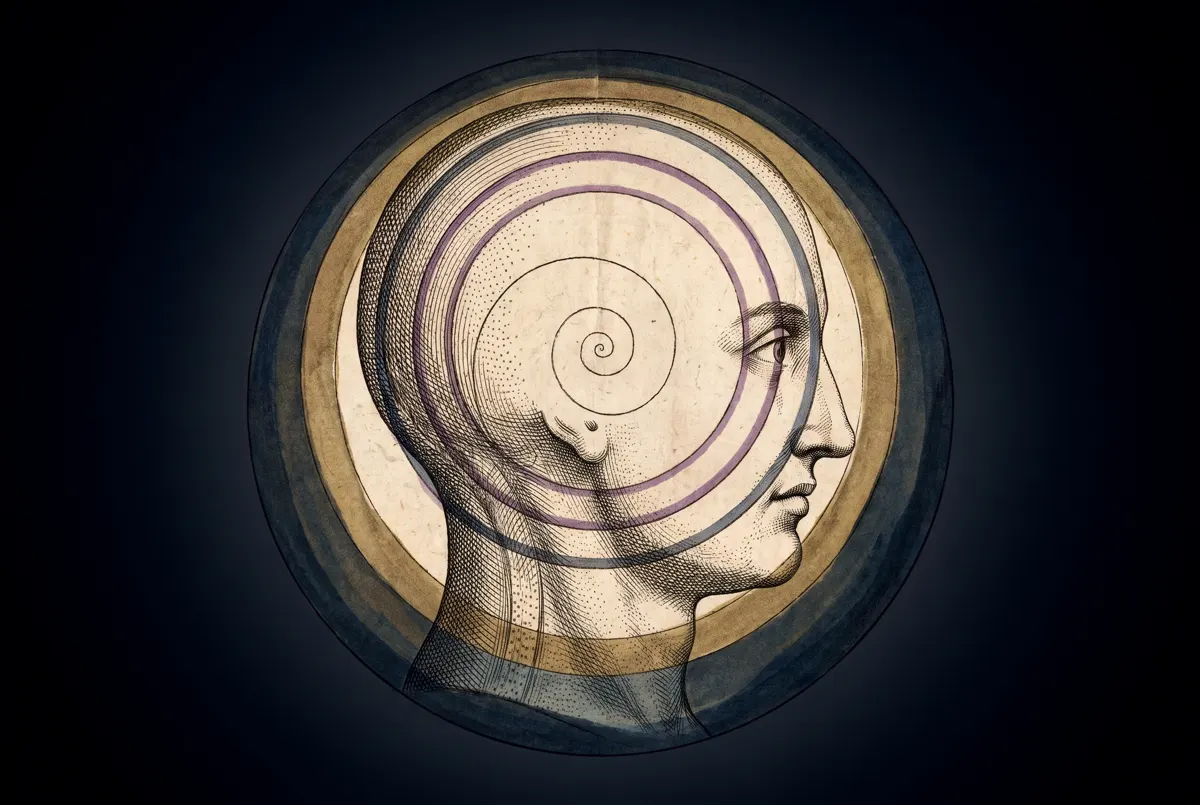
Claircognizance means claimed clear knowing or sudden intuitive knowledge.
A plain educational schematic; it does not diagnose a condition or replace professional care.
What does your own chart say about you?
Choose love, work or purpose. Your reading is written from your chart. Your reading uses your own birth details.
Walk through Alex’s whole example first
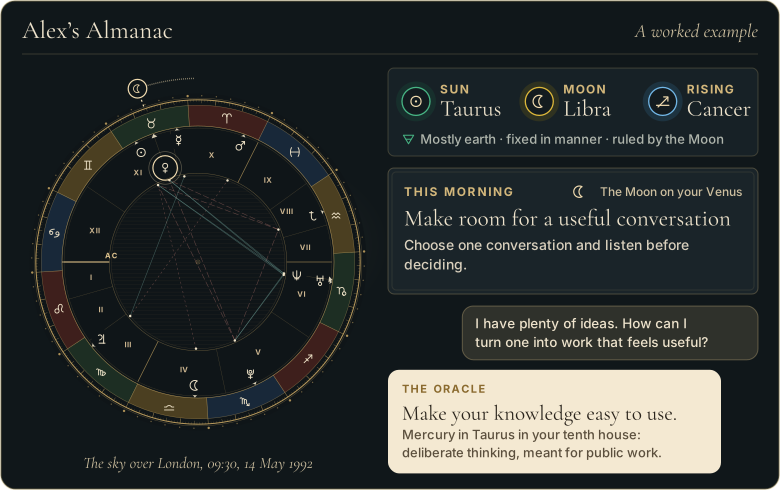
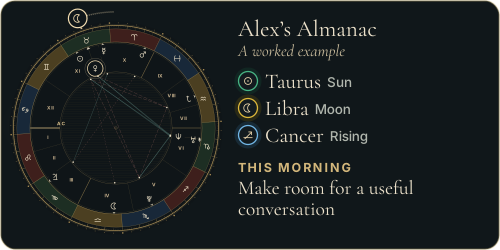
 The Road of AgesSee the turning points of your whole life, from your birth date
See your road's shape
The Road of AgesSee the turning points of your whole life, from your birth date
See your road's shape
Prefer to explore first?
 The Road of AgesThe turning points of your whole life, from your own chart
Walk my road
The Road of AgesThe turning points of your whole life, from your own chart
Walk my road
Free, by email
Your daily Almanac letter
One short letter at 7 each morning: the day’s theme read for your own chart, and one thing to do with it.
The signs people describe
Accounts of claircognizance are strikingly consistent in shape. People describe knowledge that arrives whole rather than being reasoned toward: a certainty about a decision before the options are weighed, knowing who is calling before looking, a fully formed answer to a problem landing during a shower or a walk, or an unshakeable sense that a story someone is telling does not add up.
The distinguishing texture in these accounts is the absence of imagery or feeling. Where clairvoyance is described in pictures and clairsentience in bodily sensation, claircognizance is described as bare knowing, often compared to remembering something you were never told.
Knowing, intuition, and anxiety are three different things
Cognitive science has a well-documented, non-psychic account of most such moments: implicit learning. The mind absorbs patterns it never consciously registers, and delivers conclusions without showing its work. An experienced nurse who "just knows" a patient is deteriorating is usually reading a hundred small cues below the level of speech. That explanation does not diminish the experience; it locates it.
The harder and more useful distinction is between quiet knowing and anxious certainty. Intrusive conviction that something terrible is true, arriving with urgency and dread and demanding immediate action, is the signature of anxiety, not insight. Claimed knowing that punishes you for questioning it deserves suspicion, whatever vocabulary it wears.
A discernment checklist before trusting a knowing
- Does it survive checking? Genuine pattern recognition welcomes verification; a false certainty resents it.
- Would you stake something small on it, and are you willing to be wrong out loud?
- Is it asking you to skip due diligence on health, money, or another person's character? Then it does not get to decide alone, however sure it feels.
- Does it flatter you? Knowings that consistently confirm what you wanted to do anyway are usually preference in costume.
- The Almanac's standing counsel applies here as everywhere: test everything and hold on to what proves good. Treat claimed clear knowing as a prompt to investigate, never as a verdict.
The story behind Claircognizance
Claircognizance is a modern intuitive term shaped by spiritualist, psychic, New Age, and coaching cultures.
The spiritual meaning of Claircognizance
Spiritually, Claircognizance asks whether certainty can remain teachable.
Claircognizance in the Bible
Christian readers should test sudden knowledge by humility, evidence, counsel, fruit, and peace.
Why Claircognizance matters
Claircognizance matters because sudden certainty can feel powerful but may also be bias, fear, or pattern recognition. Responsible interpretation keeps knowing accountable.
Sources and editorial method
This entry summarizes the tradition in the Almanac's own words; where no source is listed, it is an editorial summary rather than a primary text, and symbolic readings are named as the tradition's, not as fact.
- Source
- The Great Almanac Dictionary
- Category
- Consciousness & Spiritual Psychology
- Last updated
- 2026-09-26
Let knowing stay humble
A definition tells you what it is; your own birth chart tells you what it means for you. The Oracle casts your real chart and answers for your love, your work, and your year ahead, in conversation. It opens with the 7-day Seeker trial.
Speak with the OracleYour year, written once from your chart alone: the Cosmic Codex reads the whole of it, month by month. Open the Cosmic Codex
Related terms
More in Consciousness & Spiritual Psychology
- Divine Timing
- Frequency
- Internal Family Systems
- Parts Work
- Secure Attachment
- Soul Purpose
- Threshold Experience
- Anxious Attachment
From the reference page to your own chart
Every word here
is in your own chart.
- A personal reading about love, work or purpose, written from your chart
- A practical next step to consider
- It opens with 7 days free, with the AI Oracle and daily guidance
$0 today, then $12/month after 7 days. Cancel anytime.
Common questions
What is claircognizance?
Claircognizance is psychic vocabulary for clear knowing, meaning claimed sudden knowledge without ordinary evidence or conscious reasoning.
Where does claircognizance come from?
Claircognizance is a modern intuitive term shaped by spiritualist, psychic, New Age, and coaching cultures.
What does claircognizance mean spiritually?
Spiritually, Claircognizance asks whether certainty can remain teachable.
Free, by email
The Almanac, in your inbox at 7
One short letter at 7 each morning: the day’s theme read for your own chart, and one thing to do with it.