British name and literary mythology
Albion
Direct answer
The oldest geographic uses refer to Britain. The familiar link with Latin albus, “white,” and Dover’s cliffs is an ancient or later explanatory association, but modern linguists also consider Celtic roots; the etymology is not settled by poetic resemblance.
Albion is an ancient name for the island of Great Britain and, in later literature, a poetic national name, legendary giant, and central figure in William Blake’s mythology.
Quick facts
| Question | Direct answer |
|---|---|
| Basic historical referent | The island of Great Britain, sometimes used more narrowly for England in later poetry. |
| Classical form | Greek and Latin forms related to Albion or Albiōn. |
| Legendary form | A giant associated with the island in medieval and early modern origin stories. |
| Blakean form | A primordial human and personification whose fall and division structure William Blake’s mythology. |
Albion means a classical Kuiper belt object once known by a provisional discovery name.
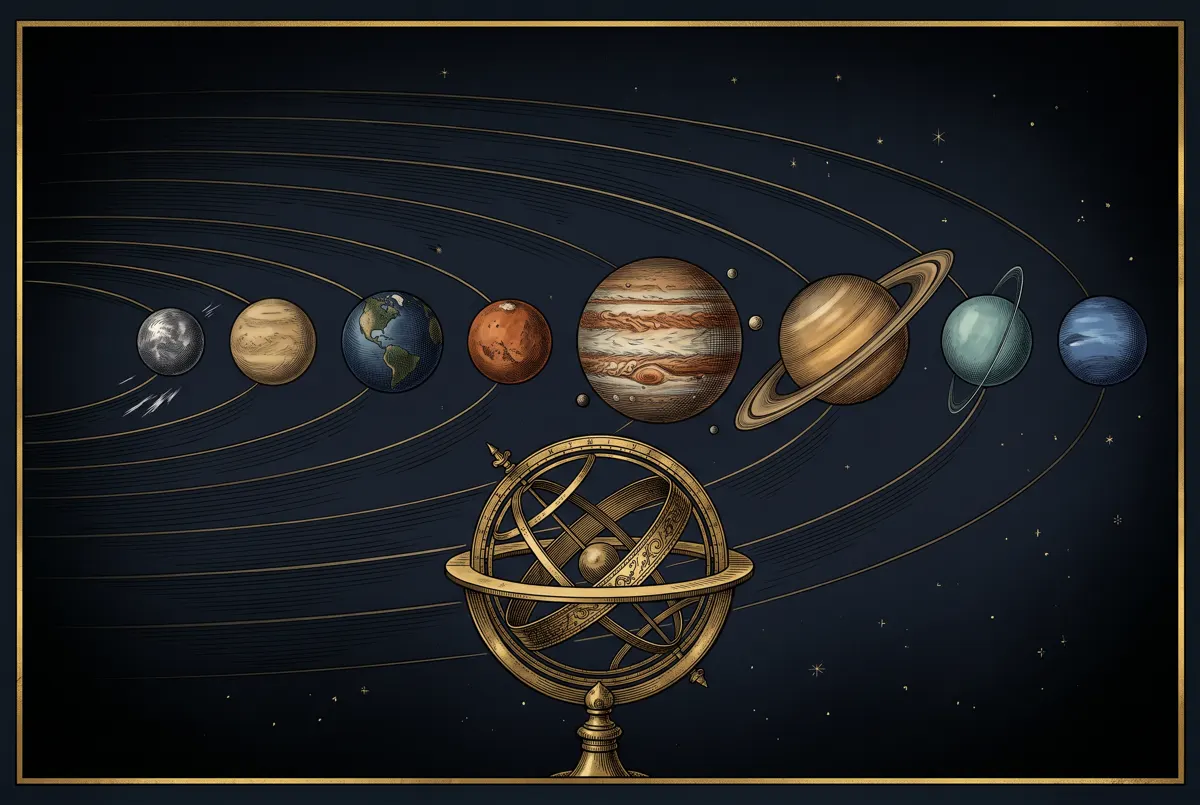
The orbit map distinguishes physical bodies, calculated points, and symbolic cycles where possible.
What does your own chart say about you?
Choose love, work or purpose for a personal insight and a useful next step. Your reading uses your own birth details.
Walk through Alex’s whole example first
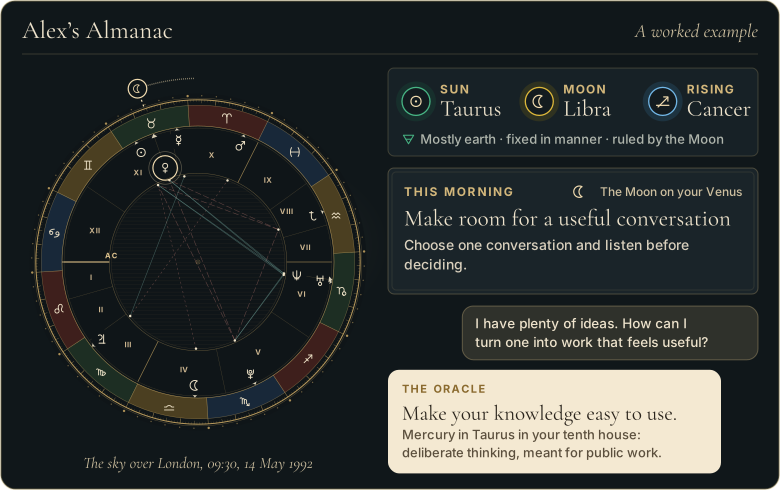
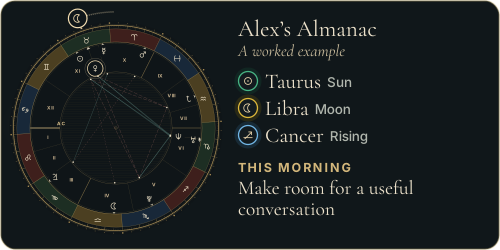
 The Road of AgesSee the turning points of your whole life, from your birth date
Free first look
The Road of AgesSee the turning points of your whole life, from your birth date
Free first look
Prefer to explore first?
 The Road of AgesThe turning points of your whole life, from your own chart
Walk my road
The Road of AgesThe turning points of your whole life, from your own chart
Walk my road
Albion as an ancient name for Britain
Classical geographic writers preserve names related to Albion for the large island northwest of continental Europe. Over time Britannia became the more usual Latin designation, while Albion survived as an archaic and poetic name. Later English usage sometimes narrows it rhetorically to England, though the historical island is Great Britain. “Perfidious Albion,” coined in French political rhetoric, is another later layer and should not be mistaken for an ancient title. Because the term changes scope across sources, quote the author and period before deciding whether Albion means the island, a nation, an idealized homeland, or a personification.
A one-minute story
The Wandering Stars
How the moving planets were watched, named and found, and what a transit is.

White cliffs and competing etymologies
A famous explanation connects Albion with Latin albus, “white,” and imagines continental travelers naming the island for the chalk cliffs near Dover. Ancient Romans themselves noticed the resemblance, and poets made it memorable. Yet resemblance to Latin is not conclusive etymology. Scholars have also proposed Celtic forms connected with world, land, height, or whiteness and compare related place-name elements. The safest statement is that the name is ancient and its ultimate origin disputed. A spiritual claim that Albion literally means a divinely chosen “white land” exceeds the linguistic evidence and can import racial meanings absent from the name’s early geography.
Albion the giant in origin legends
Medieval and early modern chronicles developed stories in which Albion was a giant who ruled or gave his name to the island, sometimes as a son of Neptune. Other British origin legends center on Brutus of Troy, and writers tried to combine competing genealogies. These tales are mythic historiography, not archaeological accounts of Britain’s settlement. They reveal how authors linked land, ancestry, classical prestige, and political identity. When modern retellings describe Albion as an ancient Celtic god, they often merge the giant, the geographic name, and later literary personification without a primary source establishing that identity.
William Blake’s cosmic Albion
William Blake transformed Albion into a vast primordial human whose fallen division becomes both psychic and national drama. In works such as Jerusalem and the prophetic books, Albion’s relationships with the Four Zoas, Jerusalem, Los, and other figures explore imagination, reason, desire, body, empire, religion, and redemption. Blake’s mythology shifts across illuminated books and resists a one-line code. His Albion is neither simply Britain praised nor a conventional pagan deity; the figure can embody the nation’s spiritual possibilities and its oppressive fragmentation. Interpret an image or quotation within the specific Blake work rather than through generic “Albion energy.”
How to evaluate claims about Albion
Claims about Albion should be tied to a dated text, object, author, or community rather than presented as timeless fact. Names and images often accumulate new meanings as they move between languages, religions, literature, art, and popular culture. Etymology does not by itself determine later symbolism, and a resemblance between traditions is not proof that one secretly derived from the other. A useful interpretation identifies the historical layer being discussed, distinguishes evidence from speculation, and acknowledges competing readings. Personal reflection may begin with a cultural symbol, but it should not erase the people, texts, or circumstances that gave that symbol its documented forms.
Sources and editorial method
Research and editorial references used for this page include:
- Encyclopaedia Britannica 1911: Albion - Historical reference entry documenting the geographic name and traditional etymology.
- The William Blake Archive - Authoritative digital editions of Blake’s illuminated works containing Albion.
These references support the factual, historical, textual, or interpretive claims on this page. Interpretive traditions are identified as such, and factual claims are kept separate from symbolic claims.
Related reading
Check it in your skymap
Albion in a book is one thing; Albion in your own birth chart is your life. The Oracle casts your real chart and tells you what it means for your love, your work, and your year ahead, in conversation, free.
Speak with the OracleWhere Albion moves through your own year, and what that asks of your love and your work, is written in the Cosmic Codex, month by month from your chart. Open the Cosmic Codex
More in Planets & Celestial Bodies
From the reference page to your own chart
Every word here
is in your own chart.
- Your chart and numbers, read for you in about a minute
- Ask the Oracle anything about them
- Every personal tool and daily guidance
Free reading, no card needed. Optional membership: payment details required, 7 days free, then $12/month. Cancel before it renews and you pay nothing.
Common questions
Does Albion mean England or Britain?
Historically it names Great Britain; later poetic usage sometimes narrows it to England. Context decides.
Is Albion named after the white cliffs of Dover?
That is an old and influential explanation, but the ultimate etymology remains debated.
Who is Albion in William Blake?
A primordial human and national-cosmic personification whose fall, division, and possible restoration organize Blake’s mythology.