

Mystical systems
Spiritualism
Direct answer
Spiritualism is a religious movement, begun in the United States in 1848, built on the belief that the dead survive and can speak with the living through mediums.
$0 today, then $19/month after 7 days. Cancel anytime.
At a glance
- Also called
- spiritualist movement, spiritualist church, spiritism
- Found in
- Mystical Systems
- Related
- Seance, Mediumship, Ghost, Poltergeist
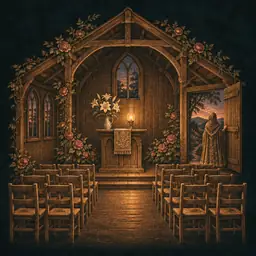

Spiritualism is a religious movement, begun in the United States in 1848, built on the belief that the dead survive and can speak with the living through mediums.
A lineage map for books and systems; it avoids presenting symbolic traditions as literal fact.
Understand the chapter you are in.
Your life’s turning points, measured from your birth.
Walk through Alex’s whole example first


Prefer to explore first?
 The Road of AgesThe turning points of your whole life, from your own chart
Walk my road
What is Spiritualism?
Spiritualism holds that death is a change of state, that the dead keep their characters, and that they can be reached through a medium. It began with the Fox sisters at Hydesville, New York, in 1848, and within a decade claimed millions of followers in America and Britain. Its services combine hymns, an address and a demonstration in which a medium gives messages to members of the congregation.
The movement drew reformers, especially campaigners against slavery and for women's rights, because it gave women a public voice as mediums. It also drew conjurors. The French branch founded by Allan Kardec, called Spiritism, adds reincarnation and is today strongest in Brazil.
On the tree of the hidden arts: The spirit realm.
What sets Spiritualism apart
Spiritualism differs from older beliefs about the dead in claiming to be an experimental religion. Its founders said survival could be shown by evidence, in a sitting, to anyone, and they welcomed the telegraph as a comparison: raps as a code between two worlds. That invitation to test is why scientists became involved and why exposures hurt it so badly. It also had no priesthood. Any person, and in practice very often a young woman, could be the channel, which gave women a rare public platform in the 1850s.
- Founding event: the Fox sisters at Hydesville, New York, March 1848
- French branch: Spiritism, from Allan Kardec's book of 1857
- British body: the Spiritualists' National Union, from 1901
- Testing body: the Society for Psychical Research, London, 1882
- Confession: Margaretta Fox, 1888; withdrawn in 1889
- Strongest today: Spiritism in Brazil
Often mistaken for something else: Spirituality is a general word for a person's inner or religious life; Spiritualism is one movement of the nineteenth century, with mediums, services and a founding date.
The story behind Spiritualism
The raps at Hydesville were reported in March 1848. Kardec published The Spirits' Book in 1857. The Society for Psychical Research was founded in London in 1882 to test the claims, and the Spiritualists' National Union in Britain dates from 1901. Margaretta Fox confessed to trickery in 1888 and withdrew the confession the next year. Arthur Conan Doyle became the movement's best known champion after the First World War, and Harry Houdini its best known critic.
Why Spiritualism matters
Spiritualism is the source of the modern sitting, the medium and the idea of proof of survival, and it shaped psychical research and much later belief.
How to read Spiritualism
Readers meet the word in family histories, in Victorian novels and in present-day churches, and need it to tell a religion apart from a parlour game.
Spiritualism in practice: an example
A person who attends a service at a Spiritualist church, and hears a medium describe a relative to someone in the next row, is seeing the movement's central rite.
Where readings of Spiritualism go wrong
The house passes on no message from the dead. Anyone who charges for contact with a relative who has died deserves doubt, however kind the manner.
Sources and editorial method
This entry summarizes the tradition in the Almanac's own words; where no source is listed, it is an editorial summary rather than a primary text, and symbolic readings are named as the tradition's, not as fact.
- Source
- The Great Almanac Dictionary
- Category
- Mystical Systems
- Aliases
- spiritualist movement, modern spiritualism, spiritualist church, spiritism, spiritualism meaning
- Last updated
- 2026-09-26
See Spiritualism in your personal almanac
A definition tells you what it is; your own birth chart tells you what it means for you. The Oracle casts your real chart and answers for your love, your work, and your year ahead, in conversation. It opens with the 7-day Oracle trial.
Speak with the OracleRelated terms
More in Mystical Systems
From the reference page to your own chart
Every word here
is in your own chart.
- Your life’s turning points, measured from your birth
- A practical next step to consider
- It opens with 7 days free: the AI Oracle on thirty hidden arts, and your daily horoscope
$0 today, then $19/month after 7 days. Cancel anytime.
Common questions
What is Spiritualism?
It is a religious movement holding that the dead survive and can communicate through mediums. It began in New York State in 1848 and has organised churches.
Is Spiritualism the same as spirituality?
No. Spirituality is a broad word for inner or religious life. Spiritualism is a particular movement with its own history, services and belief in contact with the dead.


