

Mystical systems
Gregorian chant
Direct answer
Gregorian chant is the central repertory of Latin plainsong: unaccompanied melody for the Mass and the daily hours, shaped in the Frankish kingdom in the eighth and ninth centuries.
$0 today, then $19/month after 7 days. Cancel anytime.
At a glance
- Also called
- gregorian plainchant, cantus gregorianus, latin chant
- Found in
- Mystical Systems
- Related
- Plainsong, Psalmody, Lectio Divina, Hesychasm
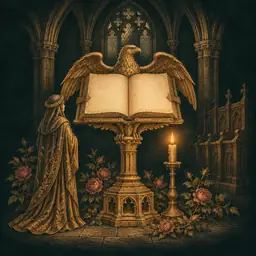

Gregorian chant is the central repertory of Latin plainsong: unaccompanied melody for the Mass and the daily hours, shaped in the Frankish kingdom in the eighth and ninth centuries.
A lineage map for books and systems; it avoids presenting symbolic traditions as literal fact.
Understand the chapter you are in.
Your life’s turning points, measured from your birth.
Walk through Alex’s whole example first


Prefer to explore first?
 The Road of AgesThe turning points of your whole life, from your own chart
Walk my road
Did Pope Gregory write Gregorian chant?
Gregorian chant is the body of single-line, unaccompanied song to which the Roman Catholic liturgy was sung for a thousand years and in places still is. It has no harmony and no regular beat; the melody follows the Latin words, from simple reciting tones for the psalms to long, ornate lines for a single syllable of an Alleluia.
Gregorian chant is named after Pope Gregory I, who reigned from 590 to 604, but scholars place its formation later and further north, when the Frankish rulers adopted Roman worship and their singers reshaped the Roman melodies. The legend that a dove sang the chants into Gregory's ear was painted and retold through the Middle Ages and gave the repertory its authority.
On the tree of the hidden arts: Sound and mantra.
What sets Gregorian chant apart
Gregorian chant is a repertory, a fixed set of several thousand melodies each tied to a place in the church year, and not a style that can be improvised. A given chant belongs to one feast and one moment of the service. Its range of manner is wide: a psalm tone moves on one note, while a gradual may spin dozens of notes over a single vowel. The notation grew out of the chant itself, since the staff and the square notes were devised to teach these melodies, and Western written music descends from that.
- Named after: Pope Gregory I, who reigned 590 to 604; the link is a later legend
- Took shape: Frankish kingdom, eighth and ninth centuries
- Language: Latin, with a few Greek words such as Kyrie eleison
- Notation: neumes from the ninth century; a four-line staff from about 1030
- Restored by: the monks of Solesmes, in the later nineteenth century
- Standing today: given pride of place by the Second Vatican Council, 1963
Often mistaken for something else: Plainsong is the whole family of unaccompanied church chant; Gregorian chant is its largest member, the Roman and Frankish repertory.
The story behind Gregorian chant
Pippin and Charlemagne ordered the Roman rite and its chant to be kept across the Frankish kingdom from the 750s onward. Notation with neumes begins in the ninth century, and the four-line staff credited to Guido of Arezzo, around 1030, fixed the pitches. Printed editions of the sixteenth century cut the melodies down; in the nineteenth century the monks of Solesmes in France rebuilt them from the oldest manuscripts, and in 1903 Pope Pius X restored the chant to first place in Catholic worship. The Second Vatican Council in 1963 allowed the local languages and still gave Gregorian chant pride of place.
Why Gregorian chant matters
Gregorian chant is the oldest written music of Europe still sung, and the clearest case of chant made to carry words and breath, not to display the voice.
How to read Gregorian chant
The term places a recording or a service: it tells a listener that what they hear is Latin, unaccompanied and tied to a fixed hour or feast.
Gregorian chant in practice: an example
At an abbey the day ends with Compline: a few psalms on a plain tone, a short hymn and a chant to Mary, sung from memory in the dark.
Where readings of Gregorian chant go wrong
Gregorian chant is worship first and music second. No recording of chant has been shown to mend illness or raise intelligence.
Sources and editorial method
This entry summarizes the tradition in the Almanac's own words; where no source is listed, it is an editorial summary rather than a primary text, and symbolic readings are named as the tradition's, not as fact.
- Source
- The Great Almanac Dictionary
- Category
- Mystical Systems
- Aliases
- gregorian chants, gregorian plainchant, cantus gregorianus, latin chant
- Last updated
- 2026-09-26
See Gregorian chant in your personal almanac
A definition tells you what it is; your own birth chart tells you what it means for you. The Oracle casts your real chart and answers for your love, your work, and your year ahead, in conversation. It opens with the 7-day Oracle trial.
Speak with the OracleRelated terms
More in Mystical Systems
From the reference page to your own chart
Every word here
is in your own chart.
- Your life’s turning points, measured from your birth
- A practical next step to consider
- It opens with 7 days free: the AI Oracle on thirty hidden arts, and your daily horoscope
$0 today, then $19/month after 7 days. Cancel anytime.
Common questions
Did Pope Gregory write Gregorian chant?
No. He died in 604, and the repertory took shape in the Frankish kingdom in the eighth and ninth centuries. His name was attached to it later, with the legend of a dove singing at his ear.
How is Gregorian chant different from other music?
It is a single melody without harmony, accompaniment or a regular beat, sung in Latin, and its rhythm follows the words. It is written in square notes on a staff of four lines.
Is Gregorian chant still sung?
Yes. Benedictine and other monasteries sing it daily, and many cathedrals and parishes sing it at Mass. The abbey of Solesmes in France has been its centre of study since the nineteenth century.


