Birth-date grid numerology
Arrow of Planning
Direct answer
Enter the nonzero digits of the birth date into the declared grid and check whether 1, 2, and 3 are each present at least once. If so, the line is complete under this convention. It suggests an orientation toward preparation or sequence, not proof that the person plans well or follows through.
The Arrow of Planning is a modern numerology interpretation usually assigned to a complete 1-2-3 line in a birth-date grid. Its exact printed direction changes with grid orientation, but the three-number membership is more important than whether it appears vertical or horizontal.
Quick facts
| Feature | Interpretive rule |
|---|---|
| Required digits | At least one 1, one 2, and one 3 in the birth date. |
| Zero | Usually omitted because the common grid contains cells 1 through 9. |
| Repeated digits | May intensify one component but do not create additional planning arrows. |
| Missing 1-2-3 | Not the same as a complete arrow; labels for an all-empty line differ by school. |
Arrow of Planning means a Lo Shu arrow associated with foresight, sequencing, and mental organization.
The visual isolates the number or calculation pattern; the page explains its interpretation and limits.
What does your own chart say about you?
Choose love, work or purpose for a personal insight and a useful next step. Your reading uses your own birth details.
Walk through Alex’s whole example first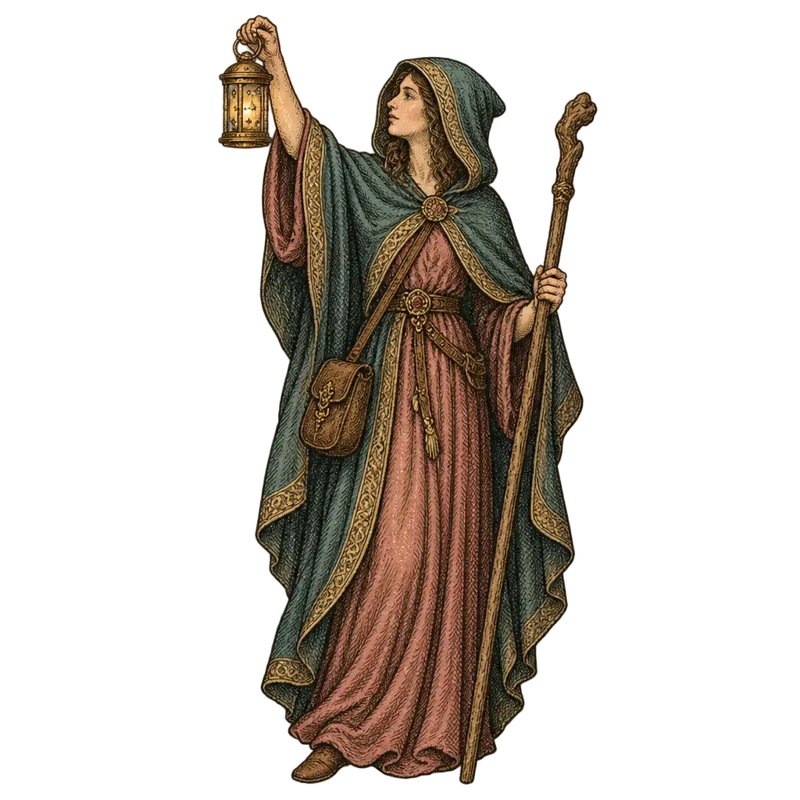
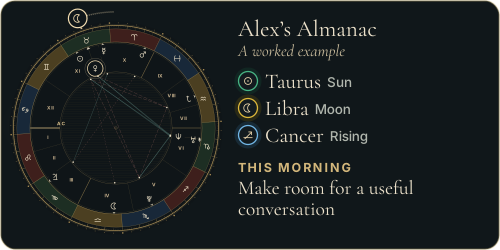
 The Road of AgesSee the turning points of your whole life, from your birth date
Free first look
The Road of AgesSee the turning points of your whole life, from your birth date
Free first look
Prefer to explore first?
 The Road of AgesThe turning points of your whole life, from your own chart
Walk my road
The Road of AgesThe turning points of your whole life, from your own chart
Walk my road
How to identify the 1-2-3 line
Write every digit of the recorded birth date and place each 1 through 9 in its matching cell. A date with two 1s keeps both marks in the 1-cell. Ignore separators and follow the school’s stated rule for zero. Then inspect the cells numbered 1, 2, and 3. All three must be occupied for the complete Arrow of Planning. Because published Lo Shu-style grids can be rotated or mirrored, calling it the “bottom row” or “vertical left line” is less reliable than naming the digits.
A one-minute story
The Music of Number
From a blacksmith's hammers to your Life Path: the story of number.

Planning as a sequence, not a guarantee of execution
Modern readers associate the three cells with an ability or preference for ordering steps, preparing resources, and forming a mental route before action. The idea can manifest constructively as organization and anticipation, but it can also appear as overplanning, reluctance to improvise, or elegant plans that remain unrealized. Grid symbolism does not measure executive function. Compare the theme with actual behavior: deadlines met, contingencies prepared, changes handled, and tasks completed. A person can build planning skill regardless of whether the line appears.
Repeated digits and the rest of the grid
A line containing 111, 2, and 3 remains one arrow, but repetition may alter the school’s interpretation of emphasis or imbalance. Other complete and missing lines can suggest different symbolic pressures, while life-path and name numbers come from separate calculations. Avoid making the Arrow of Planning the person’s entire profile. It may describe preparation in one domain and not another: someone can organize work meticulously while avoiding emotional conversations, or improvise creatively while relying on detailed financial routines.
Modern numerology versus the historical Lo Shu
The Lo Shu is an ancient Chinese three-by-three magic square whose rows, columns, and diagonals share a total. Applying a Western civil birth date to its cells and assigning personality arrows is a modern numerological development, not simply the square’s original historical function. Authors also vary in orientation, arrow names, master-number doctrine, and date notation. Show the digits and rule so the result is reproducible. Numerology is a symbolic divinatory practice, not a scientifically validated test of planning ability, intelligence, diagnosis, or occupational suitability.
Sources and editorial method
Research and editorial references used for this page include:
- Columbia University: The Lo Shu magic square - Educational historical context for the Chinese magic square adapted by modern grid numerology.
- Encyclopaedia Britannica: Numerology - Reference overview of number symbolism and divinatory interpretation.
These references support the factual, historical, textual, or interpretive claims on this page. Interpretive traditions are identified as such, and factual claims are kept separate from symbolic claims.
Related reading
Read your number pattern
A number in a book is one thing; the numbers in your own birth date are yours. The Oracle reads your numbers and your chart and tells you what they mean for your love, your work, and your year ahead, in conversation, free.
Speak with the OracleYour personal year and the numbers in your name are written once in the Cosmic Codex: your whole year, month by month. Open the Cosmic Codex
More in Numerology
- Consonant Number
- Intuitive Plane Number
- Lo Shu Grid
- Name Numerology Chart
- Number 4 Meaning
- Numerology Arrow
- Personal Year Forecast
- Transit Letter
From the method to your own numbers
Your numbers,
worked out for you.
- Your chart and numbers, read for you in about a minute
- Ask the Oracle anything about them
- Every personal tool and daily guidance
Free reading, no card needed. Optional membership: payment details required, 7 days free, then $12/month. Cancel before it renews and you pay nothing.
Common questions
Which numbers form the Arrow of Planning?
In the common convention described here, 1, 2, and 3. Always verify the author’s labels because grid systems and arrow names vary.
Do I need exactly one of each digit?
No. Each cell must be occupied at least once. Repeats may influence interpretation but do not invalidate the complete line.
Does having the arrow mean I will accomplish every plan?
No. Planning and execution are different, and real outcomes depend on habits, skills, resources, health, support, and circumstance.