Modern numerology methods
Numerology Arrow
Direct answer
To find an arrow, first place the digits of a birth date into the grid used by your chosen school, keeping repeated digits visible. Inspect only the recognized horizontal, vertical, and diagonal triplets. State the grid orientation and interpretive source, because labels and even cell positions differ.
A numerology arrow is a straight line across a number grid whose three cells are either all occupied or all empty. Practitioners interpret complete lines as concentrated tendencies and missing lines as themes that may require conscious development.
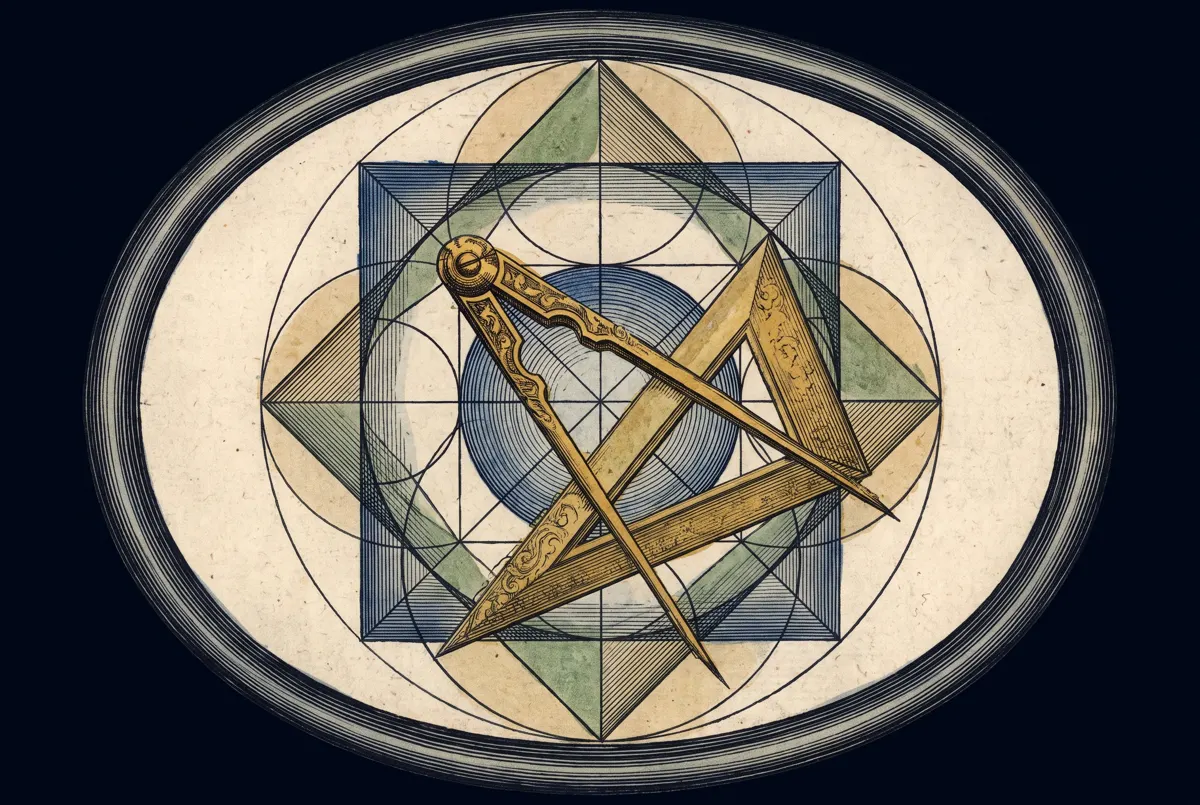
Numerology Arrow means a line of numbers in a grid read as a strength, tendency, or missing pattern.
The visual isolates the number or calculation pattern; the page explains its interpretation and limits.Quick facts
| Feature | Meaning in the method |
|---|---|
| Complete arrow | All three numbers in a recognized line occur at least once in the date. |
| Missing arrow | None of the three numbers in that line occurs in the date. |
| Repeated digit | Usually intensifies one cell but does not create a new geometric line. |
| Evidence status | A symbolic numerology practice, not a scientifically validated personality test. |
The Instruments
Ten readings, worked out from your own birth chart
An instrument is a reading this house works out for you. Give your birth date, time and place once, and each one reads today’s real sky against the chart you were born under. Eight are personal; two are calendars anyone can open. A free account opens one instrument a day. The plans open every instrument, every day.
- Natal Chart Every planet, house and aspect in your chart
- Active Transits Where the planets are now, read against your chart
- Daily Counsel What to pursue today, and what to leave alone
- Personal Timing Your best days to decide, weeks ahead
- Fellowship Your chart and another, read side by side
- Theme of the Day The one thing today is asking of you
- Sacred Numbers Your life path, your cycles, your name in numbers
- Aeolian Harmonics Classical music chosen to match your chart
- Mercury Retrograde Every Mercury retrograde this year, with its dates Open to all
- Void-of-Course Moon When the Moon is between signs, hour by hour Open to all




What a numerology arrow is
Numerology arrows belong to modern birth-date grid systems, especially methods based on a three-by-three arrangement of the digits one through nine. Each nonzero digit in the date is entered into its corresponding cell. If the three cells of an accepted row, column, or diagonal are occupied, the result is called a complete arrow. If all three cells are empty, some schools call it a missing arrow. Partly filled lines are normally not arrows.
The term describes geometry in the grid, not a calculation made by adding the date. This distinguishes arrows from the life path number, birthday number, or other reduced totals. It also explains why two people with the same life path can have different arrows: their dates may contain different individual digits even when the digits sum to the same result.
How to identify arrows correctly
Write the full date in the convention required by the method and omit punctuation. Most systems ignore zero because the classic grid contains cells one through nine, although a reader should disclose any different rule. Place every occurrence of 1 through 9 in its matching cell. A date containing three 2s should show 222 in the 2-cell rather than treating the repeats as one digit; repetition may affect interpretation even though occupancy remains a yes-or-no condition for an arrow.
Next compare the occupied cells with the method’s named triplets. Do not invent a line merely because three numbers look adjacent after rotating or reordering the grid. Lo Shu-derived layouts and Westernized layouts may reverse rows or assign different titles. The numerical membership of a diagonal can therefore be more dependable than its printed direction. A transparent reading says, for example, “the 1-5-9 line in this orientation,” instead of relying only on a poetic arrow name.
Complete arrows, missing arrows, and repeated numbers
A complete line is commonly read as a set of qualities that can work together readily. The precise theme depends on the school: one author may call a triplet practical, another determined, and another action-oriented. An arrow should not be read as an unconditional virtue. A symbolic emphasis on planning, for example, might describe orderly preparation, inflexibility, or plans that never become action, depending on the surrounding grid and the person’s actual habits.
A missing line is better framed as an underrepresented mode than as a defect. It can prompt questions about skills, support, or compensating strategies. Repeated digits add another layer. A complete 1-5-9 line with four occurrences of 1 is not identical to one with each digit appearing once. Responsible interpretation separates what the grid visibly contains from judgments about character and invites the person to confirm or reject the proposed theme.
Method differences and sensible limits
The famous Lo Shu is an ancient Chinese magic square, but contemporary personality readings from a Western birth date are not simply the original historical use of that square. Modern numerology combines inherited number symbolism with newer interpretive systems. Claims of unbroken antiquity should therefore be treated cautiously. The arithmetic can be reproduced; the personality meanings remain matters of tradition and belief.
Numerology arrows are not clinical measures of intelligence, motivation, compatibility, or mental health. Dates also depend on calendar notation and, in some contexts, conversion between calendars. Use the grid as a structured reflection exercise: name the method, show the digits, distinguish a complete line from a missing one, and compare the description with lived evidence rather than treating it as a verdict.
Sources and editorial method
Research and editorial references used for this page include:
- Encyclopaedia Britannica: Numerology - Reference overview of numerology as number-based divinatory and symbolic interpretation.
- Columbia University: The Lo Shu magic square - Educational history of the Chinese magic-square arrangement often adapted by modern grid systems.
These references support the factual, historical, textual, or interpretive claims on this page. Interpretive traditions are identified as such, and factual claims are kept separate from symbolic claims.
Related reading
Read your number pattern
Numerology Arrow in a book is one thing; Numerology Arrow in your own birth chart is your life. The Oracle casts your real chart and tells you what it means for your love, your work, and your year ahead, in conversation, free.
Speak with the OracleYour personal year and the numbers in your name are written once in the Cosmic Codex: your whole year, month by month. Open the Cosmic Codex
More in Numerology
- Personal Year Forecast
- Transit Letter
- Arrow of Planning
- Consonant Number
- Hidden Passion Number
- Lo Shu Arrow
- Name Numerology
- Number 4 Meaning
Common questions
Does a partly filled line count as an arrow?
Usually no. A complete arrow requires all three cells, while a missing arrow requires none of them. A one- or two-cell line may still be discussed, but it is not the same pattern.
Do repeated digits create several arrows?
No. Repetition strengthens or complicates the interpretation of one cell; it does not duplicate the geometric line.
Why do two books give an arrow different names?
Schools vary in grid orientation, terminology, and assigned meanings. Compare the actual three-number sequence and the author’s stated convention before assuming a contradiction.