
Grimoire demonology history
Andromalius
Direct answer
The early modern catalogue assigns Andromalius roles involving thieves, stolen goods, hidden wickedness, and punishment. Those are claims within a grimoire, not evidence of a supernatural investigator or authorization for retaliation.
Andromalius is the seventy-second and final spirit in common Ars Goetia editions, titled an earl and described as a man holding a serpent.
$0 today, then $12/month after 7 days. Cancel anytime.
Quick facts
| Question | Direct answer |
|---|---|
| Catalogue position | Seventy-second, closing the familiar Ars Goetia list. |
| Rank | Earl in common English manuscript editions. |
| Appearance | A man holding a great serpent. |
| Claimed offices | Returning thieves and stolen goods, exposing wrongdoing, punishing offenders, and finding hidden treasure. |
What does your own chart say about you?
Choose love, work or purpose. Your reading is written from your chart. Your reading uses your own birth details.
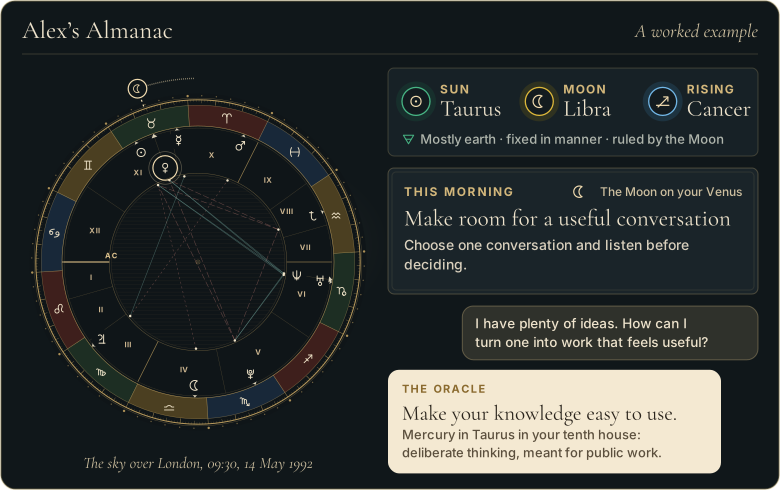
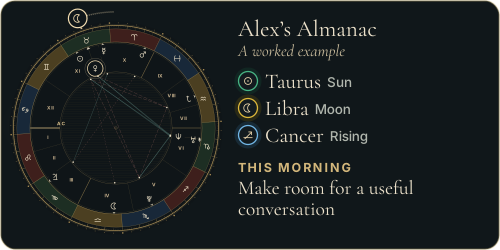
Walk through Alex’s whole example first
 The Road of AgesSee the turning points of your whole life, from your birth date
See your road's shape
The Road of AgesSee the turning points of your whole life, from your birth date
See your road's shape
Prefer to explore first?
 The Road of AgesThe turning points of your whole life, from your own chart
Walk my road
The Road of AgesThe turning points of your whole life, from your own chart
Walk my road
Free, by email
Your daily Almanac letter
One short letter at 7 each morning: the day’s theme read for your own chart, and one thing to do with it.
What the catalogue entry contains
The Andromalius entry follows the Goetia’s compact formula: name, rank, appearance, alleged offices, command of legions, and seal. Common editions place the figure last and describe an earl appearing as a man with a serpent. The attributed powers concern recovering a thief and stolen goods, revealing deceit or concealed wrongdoing, punishing thieves and wicked people, and discovering hidden treasure. Copying the wording accurately matters because modern summaries often turn this mixed catalogue of recovery, exposure, punishment, and treasure into a simplified “demon of justice.” The manuscript does not provide a modern legal or ethical theory.
The significance of being number seventy-two
The familiar Lemegeton Goetia contains seventy-two entries, a number later readers connect with other seventy-two-name systems. Andromalius’s final position makes the figure especially attractive for claims about completion or ultimate judgment, but the short entry itself does not develop those themes. Catalogue order can depend on compilation and manuscript transmission. A numerical parallel is not proof that two traditions identify the same beings. Researchers should compare actual names, functions, textual dependencies, and dates before asserting that the Goetic list is a deliberate inversion of an unrelated angelic list.
How to read the serpent image
Serpents can signify danger, healing, wisdom, deceit, renewal, sovereignty, or simply a frightening attribute across different cultures. In Andromalius’s entry, the serpent is part of a terse visual description and receives no extended explanation. Later artists may interpret it as exposure, cyclical return, venom against criminals, or hidden knowledge. Those readings can be imaginative but should be labeled modern. One cannot establish an ancient cult, planetary rulership, or psychological archetype merely by combining the serpent with generic symbol lists. The image belongs first to this specific manuscript catalogue.
Justice claims, accusation, and safety
Using an occult label to identify a supposed thief can produce false accusations and retaliation. If property is missing, make an inventory, preserve camera footage and messages lawfully, contact insurers or relevant authorities, and avoid confronting someone without evidence. Hidden-treasure claims also attract scams that demand fees or dangerous trespass. Historical interest in Andromalius does not validate divination as forensic proof. A just response requires evidence, due process, proportionate action, and concern for safety, standards the grimoire’s one-paragraph office list cannot provide.
How to study Andromalius as history
The safest and most accurate way to approach Andromalius is as a textual, artistic, or social-history subject. Manuscripts and later printed editions often disagree, while modern websites freely combine material from unrelated periods. Check the date, language, manuscript family, editor, and provenance before repeating a claim. A description in a grimoire records what a text says; it does not establish that the named being or promised effect exists. This article therefore explains vocabulary, transmission, imagery, and reception without providing invocations, seals for use, coercive procedures, or instructions aimed at another person. Anyone experiencing fear, threats, stalking, coercion, or distress should address the observable situation and seek appropriate practical or professional support rather than escalating an occult explanation.
Sources and editorial method
Research and editorial references used for this page include:
- Joseph H. Peterson: Lemegeton, Ars Goetia - Manuscript-based transcription containing the Andromalius entry.
- Project Gutenberg: The Lesser Key of Solomon - Historical printed edition for comparison with later reception.
These references support the factual, historical, textual, or interpretive claims on this page. Interpretive traditions are identified as such, and factual claims are kept separate from symbolic claims.
Related reading
Seek justice without revenge
A definition tells you what it is; your own birth chart tells you what it means for you. The Oracle casts your real chart and answers for your love, your work, and your year ahead, in conversation. It opens with the 7-day Seeker trial.
Speak with the OracleThe Cosmic Codex offers a reflective map of your year, written from your chart, never a prediction. Open the Cosmic Codex
More in Demons & Fallen Beings
From the reference page to your own chart
Every word here
is in your own chart.
- A personal reading about love, work or purpose, written from your chart
- A practical next step to consider
- It opens with 7 days free, with the AI Oracle and daily guidance
$0 today, then $12/month after 7 days. Cancel anytime.
Common questions
Is Andromalius the last Goetic spirit?
Yes, in the familiar seventy-two-entry ordering he is number 72.
Is Andromalius a demon of justice?
That is a modern summary of offices involving thieves and wrongdoing; the text titles him an earl and gives a specific list.
Can occult divination prove who stole something?
No. Accusations require reliable evidence and appropriate investigative procedures.
Free, by email
The Almanac, in your inbox at 7
One short letter at 7 each morning: the day’s theme read for your own chart, and one thing to do with it.
