
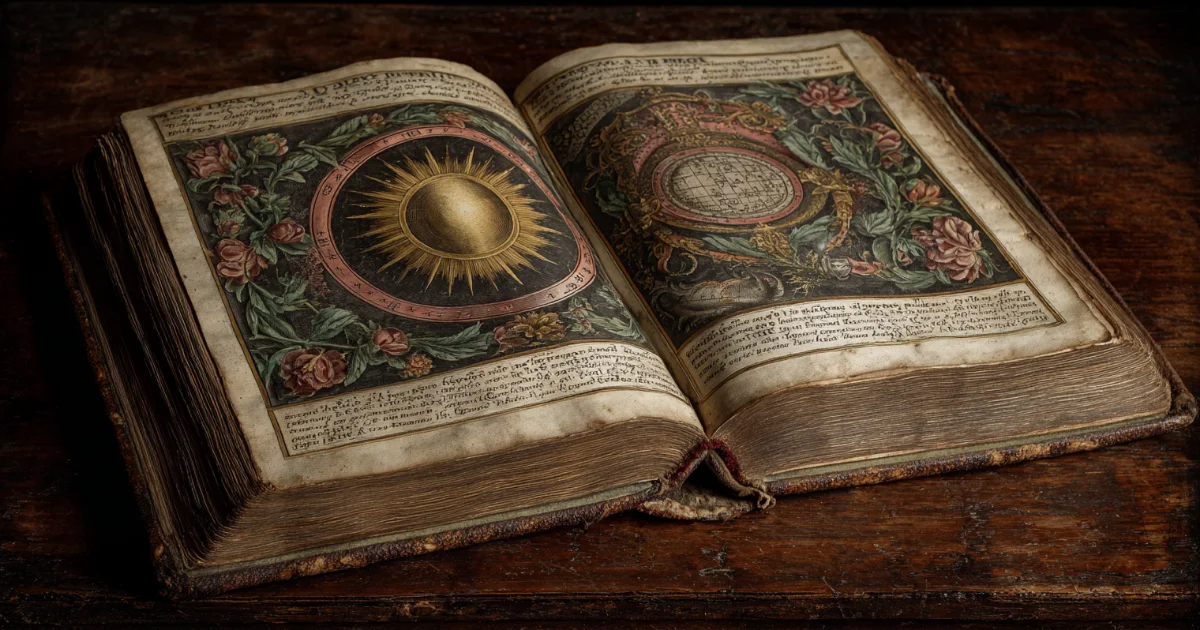
European grimoire history
Goetic Magic
Direct answer
“Goetia” is older than the Lesser Key of Solomon. Greek and later Christian writers used related terms for suspect sorcery, lamentation, or spirit work; the seventeenth-century Ars Goetia is one influential, much later catalogue.
Goetic magic broadly refers to magic involving the invocation or constraint of spirits, but today often means the seventy-two-spirit system in the Ars Goetia of the Lemegeton.
$0 today, then $12/month after 7 days. Cancel anytime.
Quick facts
| Question | Direct answer |
|---|---|
| Modern focal text | The Ars Goetia, first book of the Lemegeton. |
| Catalogue size | Seventy-two spirits in the familiar manuscript ordering. |
| Earlier important source | Johann Weyer’s Pseudomonarchia Daemonum, printed in the sixteenth century. |
| Solomonic authorship? | Legendary and pseudonymous; the surviving English compilation is early modern. |
What does your own chart say about you?
Choose love, work or purpose. Your reading is written from your chart. Your reading uses your own birth details.
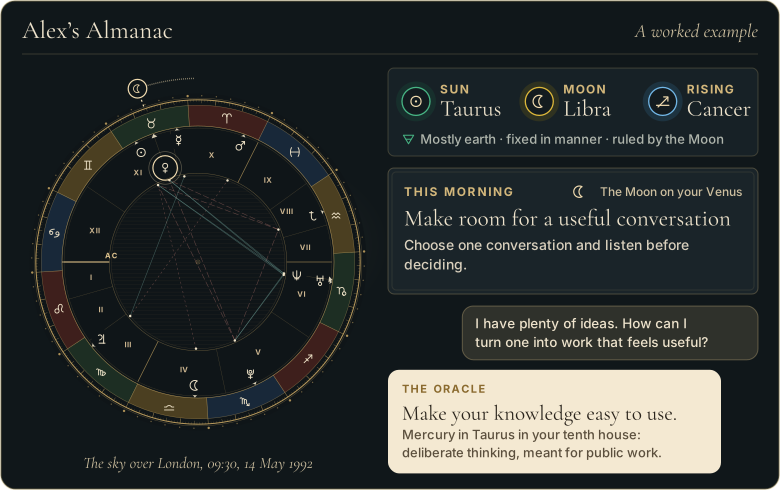
Walk through Alex’s whole example first
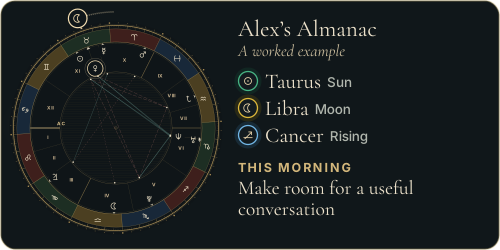
 The Road of AgesSee the turning points of your whole life, from your birth date
See your road's shape
The Road of AgesSee the turning points of your whole life, from your birth date
See your road's shape
Prefer to explore first?
 The Road of AgesThe turning points of your whole life, from your own chart
Walk my road
The Road of AgesThe turning points of your whole life, from your own chart
Walk my road
Free, by email
Your daily Almanac letter
One short letter at 7 each morning: the day’s theme read for your own chart, and one thing to do with it.
The changing meaning of goetia
Ancient Greek terms in the goēs family could denote a ritual specialist, lamenter, enchanter, or socially suspect magician, depending on author and period. Philosophical and Christian classifications later contrasted goetia with theurgia, often assigning the former a lower or illicit status. These categories were polemical as well as descriptive. Consequently, “goetic magic” does not identify one unbroken secret order from antiquity to the present. The word accumulated meanings before early modern compilers used Ars Goetia as the title for a particular spirit catalogue attributed to Solomon.
The Ars Goetia in the Lemegeton
The Ars Goetia is commonly the first of five parts in English Lemegeton manuscripts. It lists seventy-two spirits with ranks, appearances, alleged offices, legions, and seals, framed by material about ritual constraint. The collection was assembled from earlier demonological catalogues and Solomonic magical traditions rather than written by the biblical king. Individual manuscript witnesses differ, and popular printed “Lesser Keys” sometimes contain only this first part. Historical description should identify the witness or editor and should not reproduce operational conjurations or imply that catalogue claims are verified facts.
Weyer, Scot, and the catalogue’s sources
Johann Weyer’s Pseudomonarchia Daemonum appended a spirit list to his critique of witch persecutions and demonic deception. Reginald Scot reproduced English material in The Discoverie of Witchcraft. Lemegeton compilers drew heavily on this stream while adding, removing, renaming, and reorganizing entries and incorporating seals. That genealogy matters: a spirit profile may be older than the Goetia, altered by it, or absent from it altogether. Comparing editions prevents modern fan art, role-playing lore, or personal revelation from being cited as if it appeared in a sixteenth- or seventeenth-century source.
Modern ceremonial, devotional, and fictional receptions
The 1904 Mathers-Crowley edition, later occult orders, contemporary demonolatry, games, music, and online communities transformed Goetic figures in different directions. Some readers treat them psychologically, some as independent spirits, and others entirely as literary or artistic characters. Those positions should not be merged. Historical scholarship can study texts and reception without deciding metaphysical truth. Practical safety also matters: claims that a named spirit demands self-harm, illegal acts, threats, isolation, or large payments are reasons to step back and seek trusted support, not evidence of a successful operation.
How to study Goetic Magic as history
The safest and most accurate way to approach Goetic Magic is as a textual, artistic, or social-history subject. Manuscripts and later printed editions often disagree, while modern websites freely combine material from unrelated periods. Check the date, language, manuscript family, editor, and provenance before repeating a claim. A description in a grimoire records what a text says; it does not establish that the named being or promised effect exists. This article therefore explains vocabulary, transmission, imagery, and reception without providing invocations, seals for use, coercive procedures, or instructions aimed at another person. Anyone experiencing fear, threats, stalking, coercion, or distress should address the observable situation and seek appropriate practical or professional support rather than escalating an occult explanation.
Sources and editorial method
Research and editorial references used for this page include:
- Joseph H. Peterson: Lemegeton - Manuscript-based edition with introduction, witnesses, and textual notes.
- Project Gutenberg: The Lesser Key of Solomon - Public-domain printed edition documenting modern reception.
These references support the factual, historical, textual, or interpretive claims on this page. Interpretive traditions are identified as such, and factual claims are kept separate from symbolic claims.
Related reading
Do not operationalize demon lore
A definition tells you what it is; your own birth chart tells you what it means for you. The Oracle casts your real chart and answers for your love, your work, and your year ahead, in conversation. It opens with the 7-day Seeker trial.
Speak with the OracleYour year, written once from your chart alone: the Cosmic Codex reads the whole of it, month by month. Open the Cosmic Codex
More in Spells & Occult Terms
- Knot Magic
- Necromantic Magic
- Prosperity Spell
- Sorcery
- Thoughtform
- Ars Notoria
- Channeling
- Domination Spell
From the reference page to your own chart
Every word here
is in your own chart.
- A personal reading about love, work or purpose, written from your chart
- A practical next step to consider
- It opens with 7 days free, with the AI Oracle and daily guidance
$0 today, then $12/month after 7 days. Cancel anytime.
Common questions
Is Goetia the whole Lesser Key of Solomon?
No. Ars Goetia is the first part; the Lemegeton commonly contains four additional books or sections.
Are all demons found online Goetic?
No. A Goetic identity should be verified against the actual seventy-two-entry catalogue and its variants.
Did King Solomon write the Ars Goetia?
There is no historical evidence for that attribution; it is part of the text’s legendary authority.
Free, by email
The Almanac, in your inbox at 7
One short letter at 7 each morning: the day’s theme read for your own chart, and one thing to do with it.
