
Grimoire demonology history
Valefor
Direct answer
The Goetia says Valefor gives a good familiar but tempts toward theft, a built-in warning often lost in modern “patron” profiles. This is early modern grimoire literature, not verified evidence of a supernatural being.
Valefor, also printed Malaphar in an earlier catalogue, is the sixth spirit in common Ars Goetia editions, titled a duke and depicted in a composite lion form.
$0 today, then $12/month after 7 days. Cancel anytime.
Quick facts
| Question | Direct answer |
|---|---|
| Catalogue position | Sixth in the familiar Ars Goetia ordering. |
| Rank | Duke. |
| Appearance | A lion with a human or ass-like head, depending on edition and reading. |
| Claimed office and warning | A good familiar paired with temptation toward theft. |
What does your own chart say about you?
Choose love, work or purpose. Your reading is written from your chart. Your reading uses your own birth details.
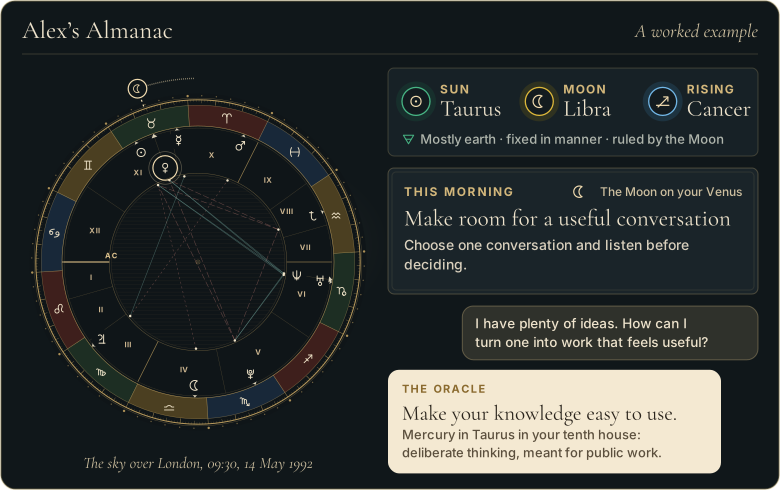
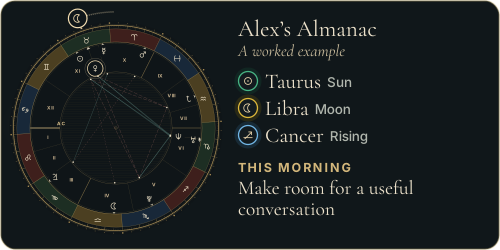
Walk through Alex’s whole example first
 The Road of AgesSee the turning points of your whole life, from your birth date
See your road's shape
The Road of AgesSee the turning points of your whole life, from your birth date
See your road's shape
Prefer to explore first?
 The Road of AgesThe turning points of your whole life, from your own chart
Walk my road
The Road of AgesThe turning points of your whole life, from your own chart
Walk my road
Free, by email
Your daily Almanac letter
One short letter at 7 each morning: the day’s theme read for your own chart, and one thing to do with it.
The short Goetic description
Common Lemegeton editions list Valefor as the sixth spirit and a mighty duke commanding ten legions. The figure appears as a lion with an unusual head whose description varies in transcription. The entry says Valefor can function as a good familiar but tempts the person into stealing. That last clause is essential: it makes the catalogue profile morally ambivalent rather than a straightforward promise of loyalty. Modern summaries that mention only animal symbolism, friendship, or finding valuables remove the warning that distinguishes the entry. Quote an edition rather than reconstructing a personality from a seal alone.
Valefor, Valefar, and Malaphar
Names in demonological catalogues shift through handwriting, copying, translation, and print. Valefor and Valefar are common Lemegeton forms, while Johann Weyer’s Pseudomonarchia Daemonum includes a related Malaphar entry. Comparing order, rank, appearance, and office supports the textual relationship more securely than spelling alone. It does not prove an ancient Near Eastern etymology or cult. Websites frequently invent confident name meanings by matching fragments from Hebrew, Latin, or another language without historical philology. A responsible article records variants and leaves uncertain origins uncertain.
The lion image and later symbolism
The lion can signify royalty, courage, danger, appetite, guardianship, or violence in many traditions. Valefor’s composite form adds strangeness, but the short text does not explain an elaborate symbolic program. Later occult art may link the lion to solar force, nobility, or predation; game and fiction designs add further traits. Those receptions can be catalogued by date and author. They should not be presented as original manuscript doctrine. In particular, a modern planetary, zodiacal, color, incense, or personality attribution needs its own source rather than being retroactively attached to the early modern entry.
Theft, loyalty, and ethical interpretation
The promise of a helpful familiar combined with temptation to steal offers a literary theme: an alliance that appears useful while corroding judgment. That can be discussed without supernatural claims or ritual experimentation. It does not excuse shoplifting, fraud, handling stolen goods, or testing another person’s loyalty. If theft has occurred, use inventories, lawful evidence, account security, insurers, and relevant authorities. Do not accuse someone because of divination or a dream. The catalogue’s warning is not forensic information, and historical curiosity never overrides property rights or public safety.
How to study Valefor in the Ars Goetia as history
The safest and most accurate way to approach Valefor in the Ars Goetia is as a textual, artistic, or social-history subject. Manuscripts and later printed editions often disagree, while modern websites freely combine material from unrelated periods. Check the date, language, manuscript family, editor, and provenance before repeating a claim. A description in a grimoire records what a text says; it does not establish that the named being or promised effect exists. This article therefore explains vocabulary, transmission, imagery, and reception without providing invocations, seals for use, coercive procedures, or instructions aimed at another person. Anyone experiencing fear, threats, stalking, coercion, or distress should address the observable situation and seek appropriate practical or professional support rather than escalating an occult explanation.
Sources and editorial method
Research and editorial references used for this page include:
- Joseph H. Peterson: Lemegeton, Ars Goetia - Manuscript-based transcription containing Valefor and textual notes.
- Johann Weyer: Pseudomonarchia Daemonum - Earlier printed catalogue for comparing the Malaphar entry.
These references support the factual, historical, textual, or interpretive claims on this page. Interpretive traditions are identified as such, and factual claims are kept separate from symbolic claims.
Related reading
Notice corrupting familiarity
A definition tells you what it is; your own birth chart tells you what it means for you. The Oracle casts your real chart and answers for your love, your work, and your year ahead, in conversation. It opens with the 7-day Seeker trial.
Speak with the OracleThe Cosmic Codex offers a reflective map of your year, written from your chart, never a prediction. Open the Cosmic Codex
More in Demons & Fallen Beings
From the reference page to your own chart
Every word here
is in your own chart.
- A personal reading about love, work or purpose, written from your chart
- A practical next step to consider
- It opens with 7 days free, with the AI Oracle and daily guidance
$0 today, then $12/month after 7 days. Cancel anytime.
Common questions
Is Valefor the same as Malaphar?
They are generally treated as related catalogue forms, but spelling and wording should be traced through specific sources.
What number is Valefor in the Goetia?
Sixth in the familiar seventy-two-spirit ordering.
Does Valefor help thieves?
The text associates the figure with a familiar and temptation to theft; it is not evidence or ethical permission for crime.
Free, by email
The Almanac, in your inbox at 7
One short letter at 7 each morning: the day’s theme read for your own chart, and one thing to do with it.
