Reflective timing guide
Spiritual Forecast
Direct answer
Read a forecast as a map of questions and possible weather, not a guarantee. Check the stated period, inputs, and interpretive method; keep only what fits observable circumstances; and make medical, legal, financial, and safety decisions from qualified evidence rather than symbolic prediction.
A spiritual forecast is a time-bounded interpretation of symbolic cycles, current themes, and reflective priorities. Its useful purpose is orientation: noticing what may deserve attention and choosing a proportionate response, not announcing fixed events.
$0 today, then $12/month after 7 days. Cancel anytime.
Quick facts
| Element | What a strong forecast should provide |
|---|---|
| Time frame | A clear day, week, month, or transit window rather than timeless language. |
| Method | Named symbolic inputs such as collective transits, personal chart contacts, seasons, or contemplative themes. |
| Priority | A few ranked themes instead of an overwhelming list that can fit anything. |
| Action | Low-risk reflective choices, with explicit limits around consequential decisions. |
Spiritual Forecast means a bounded preview of themes, timing, and reflective guidance for a day or season.
A process map showing how the named concept fits into the website rather than the private app.
What does your own chart say about you?
Choose love, work or purpose. Your reading is written from your chart. Your reading uses your own birth details.
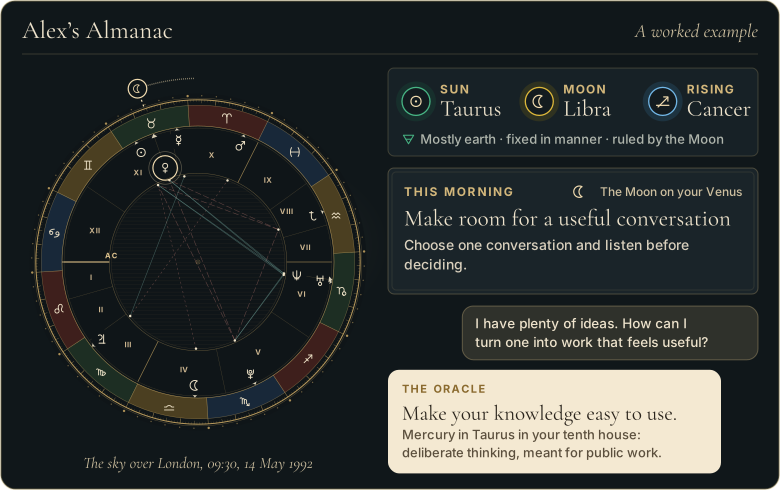
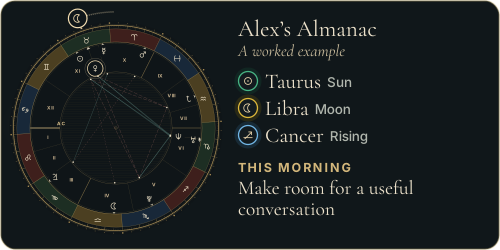
Walk through Alex’s whole example first
 The Road of AgesSee the turning points of your whole life, from your birth date
See your road's shape
The Road of AgesSee the turning points of your whole life, from your birth date
See your road's shape
Prefer to explore first?
 The Road of AgesThe turning points of your whole life, from your own chart
Walk my road
The Road of AgesThe turning points of your whole life, from your own chart
Walk my road
Free, by email
Your daily Almanac letter
One short letter at 7 each morning: the day’s theme read for your own chart, and one thing to do with it.
What a spiritual forecast is, and is not
The phrase covers many formats: an astrological overview, a seasonal reflection, a numerological cycle, a liturgical meditation, or a blended symbolic reading. What makes it a forecast is the defined future or present interval. What makes it spiritual is attention to meaning, values, inner life, relationship, or purpose. Neither word makes it prophecy. A responsible forecast describes likely themes within its chosen symbolic system and leaves room for circumstance, agency, uncertainty, and the reader’s own tradition.
A one-minute story
The Book of the Sky
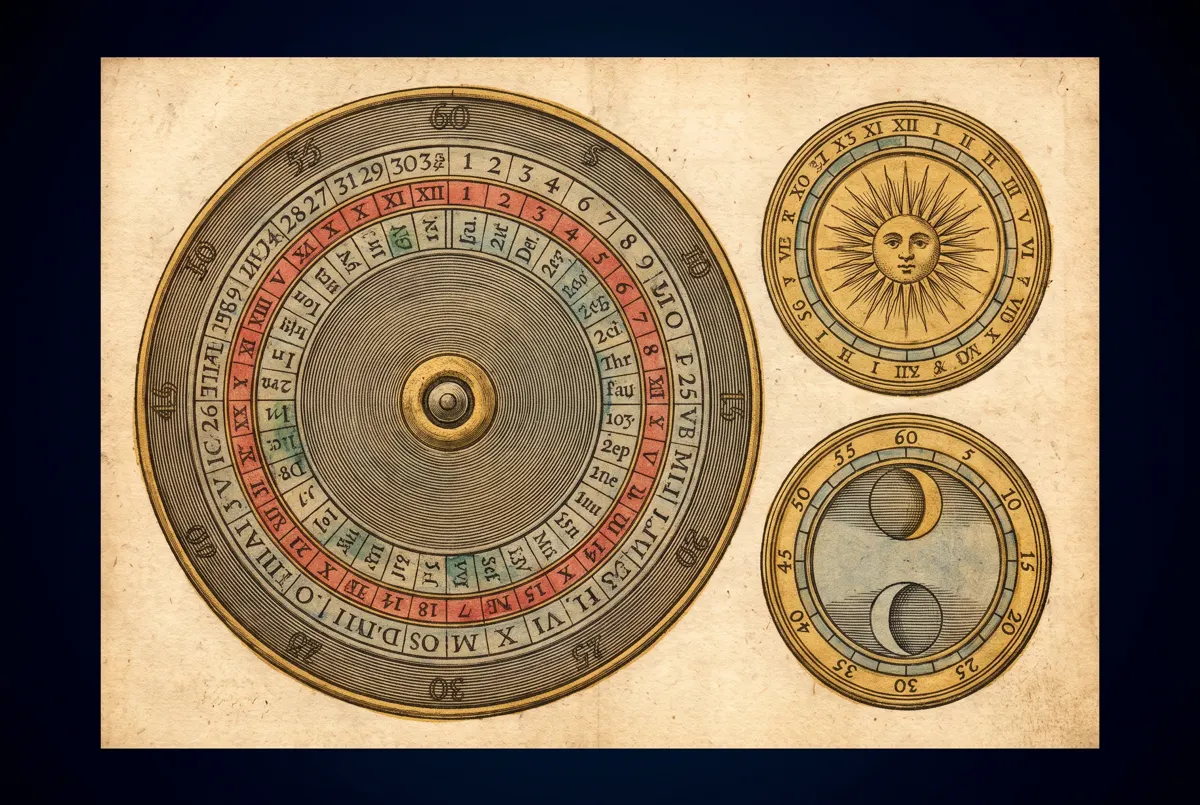
How people learned to read the sky, from Babylon to the day you were born.

Collective weather versus personal timing
A collective forecast uses conditions shared by everyone, such as a season or current planetary pattern. A personal forecast compares those conditions with individual data, for example a reliably timed birth chart. The distinction prevents generic material from pretending to be exact. Even personal symbolism is not unique in every respect: many people share placements, and biography changes expression. If birth time is unknown, angle and house claims should be omitted or clearly marked uncertain rather than filled in as though the data were exact.
Turn themes into questions and small experiments
Translate each theme into a question tied to observable life. “Reassessment” might become: Which commitment has produced new evidence this week? “Boundaries” might become: What request needs a clear yes, no, or deadline? Choose one reversible action, record what happened, and revisit the interpretation at the end of the period. This process protects against hindsight, where any outcome is retroactively made to fit, and keeps broad language from crowding out the actual people, responsibilities, and opportunities in front of you.
How to recognize useful and harmful forecasting
Useful material names its method, dates, uncertainties, and alternatives. Warning signs include guaranteed outcomes, fear-based countdowns, claims that only a paid remedy prevents disaster, diagnosis of illness, or pressure to cut off relationships without evidence. A forecast should not tell someone to stop treatment, gamble, evade legal duties, or ignore immediate danger. Symbolic traditions can support reflection and ritual meaning, but they are not scientifically validated methods of predicting individual events. Good forecasting increases clarity and agency; it does not manufacture dependence on the next message.
Sources and editorial method
Research and editorial references used for this page include:
- American Psychological Association: Confirmation bias - Reference definition for a common reasoning bias relevant to evaluating broad predictions.
- UNESCO: Recommendation on the Ethics of Artificial Intelligence - Framework supporting transparency, human agency, and safeguards when automated interpretation is involved.
These references support the factual, historical, textual, or interpretive claims on this page. Interpretive traditions are identified as such, and factual claims are kept separate from symbolic claims.
Related reading
Read today's spiritual forecast
A definition tells you what it is; your own birth chart tells you what it means for you. The Oracle casts your real chart and answers for your love, your work, and your year ahead, in conversation. It opens with the 7-day Seeker trial.
Speak with the OracleYour year, written once from your chart alone: the Cosmic Codex reads the whole of it, month by month. Open the Cosmic Codex
More in The Great Almanac System
- Almanac Timing
- Chart Memory
- Cosmic Weather
- Full Dashboard
- Membership Change Credit
- Oracle Membership
- Plan Upgrade
- Reading Snapshot
From the reference page to your own chart
Every word here
is in your own chart.
- A personal reading about love, work or purpose, written from your chart
- A practical next step to consider
- It opens with 7 days free, with the AI Oracle and daily guidance
$0 today, then $12/month after 7 days. Cancel anytime.
Common questions
Is a spiritual forecast the same as fortune-telling?
Not necessarily. It can be framed as reflective interpretation of a defined period. Claims of certain future events go beyond that bounded use.
Does a personal forecast require an exact birth time?
Accurate time is important for houses, angles, and fast-moving chart features. Date-only work can still discuss some placements if its limits are clearly stated.
How often should I read a forecast?
Choose an interval that allows observation (often weekly or monthly) and review outcomes before seeking another. Constant checking can increase anxiety and confirmation bias.
Free, by email
The Almanac, in your inbox at 7
One short letter at 7 each morning: the day’s theme read for your own chart, and one thing to do with it.
