

The inner life
Second Sight
Direct answer
Second Sight: Second sight is the name, from the Scottish Highlands and Islands, for an unsought power of seeing visions of distant or coming events, most often a death, in the midst of waking life.
$0 today, then $19/month after 7 days. Cancel anytime.
At a glance
- Also called
- the sight, an da shealladh
- Found in
- Consciousness & Spiritual Psychology
- Related
- Clairvoyance, Precognition, Premonition, Omen
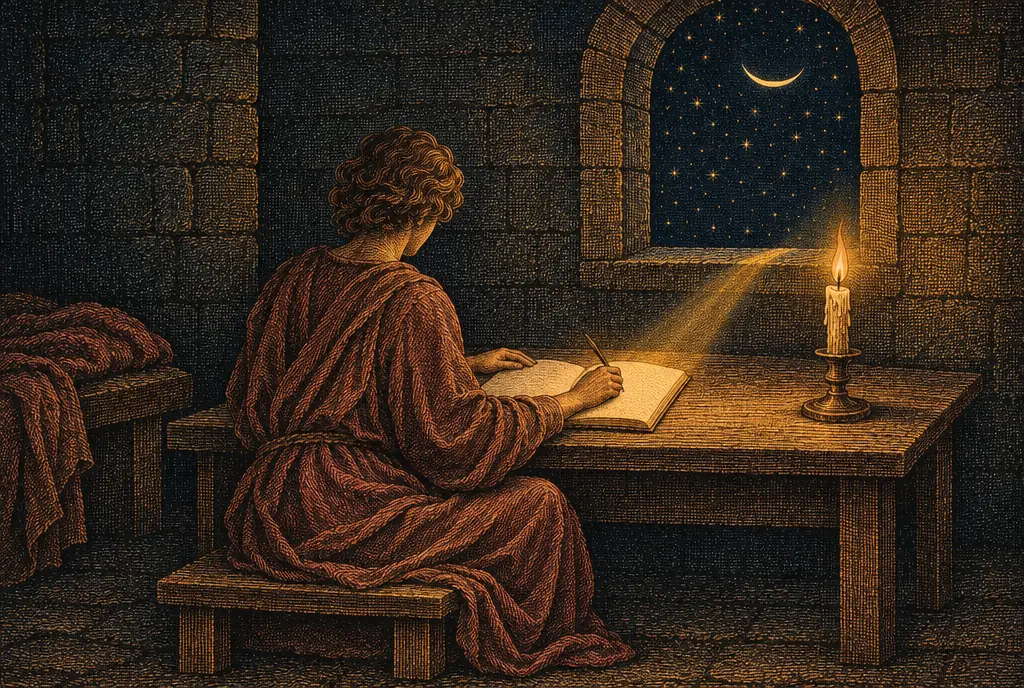
Second sight is the name, from the Scottish Highlands and Islands, for an unsought power of seeing visions of distant or coming events, most often a death, in the midst of waking life.
A plain educational schematic; it does not diagnose a condition or replace professional care.
Understand the chapter you are in.
Your life’s turning points, measured from your birth.
Walk through Alex’s whole example first


Prefer to explore first?
 The Road of AgesThe turning points of your whole life, from your own chart
Walk my road
What is second sight?
In Gaelic it is the two sights: the ordinary one, and another that shows what is not there to be seen. In the tradition of the Highlands and Western Isles the seer does not seek the vision and cannot call it up. It comes unbidden, often as a funeral procession on a road, a shroud about a living neighbour, or the form of someone who is elsewhere. The higher the shroud is seen on the body, it was said, the nearer the death.
The accounts agree that the sight was thought a burden. Seers were pitied more than envied, and some were said to have asked to be rid of it. The phrase has since widened in everyday English to mean any claimed gift of foreseeing, and that looser sense has lost most of what the Highland accounts describe.
On the tree of the hidden arts: The sixth sense.
What sets Second Sight apart
The Highland accounts give second sight features that set it apart from later psychic claims. It is involuntary, it is visual, and its subject is nearly always death or misfortune in the seer's own district. It carried a body of lore for reading the visions, such as the height of the shroud, and the accounts disagree on whether it ran in families. The seers they describe took no fee for it.
- Gaelic name: an da shealladh, the two sights
- Home ground: the Highlands and Western Isles of Scotland
- Typical vision: a shroud on a living person, or a funeral passing on the road
- Early account: Robert Kirk, The Secret Commonwealth, written in 1691
- Fullest account: Martin Martin, Description of the Western Islands, 1703
- Famous enquirer: Samuel Johnson, on his tour of 1773
Often mistaken for something else: A fortune teller offers readings on request and for payment; the Highland seer was held to see unasked, unpaid and usually unwilling.
The story behind Second Sight
Robert Kirk, minister of Aberfoyle, described it in The Secret Commonwealth, written in 1691 and first printed in 1815. Martin Martin gave a long account in his Description of the Western Islands of Scotland in 1703. Samuel Johnson asked about it throughout his tour of 1773 and wrote that he came away willing to believe but not convinced. An enquiry in the Highlands for the Society for Psychical Research in the 1890s reached no firm conclusion.
Why Second Sight matters
Second Sight is one of the best recorded folk traditions of foreseeing, described by named witnesses over three centuries, and a model for later ideas of the seer.
How to read Second Sight
Folklorists use the term for the Gaelic tradition; in everyday speech it stands for any knack of sensing what is hidden or to come.
Second Sight in practice: an example
In the accounts Martin gathered, a seer sees a shroud wrapped about a living neighbour, and the company takes it as a sign of a death to come.
Where readings of Second Sight go wrong
The old accounts are reports of belief gathered at second hand, and none was tested by recording a vision before the event.
Sources and editorial method
This entry summarizes the tradition in the Almanac's own words; where no source is listed, it is an editorial summary rather than a primary text, and symbolic readings are named as the tradition's, not as fact.
The Oracle tells what has been claimed for telepathy and second sight, what was tested, and what held: small effects have been reported and have not been reliably repeated.
- Source
- The Great Almanac Dictionary
- Category
- Consciousness & Spiritual Psychology
- Aliases
- second sight meaning, second sight scotland, the sight, an da shealladh, highland second sight
- Last updated
- 2026-09-26
See Second Sight in your personal almanac
A definition tells you what it is; your own birth chart tells you what it means for you. The Oracle casts your real chart and answers for your love, your work, and your year ahead, in conversation. It opens with the 7-day Oracle trial.
Speak with the OracleRelated terms
More in Consciousness & Spiritual Psychology
From the reference page to your own chart
Every word here
is in your own chart.
- Your life’s turning points, measured from your birth
- A practical next step to consider
- It opens with 7 days free: the AI Oracle on thirty hidden arts, and your daily horoscope
$0 today, then $19/month after 7 days. Cancel anytime.
Common questions
What is second sight?
It is a traditional Scottish term for seeing visions of events that are distant or yet to come, especially deaths. In the Highland tradition it arrives uninvited, in full waking, and the seer has no control over it.
Where does the term second sight come from?
It translates a Gaelic phrase meaning the two sights. English readers met it through accounts of the Highlands and Western Isles written from the 1690s onward, above all those of Robert Kirk and Martin Martin.
Is second sight the same as clairvoyance?
They overlap. Clairvoyance is a nineteenth-century word for seeing hidden or distant things, used of mesmerised subjects and later in research. Second sight is the older folk tradition, concerned mostly with spontaneous visions of death.


