
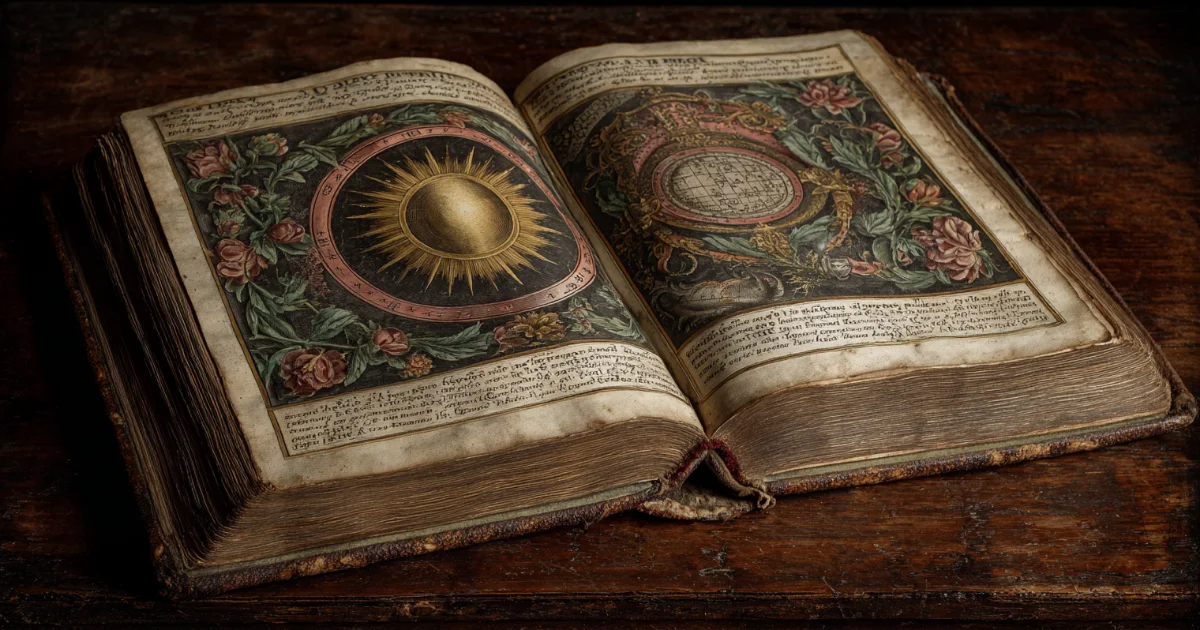
Spiritualism and automatic writing
Psychography
Direct answer
The term describes an interpretation of how writing was produced, not proof of a supernatural author. To evaluate a case, preserve the original document, observe conditions, compare handwriting and sources, record information available to participants, and consider conscious, unconscious, and fraudulent explanations.
Psychography most often refers to writing attributed to a spirit through a medium, especially in Spiritist and Spiritualist contexts. Some writers use it broadly for automatic writing, while others distinguish hand-produced text from alleged direct writing without contact.
Quick facts
| Term | Common distinction |
|---|---|
| Automatic writing | Text produced with a feeling of reduced conscious control, with no necessary spirit claim. |
| Psychography | Writing interpreted as transmitted by a spirit through or around a medium. |
| Direct writing | Alleged writing produced without the medium’s hand making the marks. |
| Inspired writing | Ordinary-feeling composition attributed religiously or artistically to inspiration. |
What does your own chart say about you?
Choose love, work or purpose for a personal insight and a useful next step. Your reading uses your own birth details.
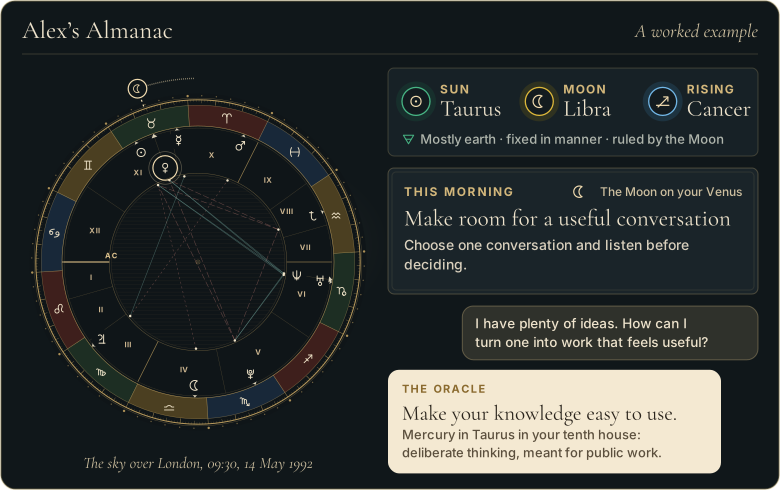
Walk through Alex’s whole example first
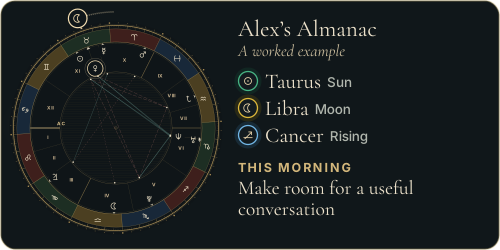
 The Road of AgesSee the turning points of your whole life, from your birth date
Free first look
The Road of AgesSee the turning points of your whole life, from your birth date
Free first look
Prefer to explore first?
 The Road of AgesThe turning points of your whole life, from your own chart
Walk my road
The Road of AgesThe turning points of your whole life, from your own chart
Walk my road
Why psychography has more than one definition
Nineteenth- and twentieth-century Spiritualist, Spiritist, occult, psychological, and psychical-research vocabularies overlap without matching perfectly. In Kardecist Spiritism, psychography is strongly associated with mediumistic writing attributed to discarnate communicators. English sources may use automatic writing for similar sessions, while psychologists can discuss automaticity or dissociation without accepting a spirit explanation. “Direct” psychography or direct writing makes the stronger claim that marks appear without normal hand contact. Any case report should specify which mechanism is being alleged.
From Spiritualist séance to psychological study
Automatic writing became prominent during the growth of modern Spiritualism, when séances, planchettes, table phenomena, and trance speech attracted both believers and investigators. Researchers collected scripts, tested mediums, and debated unconscious muscular action, secondary personality, cryptomnesia, telepathy, deception, and survival after death. Surrealists later used automatic writing as an artistic strategy, changing its aim again. These histories show why one visible behavior (writing with reduced deliberation) can receive religious, experimental, clinical, or creative interpretations depending on setting.
Evidence needed for an authorship claim
A persuasive investigation documents continuous custody of the paper, camera coverage, lighting, access, prior knowledge, handwriting, language ability, and all information fed back by sitters. Apparently unknown facts must be specific, verified independently, and shown unavailable through ordinary research or cueing. General consolation and period-style prose are not identity proof. Source comparison can reveal quotation, paraphrase, or cryptomnesia. Controls should be established before the session; tightening conditions only after a striking result makes selective reporting difficult to rule out. Negative and failed trials belong in the record alongside the memorable hits.
Mental-health and consent boundaries
This reference does not teach induction or séance procedures. Writing that feels involuntary can occur in creative absorption, ideomotor activity, dissociation, sleep deprivation, substance effects, neurological conditions, or distress. It is not automatically illness, but messages commanding harm, creating terror, disrupting sleep, or displacing daily control require prompt professional support. Do not use attributed messages to pressure bereaved people, make decisions for a deceased person’s family, accuse someone of wrongdoing, or replace medical and legal evidence. Private writings should be shared only with consent.
Sources and editorial method
Research and editorial references used for this page include:
- University of Toronto: Automatic Writing, Automatic Speaking - Library exhibition placing automatic writing within psychical research history.
- Society for Psychical Research: Our history - Institutional history of organized investigation into mediumship and related claims.
These references support the factual, historical, textual, or interpretive claims on this page. Interpretive traditions are identified as such, and factual claims are kept separate from symbolic claims.
Related reading
See it in your own chart
A definition tells you what it is; your own birth chart tells you what it means for you. The Oracle casts your real chart and answers for your love, your work, and your year ahead, in conversation, free.
Speak with the OracleYour year, written once from your chart alone: the Cosmic Codex reads the whole of it, month by month. Open the Cosmic Codex
More in Spells & Occult Terms
From the reference page to your own chart
Every word here
is in your own chart.
- Your chart and numbers, read for you in about a minute
- Ask the Oracle anything about them
- Every personal tool and daily guidance
Free reading, no card needed. Optional membership: payment details required, 7 days free, then $12/month. Cancel before it renews and you pay nothing.
Common questions
Is psychography the same as automatic writing?
They overlap, but psychography usually includes a spirit-authorship interpretation. Automatic writing can be studied psychologically or used artistically without that claim.
Does unfamiliar handwriting prove a spirit wrote the text?
No. People can vary their handwriting consciously or unconsciously. Authorship requires stronger controls, source checks, and independent evidence.
Is psychography scientifically accepted as contact with the dead?
No scientific consensus establishes spirit authorship. Historical researchers have proposed and tested multiple normal and paranormal explanations.