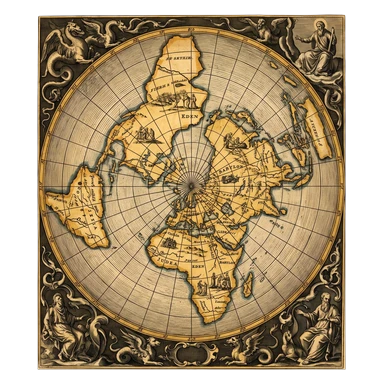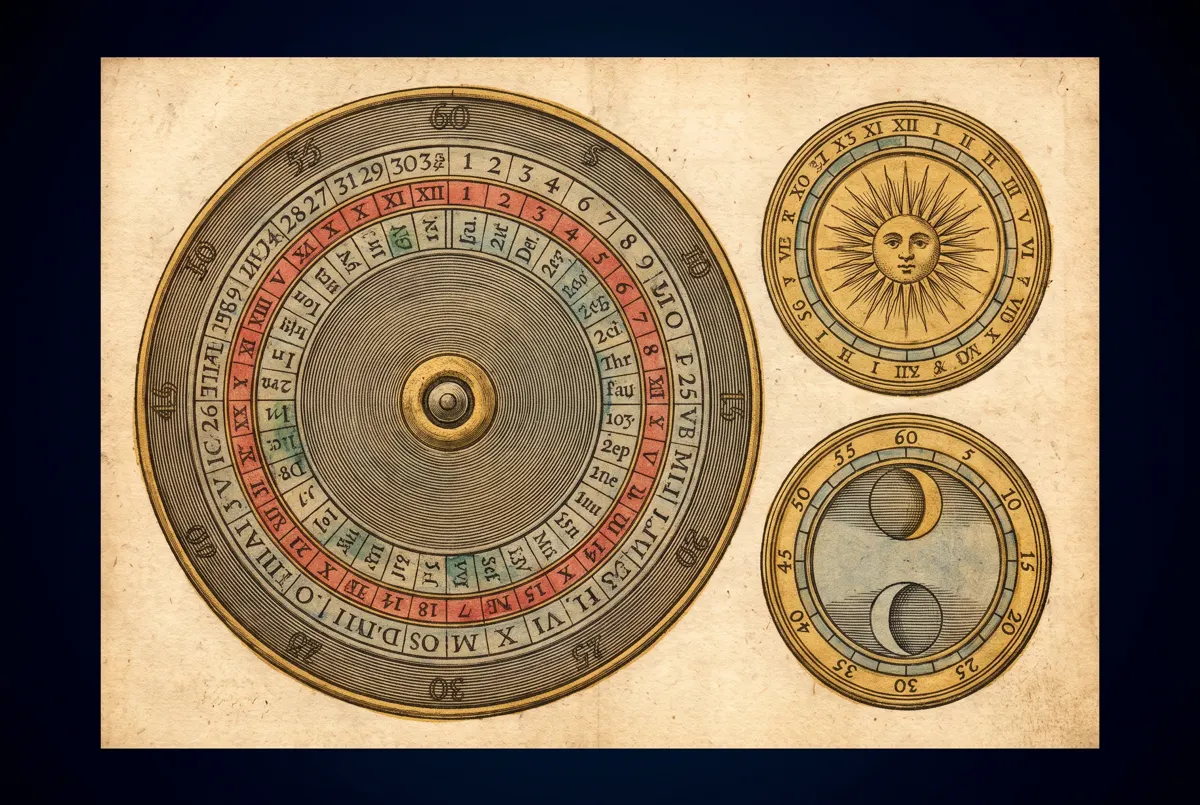
The Almanac system
Personal Almanac
Direct answer
Personal Almanac: A Personal Almanac is The Great Almanac's user-specific daily timing map, built from birth data, current sky movement, numerology, saved context, and reflective AI guidance.
A Personal Almanac is a customized daily timing system for one user's chart, cycles, and questions.
$0 today, then $12/month after 7 days. Cancel anytime.
At a glance
- Also called
- personalized almanac, daily almanac, private timing map
- Found in
- The Great Almanac System
- Related
- Oracle, Birth Chart, Transit, Discernment
Deeper Almanac guide: Daily Almanac guide. This dictionary entry is a concise definition page; the linked guide remains the long-form topic page.
A Personal Almanac is a customized daily timing system for one user's chart, cycles, and questions.
A process map showing how the named concept fits into the website rather than the private app.
What does your own chart say about you?
Choose love, work or purpose. Your reading is written from your chart. Your reading uses your own birth details.
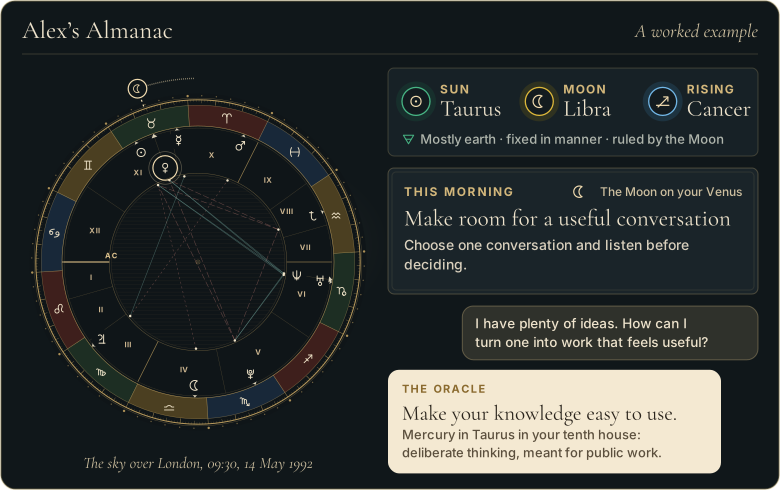
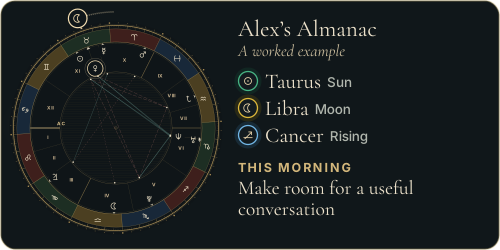
Walk through Alex’s whole example first
 The Road of AgesSee the turning points of your whole life, from your birth date
See your road's shape
The Road of AgesSee the turning points of your whole life, from your birth date
See your road's shape
Prefer to explore first?
 The Road of AgesThe turning points of your whole life, from your own chart
Walk my road
The Road of AgesThe turning points of your whole life, from your own chart
Walk my road
Free, by email
Your daily Almanac letter
One short letter at 7 each morning: the day’s theme read for your own chart, and one thing to do with it.
The story behind Personal Almanac
Traditional almanacs organized calendars, sky events, seasons, and practical timing.
A one-minute story
The Book of the Sky
How people learned to read the sky, from Babylon to the day you were born.

Personal Almanac in numerology
Personal Almanac may incorporate life path and personal cycles as secondary timing lenses.
Where readings of Personal Almanac go wrong
It is a mistake to treat the Personal Almanac as prophecy, professional advice, or a command system.
Sources and editorial method
This entry summarizes the tradition in the Almanac's own words; where no source is listed, it is an editorial summary rather than a primary text, and symbolic readings are named as the tradition's, not as fact.
A Personal Almanac is reflective and educational. It does not replace professional, pastoral, or emergency support.
- Source
- The Great Almanac Dictionary
- Category
- The Great Almanac System
- Aliases
- personalized almanac, daily almanac, private timing map
- Last updated
- 2026-09-26
Open your personal almanac
A definition tells you what it is; your own birth chart tells you what it means for you. The Oracle casts your real chart and answers for your love, your work, and your year ahead, in conversation. It opens with the 7-day Seeker trial.
Speak with the OracleYour year, written once from your chart alone: the Cosmic Codex reads the whole of it, month by month. Open the Cosmic Codex
Related terms
More in The Great Almanac System
- Purchase Status Recovery
- Skymap
- Account Creation Gate
- Birth Chart Reading
- Complete Almanac Access
- Dashboard Unlock
- Life Path Dashboard
- Numerology Dashboard
From the reference page to your own chart
Every word here
is in your own chart.
- A personal reading about love, work or purpose, written from your chart
- A practical next step to consider
- It opens with 7 days free, with the AI Oracle and daily guidance
$0 today, then $12/month after 7 days. Cancel anytime.
Common questions
What is a Personal Almanac?
A Personal Almanac is The Great Almanac's user-specific daily timing map, built from birth data, current sky movement, numerology, saved context, and reflective AI guidance.
Where does a Personal Almanac come from?
Traditional almanacs organized calendars, sky events, seasons, and practical timing.
What do people get wrong about a Personal Almanac?
It is a mistake to treat the Personal Almanac as prophecy, professional advice, or a command system.
Free, by email
The Almanac, in your inbox at 7
One short letter at 7 each morning: the day’s theme read for your own chart, and one thing to do with it.