Dictionary term
Mini Reading Funnel
Direct answer
Mini Reading Funnel is the conversion path from free mini-reading into paid access.
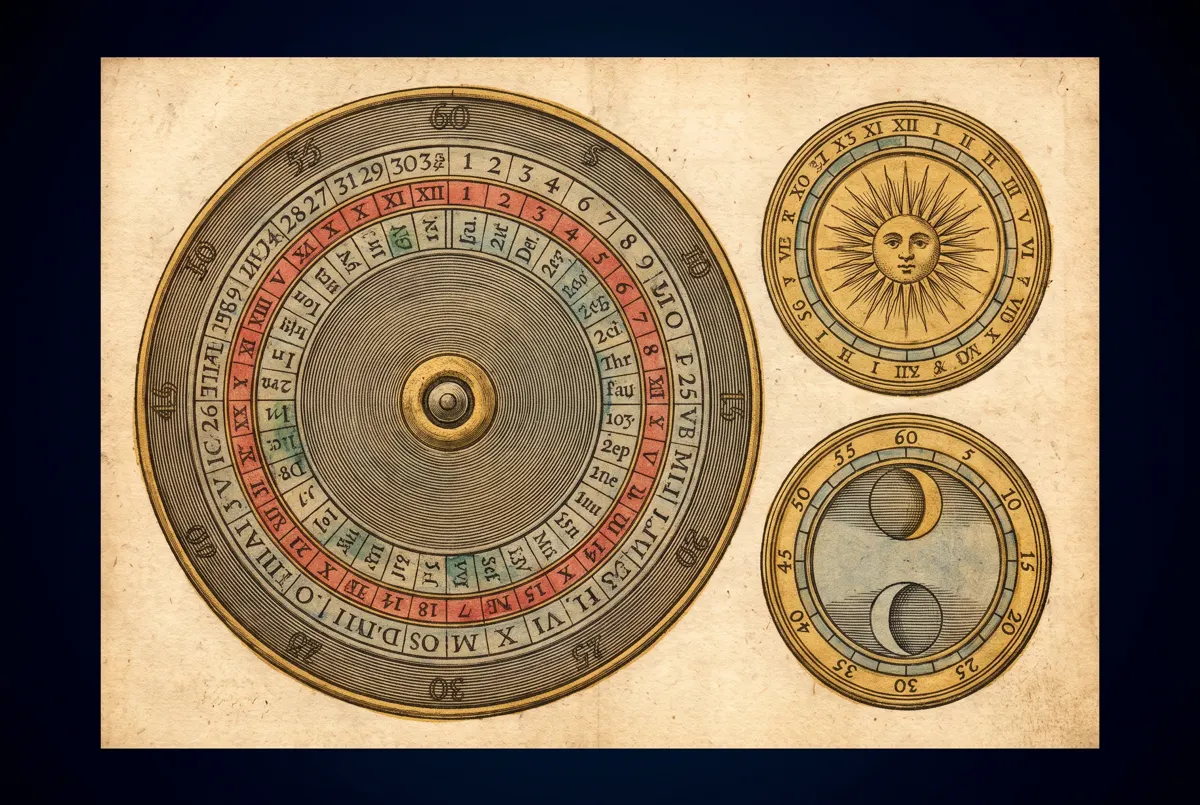
Mini Reading Funnel means the conversion path from free mini-reading into paid access.
A process map showing how the named concept fits into the website rather than the private app.Quick reference
- Use when
- Use Mini Reading Funnel as a reference point for The Great Almanac product language, dashboard conversion, plan value, checkout clarity, and account-linked reading context.
- Do not use it for
- Do not bury the paid offer before the user understands the preview.
- Reference category
- The Great Almanac System
- Related terms
- Personal Almanac, Transit, Birth Chart, Discernment
The Instruments
Ten readings, worked out from your own birth chart
An instrument is a reading this house works out for you. Give your birth date, time and place once, and each one reads today’s real sky against the chart you were born under. Eight are personal; two are calendars anyone can open. A free account opens one instrument a day. The plans open every instrument, every day.
- Natal Chart Every planet, house and aspect in your chart
- Active Transits Where the planets are now, read against your chart
- Daily Counsel What to pursue today, and what to leave alone
- Personal Timing Your best days to decide, weeks ahead
- Fellowship Your chart and another, read side by side
- Theme of the Day The one thing today is asking of you
- Sacred Numbers Your life path, your cycles, your name in numbers
- Aeolian Harmonics Classical music chosen to match your chart
- Mercury Retrograde Every Mercury retrograde this year, with its dates Open to all
- Void-of-Course Moon When the Moon is between signs, hour by hour Open to all





The story behind Mini Reading Funnel
This term is The Great Almanac product vocabulary, adapting almanac, astrology, numerology, and spiritual-reference ideas into a modern dashboard flow.
Why Mini Reading Funnel matters
Mini Reading Funnel matters because it must show enough value to motivate the next step without blocking completion.
Mini Reading Funnel at work: an example
Mini Reading Funnel would make a product boundary, benefit, or next step easier to understand. Strong copy should show what changes for the user immediately.
Sources and editorial method
This concise reference separates established definitions from historical, symbolic, or interpretive claims. Entries without external references are presented as editorial summaries rather than primary-source scholarship.
- Source
- The Great Almanac Dictionary
- Category
- The Great Almanac System
- Also appears in
- The Great Almanac System
- Aliases
- None listed
- Last updated
- 2026-07-15
Unlock the next step
Mini Reading Funnel in a book is one thing; Mini Reading Funnel in your own birth chart is your life. The Oracle casts your real chart and tells you what it means for your love, your work, and your year ahead, in conversation, free.
Speak with the OracleYour year, written once from your chart alone: the Cosmic Codex reads the whole of it, month by month. Open the Cosmic Codex
Related terms
More in The Great Almanac System
- Oracle Reading
- Planetary Weather
- Sacred Numbers Dashboard
- Unlock Prompt
- Astro-Numerology
- Clear Renewal Terms
- Daily Transit Cards
- Heavenly Pattern
Common questions
What is Mini Reading Funnel?
Mini Reading Funnel is the conversion path from free mini-reading into paid access.
How is Mini Reading Funnel used in The Great Almanac?
Use Mini Reading Funnel as a reference point for The Great Almanac product language, dashboard conversion, plan value, checkout clarity, and account-linked reading context.
What should I avoid when interpreting Mini Reading Funnel?
Do not bury the paid offer before the user understands the preview.