

The inner life
Memento Mori
Direct answer
Memento Mori: Memento mori is Latin for remember that you die: a reminder of mortality, and the name for objects and images, such as skulls and hourglasses, made to carry it.
$0 today, then $19/month after 7 days. Cancel anytime.
At a glance
- Also called
- remember you must die, vanitas, remember death
- Found in
- Consciousness & Spiritual Psychology
- Related
- Ars Moriendi, Terminal Lucidity, Near-Death Experience
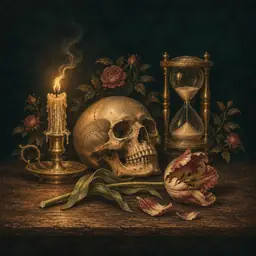
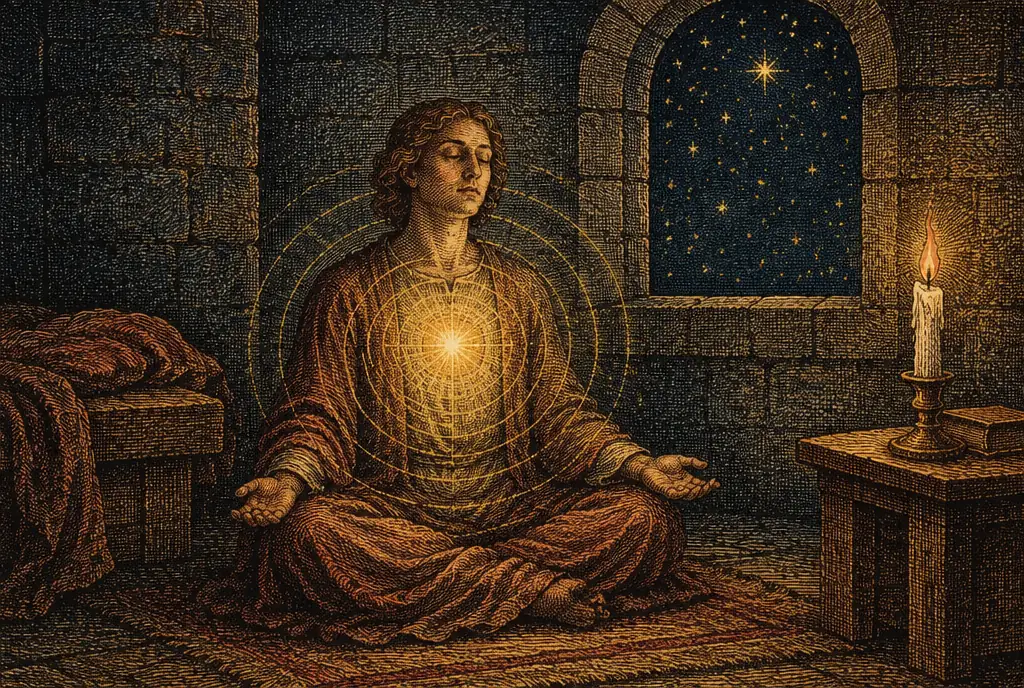
Memento mori is Latin for remember that you die: a reminder of mortality, and the name for objects and images, such as skulls and hourglasses, made to carry it.
A plain educational schematic; it does not diagnose a condition or replace professional care.
Understand the chapter you are in.
Your life’s turning points, measured from your birth.
Walk through Alex’s whole example first


Prefer to explore first?
 The Road of AgesThe turning points of your whole life, from your own chart
Walk my road
What does memento mori mean?
Memento mori is a reminder that life ends, kept in order to live it better. The Stoic philosophers recommended thinking of death daily: Seneca and Marcus Aurelius both wrote that a person who keeps the end in view wastes less time and fears less. Christian teachers took up the practice with a different aim, to turn the mind from passing things.
The phrase also names a kind of art. Medieval churches painted the dance of death, in which skeletons lead off the pope, the king and the ploughman alike. Dutch painters of the seventeenth century made the vanitas still life, with its skull, snuffed candle, watch and fading flowers. Rings, watches and tombs carried the same signs.
On the tree of the hidden arts: Death and what follows.
What sets Memento Mori apart
Memento mori works by keeping something small in view. It asks for no belief and offers no account of what follows death; its whole content is that time is short. That is why Stoics and Christians could share it while disagreeing about everything after. Its imagery is a fixed vocabulary, skull, hourglass, candle, flower, bubble, each showing time running out in a different way.
- Latin: remember that you die; often given as remember that you must die
- Stoic sources: Seneca, Letters; Marcus Aurelius, Meditations
- Medieval form: the dance of death, fifteenth century
- Painted form: the vanitas still life, Netherlands, seventeenth century
- Common signs: skull, hourglass, snuffed candle, cut flowers
The story behind Memento Mori
A story from the early Christian writer Tertullian, about 197 CE, tells of a Roman general in his triumph being reminded that he was only a man; the Latin phrase itself is later and became common in the Middle Ages. The dance of death appears in the fifteenth century after the plague, and the vanitas painting flourished at Leiden from the 1620s.
Why Memento Mori matters
Memento Mori turns the fact of death from a dread kept out of sight into a measure for deciding what is worth a day.
How to read Memento Mori
People keep an object or a line in view as a daily prompt, and art historians use the term for the imagery of skulls, hourglasses and candles.
Memento Mori in practice: an example
A woman keeps the stopped pocket watch of her grandfather on her desk, and says that it makes her leave work on time.
Where readings of Memento Mori go wrong
Memento Mori is meant to sharpen living, not to darken it. Anyone whose thoughts of death turn toward wishing for it should talk to a doctor at once.
Sources and editorial method
This entry summarizes the tradition in the Almanac's own words; where no source is listed, it is an editorial summary rather than a primary text, and symbolic readings are named as the tradition's, not as fact.
- Source
- The Great Almanac Dictionary
- Category
- Consciousness & Spiritual Psychology
- Aliases
- remember you must die, memento mori meaning, vanitas, remember death
- Last updated
- 2026-09-26
See Memento Mori in your personal almanac
A definition tells you what it is; your own birth chart tells you what it means for you. The Oracle casts your real chart and answers for your love, your work, and your year ahead, in conversation. It opens with the 7-day Oracle trial.
Speak with the OracleRelated terms
More in Consciousness & Spiritual Psychology
- Presence
- Self-Fulfilling Prophecy
- Spiritual Gift
- Vision Board
- Awakening
- Contemplative Awareness
- Exploding Head Syndrome
- Ideomotor Effect
From the reference page to your own chart
Every word here
is in your own chart.
- Your life’s turning points, measured from your birth
- A practical next step to consider
- It opens with 7 days free: the AI Oracle on thirty hidden arts, and your daily horoscope
$0 today, then $19/month after 7 days. Cancel anytime.
Common questions
What does memento mori mean?
It is Latin for remember that you die, often given as remember that you must die. It is a reminder of mortality meant to help a person live with more care.
Where does memento mori come from?
The practice is ancient: Stoic philosophers advised thinking of death each day. The Latin phrase became common in medieval Christianity, and the imagery spread after the plague of the fourteenth century.
What is a memento mori in art?
It is an image or object that recalls death: a skull, an hourglass, a snuffed candle, wilting flowers. The vanitas still lifes of seventeenth-century Dutch painting are the best known.


