
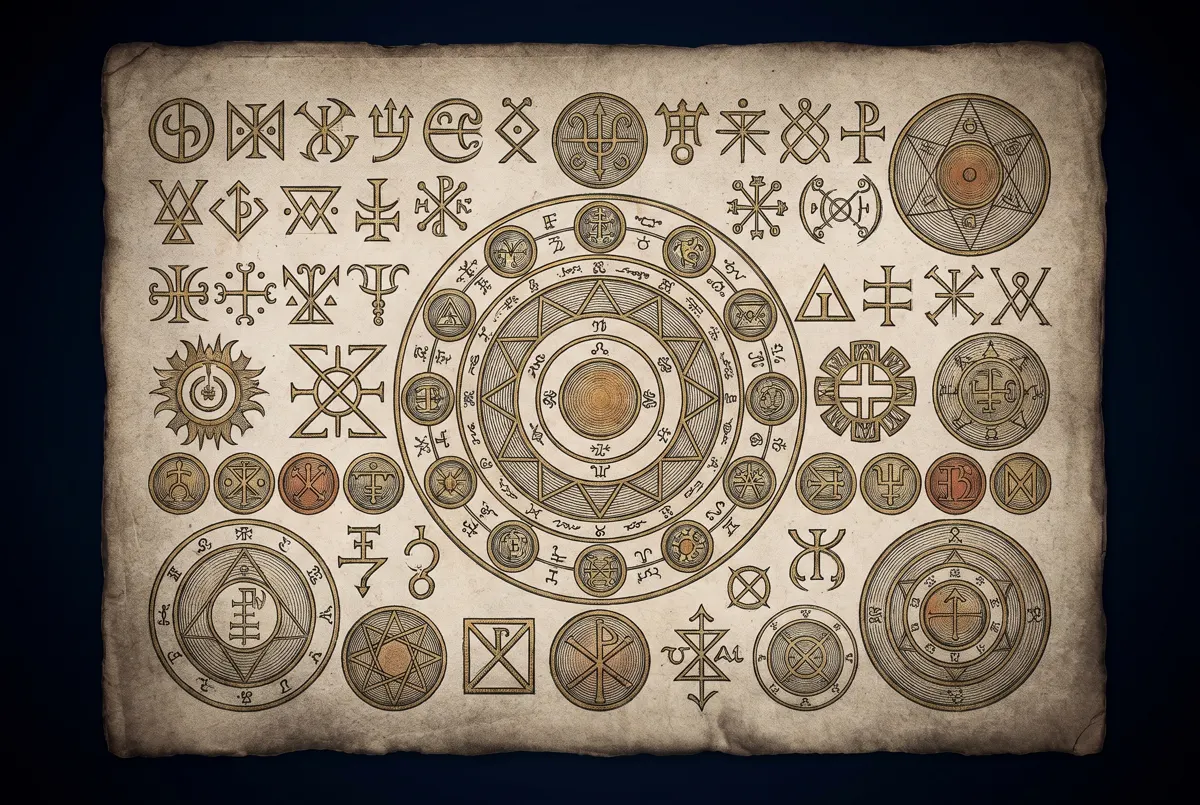
Comparative symbol history
Door Symbol
Direct answer
A door’s meaning depends on who may open it, what lies on each side, and whether it is open, closed, locked, guarded, broken, or crossed. There is no universal message attached to every door image or dream.
A door symbolizes controlled passage between spaces, making it a recurring image for opportunity, initiation, boundary, welcome, secrecy, death, and transformation.
Quick facts
| Question | Direct answer |
|---|---|
| Basic symbolic structure | A boundary with a possible point of passage. |
| Open door | May suggest access, invitation, vulnerability, or escape depending on context. |
| Closed door | May suggest privacy, protection, exclusion, delay, or mystery. |
| Threshold | A liminal zone where status or setting changes. |
Door Symbol means a symbol of threshold, access, invitation, or boundary.
A conceptual orientation, not an exact historical reproduction of every mark or seal.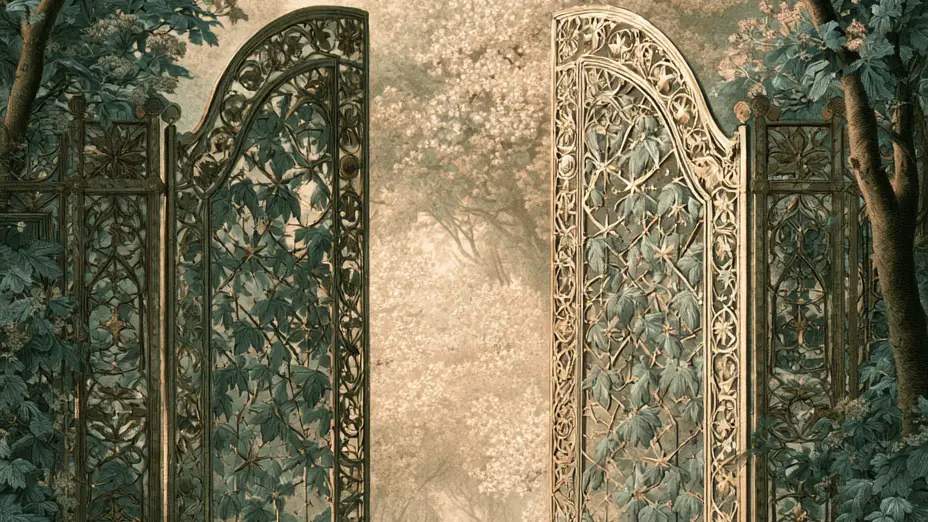
What does your own chart say about you?
Choose love, work or purpose for a personal insight and a useful next step. Your reading uses your own birth details.
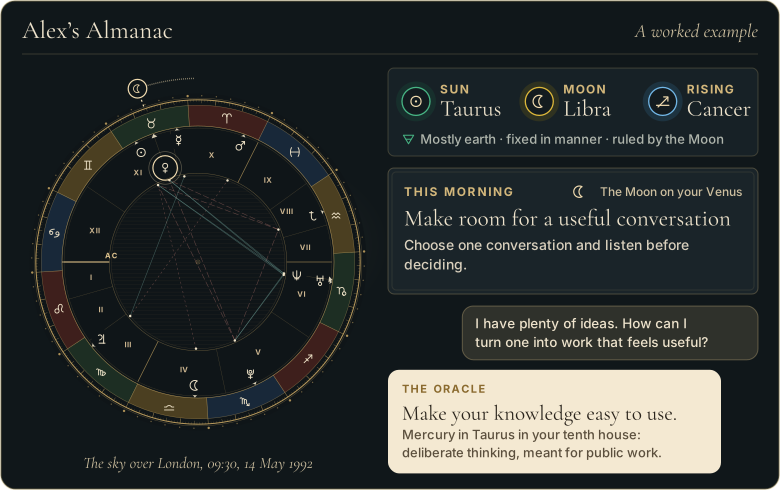
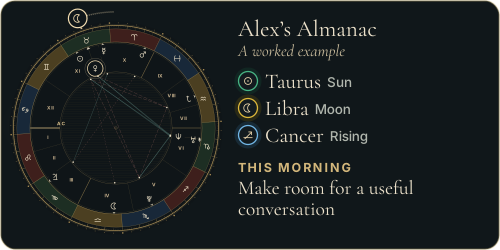
Walk through Alex’s whole example first
 The Road of AgesSee the turning points of your whole life, from your birth date
Free first look
The Road of AgesSee the turning points of your whole life, from your birth date
Free first look
Prefer to explore first?
 The Road of AgesThe turning points of your whole life, from your own chart
Walk my road
The Road of AgesThe turning points of your whole life, from your own chart
Walk my road
Why doors symbolize transitions
A wall separates; a door makes separation negotiable. Crossing it changes location and often social status: outside to inside, public to private, ordinary to sacred, stranger to guest, candidate to initiate, living world to tomb. This physical function makes the door a durable metaphor without requiring one inherited code. The same threshold can welcome one person and exclude another. Hinges, keys, locks, guards, inscriptions, and direction of movement all affect the scene. Interpretation should describe those details before turning “a door” into a generic promise of opportunity.
Doors in religious texts and architecture
Temples, churches, mosques, shrines, and tombs use entrances to organize movement and mark sacred boundaries. Biblical texts employ doors in several ways: blood-marked doorposts in Exodus, the temple gate, a door opened for mission, Christ’s “I am the door” image in John 10, and the figure standing and knocking in Revelation 3. These passages are not interchangeable. Egyptian false doors served funerary and offering contexts; monumental gateways could display political as well as sacred power. A symbol’s architectural use and its literary metaphor should be distinguished even when they illuminate one another.
Door imagery in dreams and art
In a dream, a door may condense an ordinary concern about privacy, change, curiosity, danger, or a pending decision. Personal associations matter: a hospital door, childhood bedroom, prison gate, and stage entrance carry different emotional histories. Artists use doors to frame absence, conceal a scene, direct perspective, or place the viewer at an uncertain boundary. There is no evidence that dreaming of a colored or numbered door predicts a specific event. Record the setting, emotion, action, and waking-life context before consulting symbolic lists that can fit almost anyone.
Access, hospitality, and exclusion
Doors reveal power because someone controls the key, decides who enters, and defines acceptable passage. A welcoming doorway can embody hospitality; a locked one may protect safety or enforce unjust exclusion. Ritual thresholds can establish consent and belonging, while forced entry signifies violation. In practical interpretation, ask whose boundary is represented and whether crossing is invited. “A door opened” is not ethical permission to disregard another person’s refusal, privacy, or property. The richest symbolic readings preserve both possibility and boundary instead of assuming every closed door must be conquered.
Why context controls the meaning of Door Symbol
No symbol carries one fixed meaning across every culture and century. Interpreting Door Symbol begins with the object that bears it: where it was made, when it was made, who used it, what surrounds it, and whether any inscription or contemporary text explains it. Similar forms can arise independently because they are visually simple, structurally useful, or common in nature. A modern spiritual association may be meaningful to a community without being an ancient universal code. Good interpretation labels the specific tradition, separates documented use from personal association, and avoids claiming that an isolated motif proves hidden ancestry, supernatural protection, or a message intended for one viewer.
Sources and editorial method
Research and editorial references used for this page include:
- Bible Gateway: John 10:1–10 - Primary text for a major Christian door and gate metaphor.
- Encyclopaedia Britannica: Door - Architectural history and functional context for doors and entrances.
These references support the factual, historical, textual, or interpretive claims on this page. Interpretive traditions are identified as such, and factual claims are kept separate from symbolic claims.
Related reading
Read the symbol with context
A definition tells you what it is; your own birth chart tells you what it means for you. The Oracle casts your real chart and answers for your love, your work, and your year ahead, in conversation, free.
Speak with the OracleYour year, written once from your chart alone: the Cosmic Codex reads the whole of it, month by month. Open the Cosmic Codex
More in Sigils, Seals & Symbols
From the reference page to your own chart
Every word here
is in your own chart.
- Your chart and numbers, read for you in about a minute
- Ask the Oracle anything about them
- Every personal tool and daily guidance
Free reading, no card needed. Optional membership: payment details required, 7 days free, then $12/month. Cancel before it renews and you pay nothing.
Common questions
What does an open door symbolize?
Often access or invitation, but it can also mean exposure or danger; the scene determines the reading.
What does a closed door mean in a dream?
It may reflect privacy, protection, frustration, uncertainty, or an ordinary memory. No single interpretation is diagnostic.
Is the door a Christian symbol?
It appears in Christian scripture and art, but door symbolism also occurs across many unrelated cultures and settings.