
Biblical angels and later tradition
Archangel Michael
Direct answer
The clearest primary sources are Daniel 10 and 12, Jude 9, and Revelation 12. They present Michael through protection, dispute, and heavenly conflict, but they do not supply every color, crystal, weekday, prayer, rank chart, or personal-message claim now circulated under his name.
Michael is a named angelic figure in Jewish and Christian scripture, described as a prince or archangel who contends for God’s people and leads heavenly forces against the dragon in Revelation. Later traditions greatly expand his titles and imagery.
$0 today, then $12/month after 7 days. Cancel anytime.
Quick facts
| Source | Michael’s role |
|---|---|
| Daniel 10 | A chief prince who assists in a heavenly conflict and is associated with Israel. |
| Daniel 12 | The great prince who stands over the people during a time of distress. |
| Jude 9 | Called the archangel in a dispute with the devil over Moses’s body. |
| Revelation 12 | Leads angels in war against the dragon and its angels. |
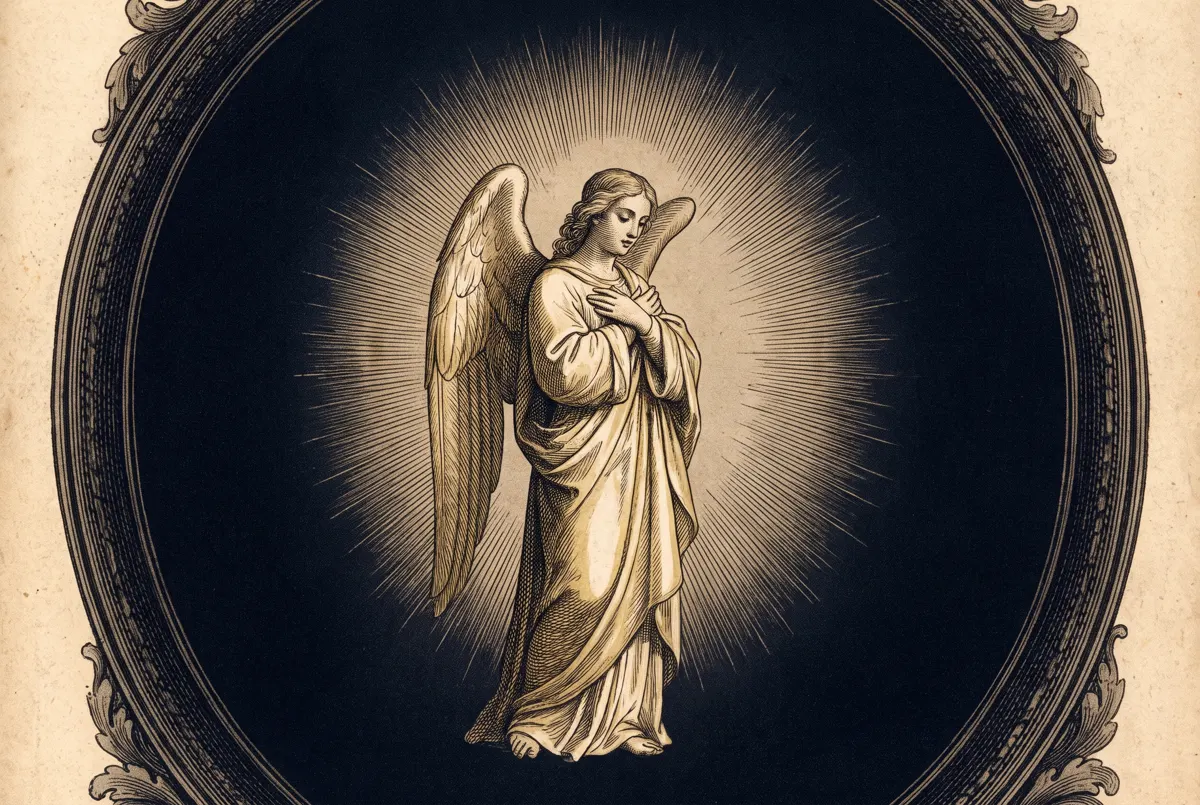
Archangel Michael is a chief angel associated with defense, protection, and heavenly battle.
A manuscript-style hierarchy, not a claim that a named being has one canonical appearance.
What does your own chart say about you?
Choose love, work or purpose. Your reading is written from your chart. Your reading uses your own birth details.
Walk through Alex’s whole example first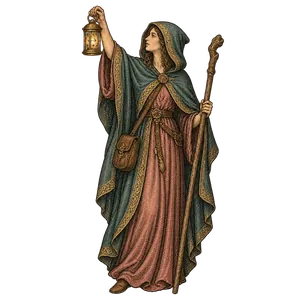
 The Road of AgesSee the turning points of your whole life, from your birth date
See your road's shape
The Road of AgesSee the turning points of your whole life, from your birth date
See your road's shape
Prefer to explore first?
 The Road of AgesThe turning points of your whole life, from your own chart
Walk my road
The Road of AgesThe turning points of your whole life, from your own chart
Walk my road
Free, by email
Your daily Almanac letter
One short letter at 7 each morning: the day’s theme read for your own chart, and one thing to do with it.
What the biblical texts say
Daniel presents Michael within an apocalyptic vision of heavenly princes connected with earthly peoples and empires. Jude calls him “the archangel” and emphasizes restraint: in disputing with the devil, Michael appeals to divine rebuke rather than pronouncing judgment on his own authority. Revelation depicts Michael and his angels fighting the dragon, identified with the ancient serpent, devil, and Satan. Reading each passage in context prevents a composite biography from being mistaken for one continuous narrative supplied by scripture.
Development in Jewish and Christian traditions
Second Temple Jewish literature, rabbinic discussions, Christian liturgy, saints’ calendars, apocrypha, and later theological systems give Michael additional roles as advocate, healer, guide of souls, guardian, or commander. Eastern Orthodox, Catholic, Anglican, Protestant, Jewish, Islamic, and esoteric sources do not all define him in the same way. The title archangel itself is used and ranked differently. A careful account names the text and community instead of combining every tradition into a supposedly universal angel hierarchy.
Sword, scales, dragon, and military dress
Christian art often shows Michael armored, holding a spear or sword, and standing over a dragon, directly echoing Revelation’s combat imagery. Scales may connect him with judgment and the weighing of souls in later iconography. Wings identify angelic status rather than a physical description given in every biblical passage. Colors such as blue, red, or gold reflect artistic and liturgical choices across periods; they should not be advertised as scripturally fixed frequencies. Museum catalog information can establish date, region, material, and subject more securely than a generalized symbol chart.
Devotion, discernment, and fear-based claims
Believers may pray through or about Michael according to their tradition, while other communities reject invocation of angels and direct prayer to God alone. That theological disagreement deserves accurate representation. A coincidence, feather, number, or inner impression cannot independently verify that Michael issued a command. Messages encouraging harm, grandiosity, isolation, or rejection of needed care should not be obeyed. Historical and devotional interest can remain grounded in scripture, recognized community practice, and ethical fruit rather than escalating every difficulty into invisible warfare.
Michael as the genius of autumn
J. H. Hill names Michael as one of the four Chaldean corner-keepers, with Gabriel, Raphael and Uriel, and says he is the genius of autumn. He ties Michaelmas to the autumnal equinox, on the fourth day after it. Hill gives 26 September, and the Catholic calendar keeps 29 September.
He pairs Michael's season with the autumn crucifixion on 22 September, when, in his reading, the Lord of Evil triumphs, and with the harvest and the vintage thanksgiving.
The four corner-keepers
For Hill the four archangels guard the four corners of the sky, as the four fixed signs mark the four quarters of the year. He pairs the Chaldean names Gabriel, Michael, Raphael and Uriel with the evangelists Matthew, Mark, Luke and John. He assigns Gabriel to spring and Michael to autumn and does not tie Raphael and Uriel to seasons in the text. See Four Living Creatures.
Sources and editorial method
Research and editorial references used for this page include:
- NRSVUE: Daniel, Jude, and Revelation passages about Michael - Primary scriptural passages for Michael’s named roles.
- Encyclopaedia Britannica: Michael the archangel - Reference overview of Michael across scripture, tradition, and art.
These references support the factual, historical, textual, or interpretive claims on this page. Interpretive traditions are identified as such, and factual claims are kept separate from symbolic claims.
Related reading
Read Michael with courage
A definition tells you what it is; your own birth chart tells you what it means for you. The Oracle casts your real chart and answers for your love, your work, and your year ahead, in conversation. It opens with the 7-day Seeker trial.
Speak with the OracleThe Cosmic Codex offers a reflective map of your year, written from your chart, never a prediction. Open the Cosmic Codex
More in Angels & Archangels
- Archangel Selaphiel
- Cherubim
- Guardian Angel
- Ophanim
- Sons of God
- Angel
- Archangel Azrael
- Archangel Haniel
From the reference page to your own chart
Every word here
is in your own chart.
- A personal reading about love, work or purpose, written from your chart
- A practical next step to consider
- It opens with 7 days free, with the AI Oracle and daily guidance
$0 today, then $12/month after 7 days. Cancel anytime.
Common questions
Where is Michael called an archangel in the Bible?
Jude 9 explicitly calls Michael the archangel. Daniel calls him a prince or great prince, and Revelation portrays him leading angels.
Is Michael the only archangel?
That depends on the canon and tradition. The Protestant biblical canon names Michael as archangel, while other Jewish and Christian texts and traditions name additional archangels.
Does the Bible assign Michael a color or crystal?
No. Popular blue-ray, gemstone, and weekday correspondences come from later devotional or esoteric systems, not the cited biblical passages.
Free, by email
The Almanac, in your inbox at 7
One short letter at 7 each morning: the day’s theme read for your own chart, and one thing to do with it.
