Angel lore
Angel of the Lord
Direct answer
Angel of the Lord is a biblical figure or phrase for a divine messenger, sometimes appearing with unusual closeness to God presence and speech.
Angel of the Lord is a biblical divine messenger phrase with special theological weight.
$0 today, then $12/month after 7 days. Cancel anytime.
At a glance
- Found in
- Angels & Archangels
- Related
- Birth Chart, Zodiac, Transit
Angel of the Lord is a biblical divine messenger phrase with special theological weight.
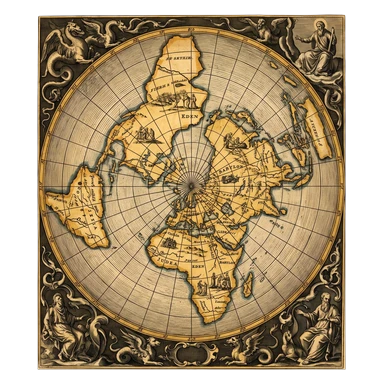
A manuscript-style hierarchy, not a claim that a named being has one canonical appearance.
What does your own chart say about you?
Choose love, work or purpose. Your reading is written from your chart. Your reading uses your own birth details.
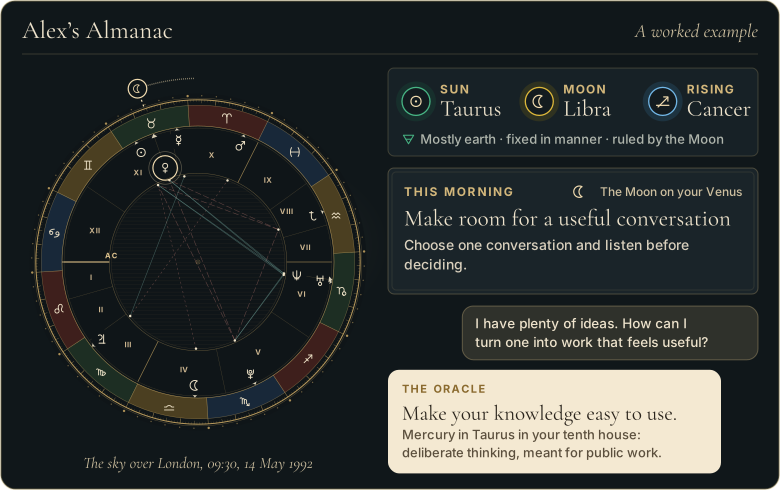
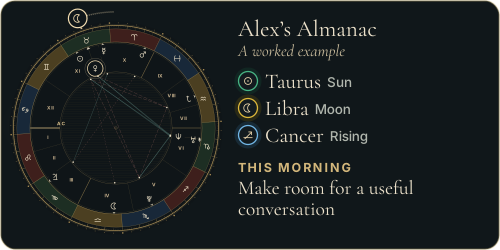
Walk through Alex’s whole example first
 The Road of AgesSee the turning points of your whole life, from your birth date
See your road's shape
The Road of AgesSee the turning points of your whole life, from your birth date
See your road's shape
Prefer to explore first?
 The Road of AgesThe turning points of your whole life, from your own chart
Walk my road
The Road of AgesThe turning points of your whole life, from your own chart
Walk my road
Free, by email
Your daily Almanac letter
One short letter at 7 each morning: the day’s theme read for your own chart, and one thing to do with it.
The story behind Angel of the Lord
Jewish and Christian interpreters have debated the Angel of the Lord for centuries, especially where messenger and divine presence overlap.
The spiritual meaning of Angel of the Lord
Spiritually, Angel of the Lord asks how God can meet people through mediated presence without losing divine authority.
Angel of the Lord in the Bible
The Angel of the Lord appears in passages involving Hagar, Moses, Gideon, and others, often speaking with divine authority.
Why Angel of the Lord matters
Angel of the Lord matters because some passages blur ordinary messenger language with direct divine presence, creating major interpretive questions.
How to read Angel of the Lord
Read Angel of the Lord by reading each passage carefully: context determines whether the phrase means a messenger, a theophany, or a debated divine appearance.
Angel of the Lord in practice: an example
The burning bush passage includes angelic appearance language and direct divine speech, which is why interpreters discuss theophany.
Where readings of Angel of the Lord go wrong
It is a mistake to force one interpretation onto every passage. The phrase is context-sensitive.
Sources and editorial method
This entry summarizes the tradition in the Almanac's own words; where no source is listed, it is an editorial summary rather than a primary text, and symbolic readings are named as the tradition's, not as fact.
- Source
- The Great Almanac Dictionary
- Category
- Angels & Archangels
- Last updated
- 2026-09-26
Study divine messenger passages
A definition tells you what it is; your own birth chart tells you what it means for you. The Oracle casts your real chart and answers for your love, your work, and your year ahead, in conversation. It opens with the 7-day Seeker trial.
Speak with the OracleThe Cosmic Codex offers a reflective map of your year, written from your chart, never a prediction. Open the Cosmic Codex
Related terms
More in Angels & Archangels
- Archangel Barachiel
- Archangel Jegudiel
- Archangel Raguel
- Archangel Uriel
- Dominions
- Heavenly Host
- Powers
- Thrones
From the reference page to your own chart
Every word here
is in your own chart.
- A personal reading about love, work or purpose, written from your chart
- A practical next step to consider
- It opens with 7 days free, with the AI Oracle and daily guidance
$0 today, then $12/month after 7 days. Cancel anytime.
Common questions
Who is Angel of the Lord?
Angel of the Lord is a biblical figure or phrase for a divine messenger, sometimes appearing with unusual closeness to God presence and speech.
Where does Angel of the Lord come from?
Jewish and Christian interpreters have debated the Angel of the Lord for centuries, especially where messenger and divine presence overlap.
What does Angel of the Lord mean spiritually?
Spiritually, Angel of the Lord asks how God can meet people through mediated presence without losing divine authority.
What do people get wrong about Angel of the Lord?
It is a mistake to force one interpretation onto every passage. The phrase is context-sensitive.
Free, by email
The Almanac, in your inbox at 7
One short letter at 7 each morning: the day’s theme read for your own chart, and one thing to do with it.