

Life Path Number and Business Strengths
A Life Path number can suggest how you prefer to initiate, cooperate, communicate, build, adapt, serve, study, lead, or complete. It cannot identify a profitable business for you. The useful move is to translate the symbol into a role hypothesis, then test that hypothesis with customers, costs, and consistent work.
$0 today, then $12/month after 7 days. Cancel anytime.
Direct answer
Short version
Read a Life Path number as a working-style prompt, not a business verdict. Numbers 1 through 9 can help name preferred modes of initiative, partnership, expression, structure, experimentation, care, research, authority, and completion. Master numbers 11, 22, and 33 add intensity and responsibility to the root themes of 2, 4, and 6. None predicts revenue, competence, honesty, or entrepreneurial success.

What could this mean for your working life?
Explore your strengths, what matters at work, and a next step to consider. Your reading uses your own birth details.
Walk through Alex’s whole example first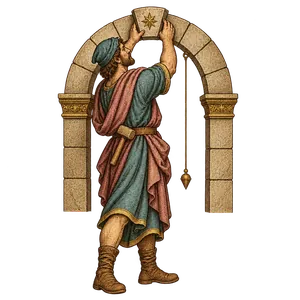


 The Road of AgesSee the turning points of your whole life, from your birth date
See your road's shape
Prefer to explore first?
 The Road of AgesThe turning points of your whole life, from your own chart
Walk my road
Free, by email
Your daily Almanac letter
One short letter at 7 each morning: the day’s theme read for your own chart, and one thing to do with it.
Quick facts
| Number | Possible business strength | Useful reality check |
|---|---|---|
| 1 | Initiating, deciding, owning a direction | Can you listen after setting the vision? |
| 2 | Partnership, timing, service, mediation | Can you name disagreement before resentment builds? |
| 3 | Communication, creativity, audience energy | Can you ship consistently after the exciting idea? |
| 4 | Systems, quality, process, reliability | Can you revise a system when evidence changes? |
| 5 | Sales, experimentation, movement, adaptation | Can you protect focus and finish what works? |
| 6 | Care, trust, design, responsibility | Can you price care without overgiving? |
| 7 | Research, diagnosis, depth, specialist knowledge | Can you explain the insight in customer language? |
| 8 | Resources, authority, negotiation, scale | Can you separate value from status and control? |
| 9 | Mission, perspective, storytelling, completion | Can the mission support a sustainable model? |
| 11/2 | Vision translated through connection and language | Can inspiration become a small test? |
| 22/4 | Large systems built through patient execution | Can the plan survive budgets and deadlines? |
| 33/6 | Teaching, service, stewardship, community care | Can responsibility include boundaries? |
A one-minute story
The Music of Number
From a blacksmith's hammers to your Life Path: the story of number.

Translate the number into a role, not an industry
A Life Path number is more useful for asking how you work than for announcing what business you should start. A 3 is not required to become a content creator, an 8 is not destined for finance, and a 6 does not have to sell wellness. The same pattern can appear in many industries. A 3 may make technical training understandable, an 8 may negotiate resources for a nonprofit, and a 6 may build trust through meticulous customer support.
Begin with the actual activity. Do you naturally generate possibilities, close decisions, notice quality problems, hold relationships, explain complexity, or keep a project moving after the novelty disappears? Then compare the number theme with evidence from work you have already done. The strongest hypothesis is where the symbol and the record agree. When they disagree, trust demonstrated skill and lived preference over the flattering interpretation.
Turn a strength into an offer someone can understand
A business strength is not yet an offer. “I am creative,” “I am a natural leader,” or “I help people heal” does not tell a customer what changes after paying. Translate the theme into a specific person, problem, deliverable, time frame, and boundary. A number 7 research strength might become a two-week competitor brief for independent retailers. A number 2 listening strength might become facilitated customer interviews for founders who are too close to their own product.
Keep the first offer narrow enough to test. Name one customer group, one costly frustration, one result you can responsibly support, and one simple way to deliver it. Ask five potential customers how they currently solve the problem, what the problem costs them, and what would make a new option credible. Symbolic insight can help you choose a direction; market conversations reveal whether that direction serves anyone.
Every business gift has an operational shadow
The shadow is often the gift used without proportion. A 1 can become unilateral, a 2 conflict-avoidant, a 3 scattered, a 4 rigid, a 5 inconsistent, a 6 over-responsible, a 7 inaccessible, an 8 controlling, and a 9 so mission-led that the economics stay vague. Master-number language can amplify pressure: the person feels they must build something huge or spiritually important before an ordinary paid experiment is worthy.
Build a counter-practice into the operating system. The fast initiator schedules customer listening. The harmonizer records decisions and objections. The visionary defines a weekly shipping rhythm. The caretaker publishes scope and pricing. The analyst practices a sixty-second explanation. The ambitious operator shares financial visibility and decision rights. A useful reading does not decorate the strength; it names the behavior that keeps the strength employable.
Match the working style to a business model carefully
Different models reward different rhythms. Consulting rewards diagnosis, trust, and direct delivery. Products require repeatable demand, margins, distribution, and support. Memberships require recurring value and retention. Marketplaces require two sides to participate. Agencies require sales plus delivery systems. A symbolic preference can suggest where energy may feel natural, but it cannot remove the operational requirements of the model.
Choose the simplest model that can test the central promise. Before building a course platform, sell one workshop. Before manufacturing inventory, test a prototype or preorder only where consumer law and delivery expectations are clear. Before adding a partner, complete a small paid project together. Track conversations, conversion, delivery time, direct costs, refunds, repeat demand, and the kind of work that leaves you more capable rather than chronically depleted.
A 30-day business experiment
Week one is for evidence: list three proven strengths, three problems people already ask you to solve, and three customer groups you can actually reach. Week two is for ten conversations and a one-page offer. Week three is for inviting a small number of people to a paid or clearly scoped pilot. Week four is for delivery and review. Record what customers valued, what confused them, what took too long, and what they would pay for again.
At the end, do not ask whether the number “worked.” Ask whether the hypothesis produced evidence. Did the work fit your strengths? Did a real person care enough to act? Could you deliver at a quality and cost that make continuation realistic? What did the experiment reveal about your communication, discipline, pricing, boundaries, or need for complementary help? That is how symbolic reflection becomes accountable learning.
Sources and editorial method
Research and editorial references used for this page include:
- U.S. Small Business Administration: Plan your business - Practical reference for market research, competitive analysis, business planning, startup costs, and testing demand.
- Internal Revenue Service: Business structures - Official overview of common U.S. business structures and the tax-return implications of the entity selected.
The number meanings are presented as a reflective tradition. Business claims are checked against practical planning, market research, entity, cost, and accountability requirements; no numerical pattern is treated as evidence of profitability.
Related reading
From the method to your own numbers
Your numbers,
worked out for you.
- A personal reading about love, work or purpose, written from your chart
- A practical next step to consider
- It opens with 7 days free, with the AI Oracle and daily guidance
$0 today, then $12/month after 7 days. Cancel anytime.
Common questions
Which Life Path number is best for business?
No number is inherently best. Different businesses need initiative, cooperation, communication, systems, adaptability, care, research, resource management, and mission. Execution and ethics matter more than the number.
Does Life Path 8 guarantee wealth?
No. Eight is commonly associated with authority, resources, and material stewardship, but it cannot predict income or protect someone from poor decisions, market conditions, or misconduct.
Can a Life Path number tell me what business to start?
It can suggest a working-style question, but the business should be selected through skills, access, customer demand, costs, values, and a small real-world test.
What if my number does not fit my work history?
Treat the mismatch as useful evidence. Your experience, constraints, choices, and demonstrated abilities are more specific than a birth-date reduction.
Should I use a master number in business?
Use 11, 22, or 33 only if your stated calculation method preserves it. Read the root number as well, and avoid turning a symbolic compound into pressure to achieve something grand.
Free, by email
The Almanac, in your inbox at 7
One short letter at 7 each morning: the day’s theme read for your own chart, and one thing to do with it.
