Tarot cards and interpretation
The Empress
Direct answer
The Empress does not automatically predict pregnancy, wealth, marriage, or a female person. Read her as a pattern of cultivation and material support, then modify that theme through the question, position, neighboring cards, deck imagery, and the reader’s declared approach to reversals.
The Empress is a major-arcana trump traditionally numbered III. In modern divinatory tarot she commonly evokes nurture, embodied creativity, abundance, relationship with the natural world, and the power to sustain what is growing.
$0 today, then $12/month after 7 days. Cancel anytime.
Quick facts
| Feature | Common reference |
|---|---|
| Arcana | Major Arcana or trump sequence. |
| Number | III in most modern decks. |
| Historical role | An empress figure in European trick-taking tarot before later occult meanings. |
| Modern themes | Nurture, fertility in a broad creative sense, sensory life, resources, growth, and stewardship. |
The Empress is a tarot archetype about nurture, creativity, and embodied growth.
A lineage map for books and systems; it avoids presenting symbolic traditions as literal fact.
What does your own chart say about you?
Choose love, work or purpose. Your reading is written from your chart. Your reading uses your own birth details.
Walk through Alex’s whole example first
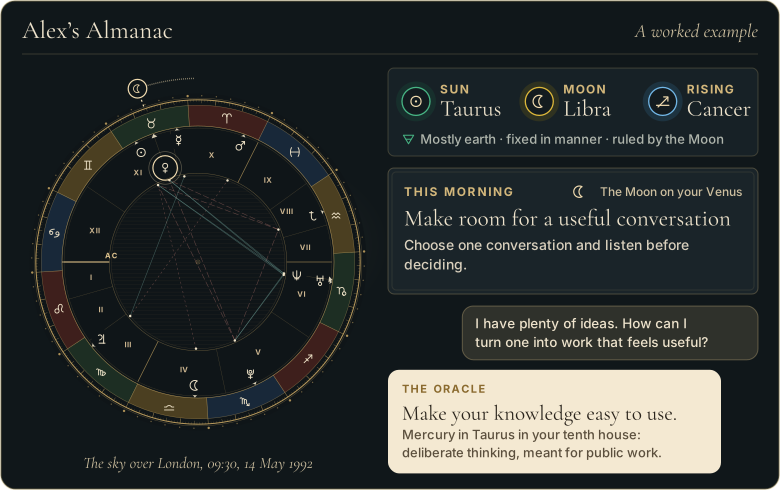
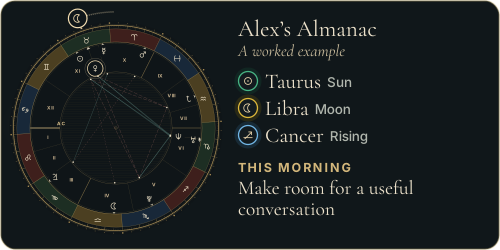
 The Road of AgesSee the turning points of your whole life, from your birth date
See your road's shape
The Road of AgesSee the turning points of your whole life, from your birth date
See your road's shape
Prefer to explore first?
 The Road of AgesThe turning points of your whole life, from your own chart
Walk my road
The Road of AgesThe turning points of your whole life, from your own chart
Walk my road
Free, by email
Your daily Almanac letter
One short letter at 7 each morning: the day’s theme read for your own chart, and one thing to do with it.
From Renaissance trump to occult archetype
Early tarot packs were made for card play, and their trump sequences included social and religious figures familiar to European viewers. The Empress represented imperial rank before tarot acquired the standardized divinatory system now widely assumed. Surviving hand-painted and printed decks vary in costume, heraldry, posture, and numbering. Eighteenth- and nineteenth-century occult authors later embedded the card in esoteric correspondences, while twentieth-century decks made garden, grain, Venus, motherhood, and lush landscape central visual cues. No single modern image exhausts the card’s history.
Nurture, creation, and material conditions
The card’s strongest shared idea is generative care: creating conditions in which a person, project, relationship, body, or place can flourish. This includes pleasure and receptivity, but also provision, patience, boundaries, and management of resources. An empress governs; she is not only passive softness. In a work reading, the card might ask whether an idea has enough time, money, skill, and maintenance to become real. In a relationship reading, it may emphasize affection and safety while also asking whether care is mutual rather than assumed.
Reversal and shadow expressions
Readers who use reversed cards may interpret a reversed Empress as depleted care, creative blockage, overprotection, dependence, neglect of the body, or resources spread too thin. Upright cards can show shadow too: abundance may become excess, nurture may become control, and comfort may prevent necessary change. Reversal is not universally used, and it does not turn every positive keyword into its opposite. State the system, examine the spread position, and choose the interpretation that responds most precisely to the question and visible card relationships.
Reading The Empress without stereotypes or promises
Gendered royal imagery need not restrict the card to women, mothers, or heterosexual roles. Any person can embody cultivation, authority, sensual presence, or caregiving, and actual caregiving conditions differ across cultures and families. The card cannot diagnose fertility, confirm pregnancy, or guarantee financial return; those claims require medical tests or material evidence. A useful response translates symbolism into an open question: What needs consistent nourishment? What resource is available? Where has care become control? What tangible next step would help growth continue?
Sources and editorial method
Research and editorial references used for this page include:
- The Metropolitan Museum of Art: The World in Play: Luxury Cards, 1430-1540 - Museum scholarship on early European card production and tarot’s historical setting.
- The Metropolitan Museum of Art: Tarot: A Very Short History - Accessible museum overview distinguishing tarot’s card-game history from later divination.
These references support the factual, historical, textual, or interpretive claims on this page. Interpretive traditions are identified as such, and factual claims are kept separate from symbolic claims.
Related reading
Let growth become embodied
A definition tells you what it is; your own birth chart tells you what it means for you. The Oracle casts your real chart and answers for your love, your work, and your year ahead, in conversation. It opens with the 7-day Seeker trial.
Speak with the OracleYour year, written once from your chart alone: the Cosmic Codex reads the whole of it, month by month. Open the Cosmic Codex
More in Mystical Systems
- The World
- Zen
- Carmelite Mysticism
- Hasidic Mysticism
- Julian of Norwich
- Monad
- Pseudo-Dionysius
- Strength
From the reference page to your own chart
Every word here
is in your own chart.
- A personal reading about love, work or purpose, written from your chart
- A practical next step to consider
- It opens with 7 days free, with the AI Oracle and daily guidance
$0 today, then $12/month after 7 days. Cancel anytime.
Common questions
Does The Empress always mean pregnancy?
No. Fertility can describe creativity, growth, bodily awareness, resources, or care. Pregnancy questions require testing and clinical guidance, not a tarot card.
What is the difference between The Empress and The High Priestess?
The Empress commonly emphasizes embodied cultivation and visible growth; The High Priestess emphasizes hidden knowledge, inward attention, and thresholds. A deck may nuance both differently.
Is a reversed Empress always negative?
No. It may redirect care inward, reveal unsustainable giving, or show a delay. Reversal meanings depend on the reader’s system and the full spread.
Free, by email
The Almanac, in your inbox at 7
One short letter at 7 each morning: the day’s theme read for your own chart, and one thing to do with it.
