
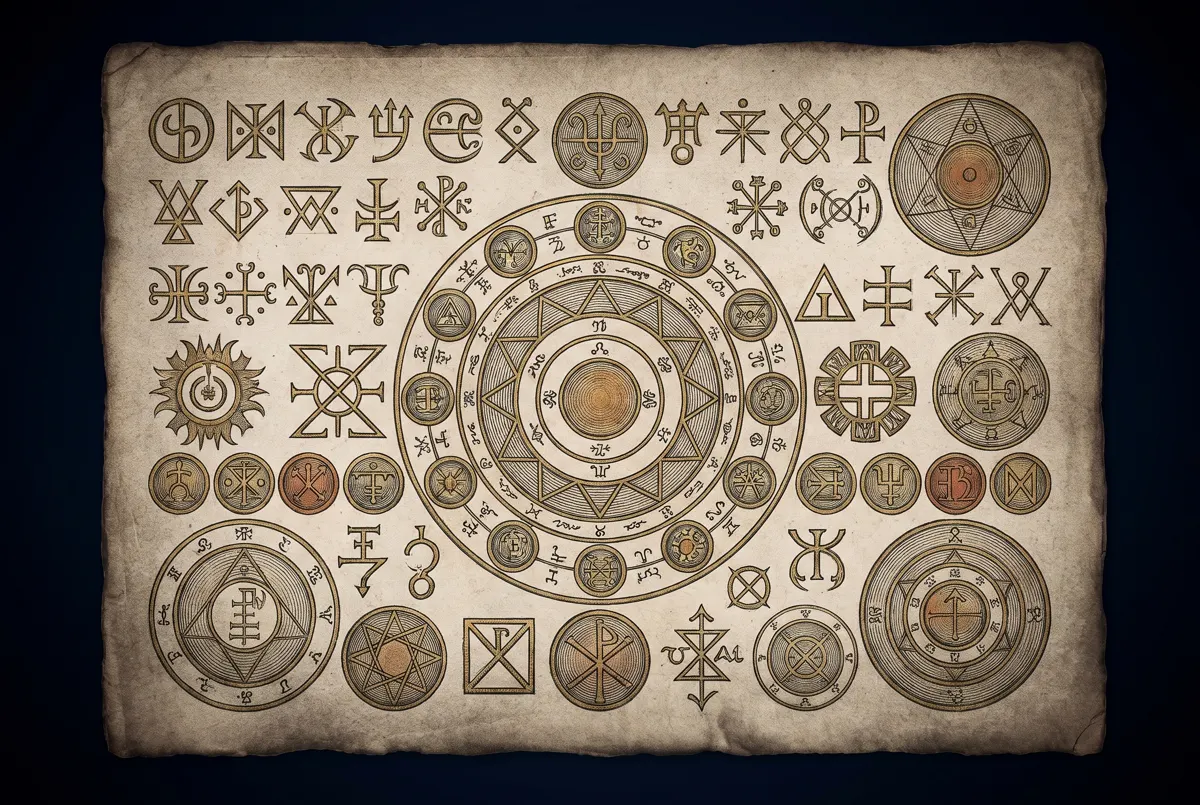
Sigils and symbols
Swastika Symbol
Direct answer
Swastika Symbol is an ancient auspicious symbol in several traditions that was violently appropriated by Nazism.
$0 today, then $19/month after 7 days. Cancel anytime.
At a glance
- Found in
- Sigils, Seals & Symbols
- Related
- Sacred Symbol, Sigil, Discernment, Spell
On the tree of the hidden arts: Symbols.
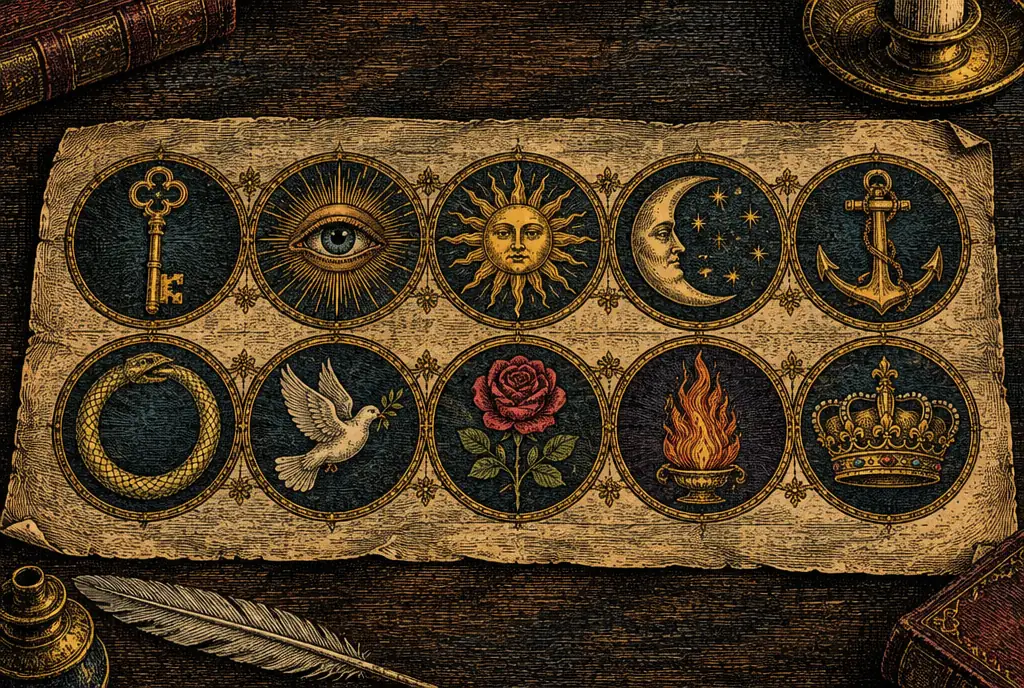
Swastika Symbol means an ancient auspicious symbol in several traditions that was violently appropriated by Nazism.
A conceptual orientation, not an exact historical reproduction of every mark or seal.
Understand the chapter you are in.
Your life’s turning points, measured from your birth.
Walk through Alex’s whole example first


Prefer to explore first?
 The Road of AgesThe turning points of your whole life, from your own chart
Walk my road
What sets Swastika Symbol apart
No other sign has two histories so far apart. In Sanskrit the word is built from su, good, and asti, it is, and in Hindu, Buddhist and Jain life the sign marks doorsteps, ledgers, temples and weddings as it has for millennia; in Japan it marks temples on maps. In Europe a racial theory of the nineteenth century claimed it for an imagined Aryan people, and the party that took it in 1920 made it the flag of the state that carried out the Holocaust. The two histories meet in one shape and in nothing else.
- Word: Sanskrit svastika, from su, good, and asti, it is
- Living use: Hindu, Buddhist and Jain worship and daily custom
- Party badge: adopted by the Nazi party in 1920
- German flag: 1933 to 1945, the only national flag from 1935
- Law in Germany: public display banned, except in teaching, research and art
Often mistaken for something else: The claim that arms bent one way are sacred and the other way evil does not hold; both directions are found in Asian religious use.
Why Swastika Symbol matters
Swastika Symbol matters because it requires careful historical and ethical distinction.
Where readings of Swastika Symbol go wrong
It is a mistake to ignore the modern harm attached to Nazi use.
Sources and editorial method
This entry summarizes the tradition in the Almanac's own words; where no source is listed, it is an editorial summary rather than a primary text, and symbolic readings are named as the tradition's, not as fact.
Recorded here as history and symbol. No rite is taught on this page.
- Source
- The Great Almanac Dictionary
- Category
- Sigils, Seals & Symbols
- Last updated
- 2026-09-26
Read the symbol with context
A definition tells you what it is; your own birth chart tells you what it means for you. The Oracle casts your real chart and answers for your love, your work, and your year ahead, in conversation. It opens with the 7-day Oracle trial.
Speak with the OracleRelated terms
More in Sigils, Seals & Symbols
- Wheel Symbol
- Archangel Sigils
- Crescent Symbol
- Dreamcatcher
- Hexagram
- Mandala
- Pomegranate Symbol
- Seal of Solomon
From the reference page to your own chart
Every word here
is in your own chart.
- Your life’s turning points, measured from your birth
- A practical next step to consider
- It opens with 7 days free: the AI Oracle on thirty hidden arts, and your daily horoscope
$0 today, then $19/month after 7 days. Cancel anytime.
Common questions
What is Swastika Symbol?
Swastika Symbol is an ancient auspicious symbol in several traditions that was violently appropriated by Nazism.
Why does Swastika Symbol matter?
Swastika Symbol matters because it requires careful historical and ethical distinction.


