
Numerology timing cycles
Personal Year Number
Direct answer
In the calendar-year method the Almanac uses, add the reduced birth month, the reduced birth day, and the Universal Year (the target year’s digits, reduced), then reduce the total, keeping 11, 22, and 33. For example, a July 14 birthday in 2026: 7 + (1+4 = 5) + (2+0+2+6 = 10, then 1) = 13, then 4. Leaving the year unreduced would give 7 + 5 + 10 = 22 instead, which is why the method has to be stated.
A Personal Year number is a modern numerology cycle calculated from birth month, birth day, and a target year, reduced to a root from 1 to 9, with 11, 22, and 33 kept as master numbers in the Almanac’s method.
$0 today, then $12/month after 7 days. Cancel anytime.
Quick facts
| Question | Direct answer |
|---|---|
| Inputs | Birth month, birth day, and the target calendar year; birth year is normally not used. |
| Cycle length | Nine root-number years; the Almanac keeps 11, 22, and 33 as master forms of 2, 4, and 6. |
| When does it begin? | January 1 in one common method, which the Almanac uses; birthday-to-birthday in another. |
| What must a calculator disclose? | Reduction steps, master-number policy, and cycle boundary. |
Personal Year Number describes the yearly numerology cycle for one person.
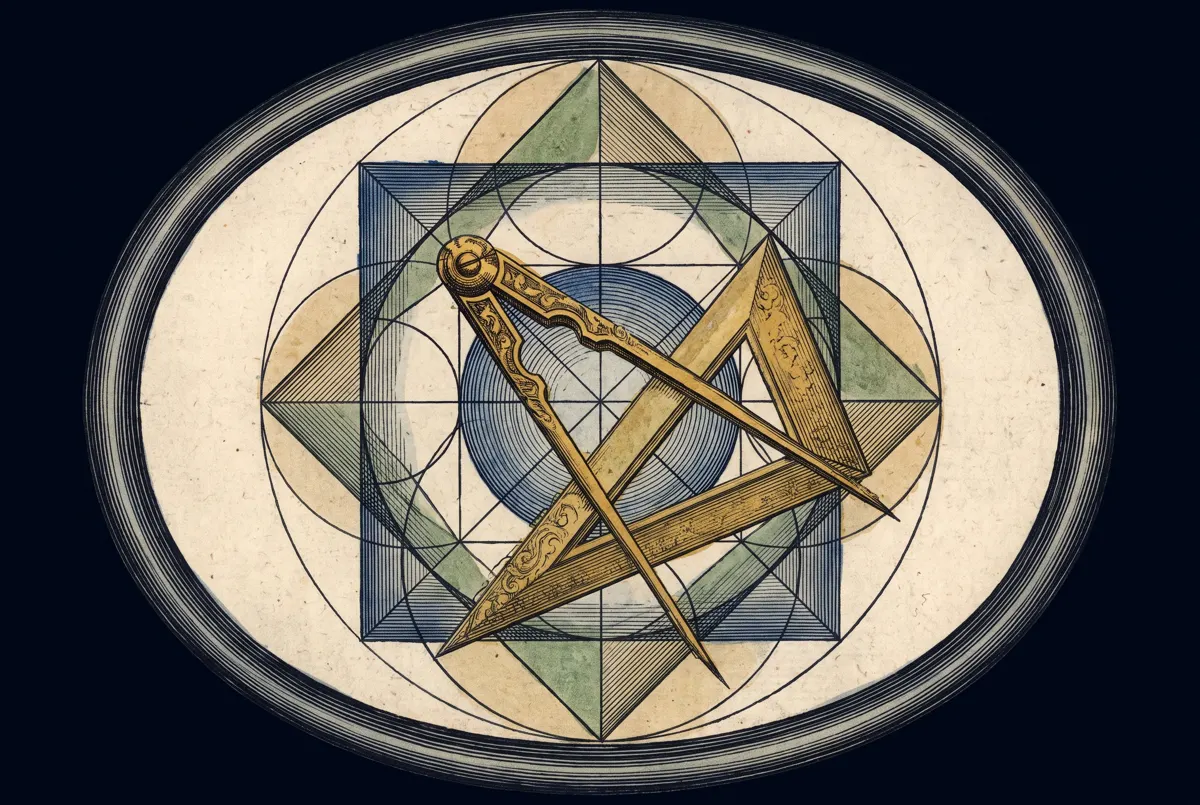
The visual isolates the number or calculation pattern; the page explains its interpretation and limits.
What could this mean for your life?
Explore your recurring patterns, what matters to you, and a way forward. Your reading uses your own birth details.
Walk through Alex’s whole example first
 The Road of AgesSee the turning points of your whole life, from your birth date
See your road's shape
The Road of AgesSee the turning points of your whole life, from your birth date
See your road's shape
Prefer to explore first?
 The Road of AgesThe turning points of your whole life, from your own chart
Walk my road
The Road of AgesThe turning points of your whole life, from your own chart
Walk my road
Free, by email
Your daily Almanac letter
One short letter at 7 each morning: the day’s theme read for your own chart, and one thing to do with it.
The common calendar-year calculation
Take the numeric birth month and day, add the digits of the year being examined, and reduce according to one consistent rule. For example, someone born December 29 calculating 2026 might use 12 + 29 + 10 = 51, then 5 + 1 = 6; the Almanac reduces each component first, keeping master numbers: 3 + 11 + 1 = 15, then 6. Those examples converge, but master-number policies can create different intermediate labels. Display the entire arithmetic. The birth year is not normally part of a Personal Year, which distinguishes the cycle from core birth-date numbers.
A one-minute story
The Music of Number
From a blacksmith's hammers to your Life Path: the story of number.

January 1 or the birthday?
Many popular numerologists treat the Personal Year as aligned with the civil calendar, beginning January 1 and ending December 31. Others describe a transition around the birthday or a blending period spanning adjacent years. These are competing conventions, not astronomical events. A reading should say which boundary it uses before discussing timing. If a birthday method is chosen, specify whether the year number changes exactly on the birthday and how months before it are labeled. Otherwise, two readers can give different current years while both follow their own undisclosed rules.
Themes assigned to years 1 through 9
A common sequence treats 1 as initiation, 2 as cooperation, 3 as expression, 4 as structure, 5 as change, 6 as responsibility, 7 as reflection, 8 as material management, and 9 as completion or release. These themes are broad enough to appear in many years, so make them concrete. A Year 4 prompt might ask which system needs maintenance; a Year 9 prompt might ask what is complete versus merely uncomfortable. Do not use a number to promise marriage, wealth, pregnancy, loss, or legal outcomes. The cycle organizes reflection rather than forecasting facts.
Using the cycle as a planning review
Write three real priorities for the target year before reading keywords. Compare each priority with the symbolic theme and choose one behavior to test for a month. Track results and contrary evidence. A Year 5 does not require quitting a stable job to prove openness to change; a smaller experiment may reveal more. At year end, assess what the prompt helped you notice and what it missed. This keeps agency, resources, and evidence central. If a prediction creates fear or encourages neglecting professional advice, discard the prediction rather than reorganizing life around it.
Method, variation, and limits of Personal Year Number
Modern numerology has no single international standard, and Personal Year Number may be calculated or worded differently by different authors. A responsible explanation therefore shows the arithmetic, names the system being used, preserves intermediate compound numbers when they matter, and does not quietly change methods to obtain a preferred answer. Numerological meanings belong to a symbolic and divinatory tradition; they have not been scientifically validated as measurements of character, destiny, compatibility, or future events. The result can serve as a structured reflection prompt, but it should not determine a health, relationship, employment, financial, or safety decision. Apparent repetitions are also common in ordinary life, so attention and confirmation bias should be considered before treating a number as a personal message.
What sets Personal Year Number apart
The Personal Year is a number that changes every year, built from the month and day of birth plus the digits of the current calendar year. Because the birthday stays fixed and the year advances by one, the result climbs by one each year and then returns to 1 after 9, giving a repeating nine-year round. Most systems change the year at 1 January, though a few change it at the birthday.
- Formula: birth month + birth day + current year, each reduced, then added and reduced
- Worked example: born 12 March, in 2026: 3 + 3 + 1 (2026 gives 10 then 1) = 7
- Round: nine years: 1 begins, 9 completes, then 1 starts again
- Year change: usually 1 January; a minority of writers switch at the birthday
- Almanac method: keeps 11, 22 and 33 as master years
Often mistaken for something else: The Universal Year is the same for everyone; the Personal Year adds the birthday to it and so differs from person to person.
Sources and editorial method
Research and editorial references used for this page include:
- Encyclopaedia Britannica: Numerology - Context for numerological divination and reduction.
- World Numerology: Personal Year - Practitioner reference for a widely used modern cycle method.
These references support the factual, historical, textual, or interpretive claims on this page. Interpretive traditions are identified as such, and factual claims are kept separate from symbolic claims.
Related reading
Read your annual number
A number in a book is one thing; the numbers in your own birth date are yours. The Oracle reads your numbers and your chart and tells you what they mean for your love, your work, and your year ahead, in conversation. It opens with the 7-day Seeker trial.
Speak with the OracleYour personal year and the numbers in your name are written once in the Cosmic Codex: your whole year, month by month. Open the Cosmic Codex
More in Numerology
- Triple Number Pattern
- Arrow of Spirituality
- Cornerstone Letter
- Kabbalistic Numerology
- Lo Shu Grid
- Name Numerology Chart
- Number 40 Meaning
- Numerology Challenge
From the method to your own numbers
Your numbers,
worked out for you.
- A personal reading about love, work or purpose, written from your chart
- A practical next step to consider
- It opens with 7 days free, with the AI Oracle and daily guidance
$0 today, then $12/month after 7 days. Cancel anytime.
Common questions
Do I include my birth year?
Not in the common Personal Year formula; use birth month, birth day, and the target year.
What if the total is 11 or 22?
Some systems preserve it as a master-number year and others reduce it. State the policy and often show both root and compound.
When does my Personal Year change?
January 1 in a calendar-year method; around the birthday in another method. Use one declared convention.
Free, by email
The Almanac, in your inbox at 7
One short letter at 7 each morning: the day’s theme read for your own chart, and one thing to do with it.
