
Number patterns and meaning
Mirror Numbers
Direct answer
A mirror number is best identified by describing its exact pattern rather than assuming one universal definition. Reverse the digits on either side of the separator, or read the whole string backward to test for a palindrome; symbolic meanings are modern interpretations, not mathematical predictions.
Mirror numbers are digit patterns that appear reversed, reflected, or symmetrically repeated, especially on digital clocks. The phrase is informal: 12:21 is a reversal across the colon, while 1221 is also a numerical palindrome.
$0 today, then $12/month after 7 days. Cancel anytime.
Quick facts
| Example | Pattern |
|---|---|
| 12:21 | The minute pair reverses the hour pair; the full four-digit string 1221 is palindromic. |
| 10:01 | A clock reversal and a four-digit palindrome when the colon is removed. |
| 11:11 | A repeated-digit time, often called an angel number, but not a reversal of different pairs. |
| 12:12 | A repeated pair; symmetrical in layout but not a palindrome as the string 1212. |
Mirror Numbers are reflected number patterns used as symbolic prompts for balance and attention.
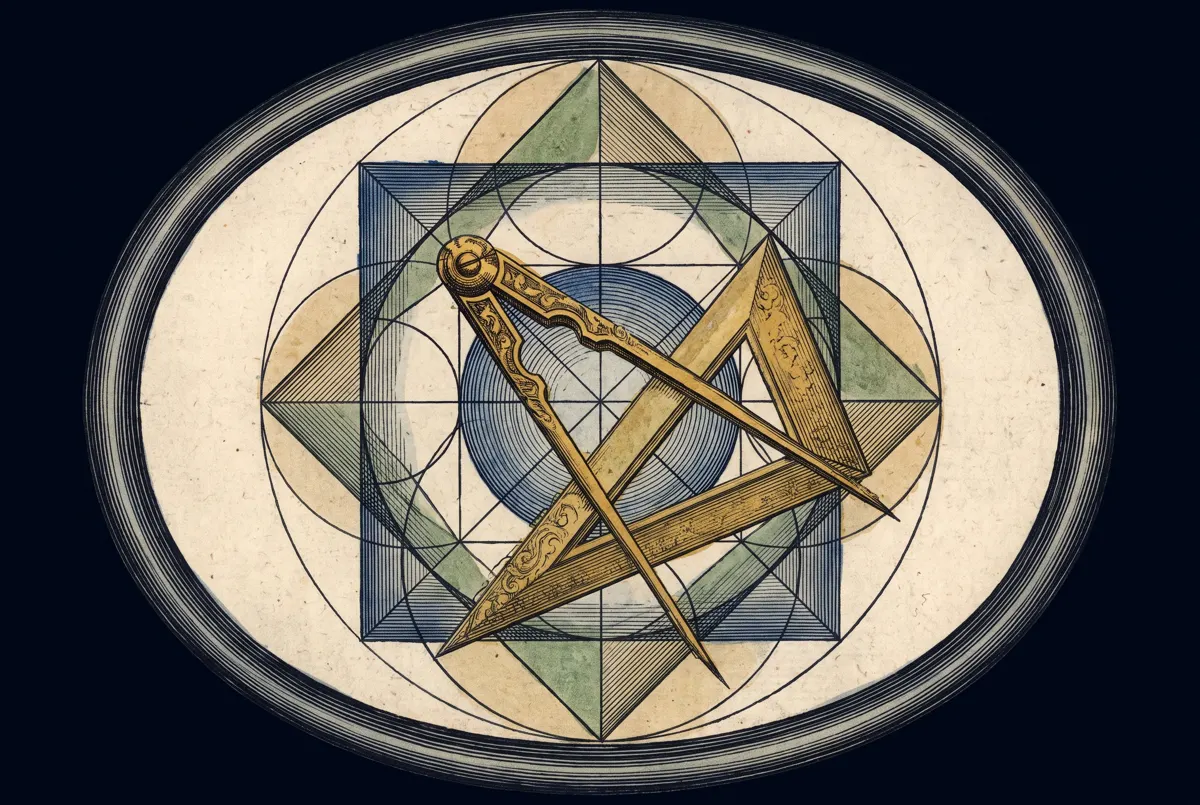
The visual isolates the number or calculation pattern; the page explains its interpretation and limits.
What does your own chart say about you?
Choose love, work or purpose. Your reading is written from your chart. Your reading uses your own birth details.
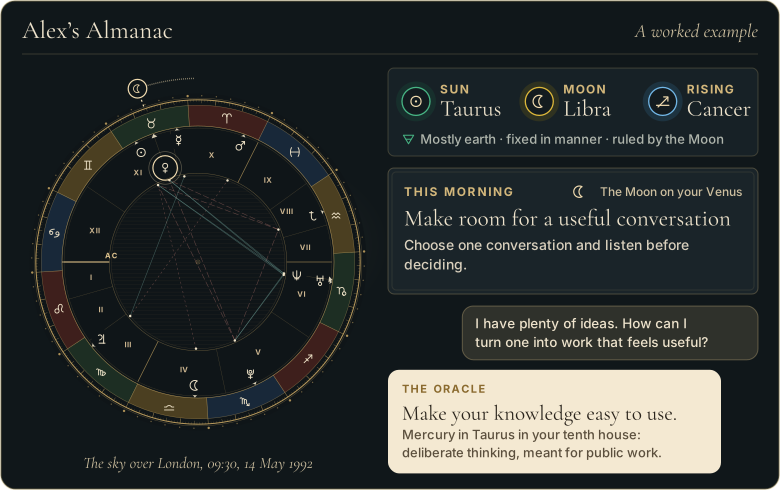
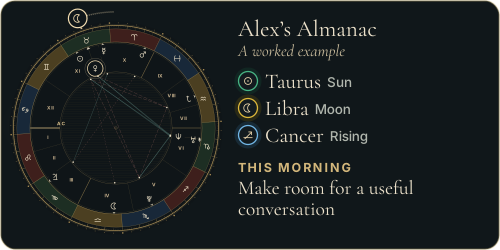
Walk through Alex’s whole example first
 The Road of AgesSee the turning points of your whole life, from your birth date
See your road's shape
The Road of AgesSee the turning points of your whole life, from your birth date
See your road's shape
Prefer to explore first?
 The Road of AgesThe turning points of your whole life, from your own chart
Walk my road
The Road of AgesThe turning points of your whole life, from your own chart
Walk my road
Free, by email
Your daily Almanac letter
One short letter at 7 each morning: the day’s theme read for your own chart, and one thing to do with it.
What counts as a mirror number?
“Mirror number” has no single formal definition shared by mathematics, numerology, and popular spirituality. In clock-number discussions it usually means a time whose right-hand pair reverses the left-hand pair, such as 12:21 or 02:20. Some writers also include repeated pairs such as 14:14, double numbers such as 11:11, or any sequence with visual symmetry. Those categories overlap, but they are not identical.
Mathematics supplies a precise nearby term: a palindrome reads the same forward and backward. Removing the colon from 12:21 gives 1221, a palindrome; removing it from 12:12 gives 1212, which is not. A display can also look mirrored because of typography without the digits forming a palindrome. Naming the operation (reversal, repetition, palindrome, or visual reflection) prevents an attractive label from obscuring the actual pattern.
A one-minute story
The Music of Number
From a blacksmith's hammers to your Life Path: the story of number.

Why these sequences feel unusually noticeable
Human attention is tuned to order, novelty, and repetition. A symmetrical clock time stands out against hundreds of ordinary combinations, making it easier to encode and recall. Once a person decides that 12:21 matters, they may check clocks more often near that time or remember the hits while forgetting all the nonmatching glances. This frequency illusion does not mean the experience is fake; it explains how salience and memory can make a pattern feel increasingly common.
Digital clocks also constrain the possible observations. A 24-hour display offers a limited set of valid reversals, and daily routines make some times more likely to be seen than others. Someone who takes lunch near 12:20 has more opportunities to notice 12:21 than 03:30. Before assigning an external cause, record every clock check for several days. The denominator (the ordinary observations) is essential for judging whether a sequence is genuinely unusual in that person’s routine.
Using a mirror number as a reflective prompt
Modern numerology often gives individual digits themes and then reads the reflected sequence as emphasis, balance, return, or reconsideration. There is no standard dictionary that makes one meaning correct. A more grounded practice begins with context: what decision, emotion, conversation, or expectation was active when the number caught attention? The pattern can function as a pause cue without being treated as a coded forecast.
For 12:21, one might notice the reversal and ask what needs to be viewed from the opposite direction. For 10:01, the enclosing ones and zeros may prompt reflection on beginnings, endings, presence, or absence. Those are creative associations, not facts hidden in the display. Write the observation, a personal association, and one proportionate action. This keeps the insight testable and avoids escalating every repeated time into an urgent command.
What mirror numbers cannot establish
A clock pattern cannot verify that a specific person is thinking about you, guarantee reconciliation, reveal a medical condition, or predict money. Meanings circulating under labels such as twin flame numbers or angel messages are recent interpretive traditions and often contradict one another. Treat any source that promises certainty, demands payment to remove danger, or turns an ordinary sequence into a threat with particular caution.
Repeated checking can become distressing. If missing a number causes anxiety, if daily choices feel controlled by a display, or if the pattern seems to issue frightening personal instructions, stop the interpretive practice and speak with someone trustworthy or a mental-health professional. The mathematically interesting part remains simple: describe the string accurately, test its symmetry, and separate observation from the story attached to it.
Sources and editorial method
Research and editorial references used for this page include:
- Wolfram MathWorld: Palindromic Number - A precise mathematical definition for numbers that read identically in both directions.
- Encyclopaedia Britannica: Numerology - Historical reference context for assigning divinatory significance to numbers.
These references support the factual, historical, textual, or interpretive claims on this page. Interpretive traditions are identified as such, and factual claims are kept separate from symbolic claims.
Related reading
Read mirror numbers with balance
A number in a book is one thing; the numbers in your own birth date are yours. The Oracle reads your numbers and your chart and tells you what they mean for your love, your work, and your year ahead, in conversation. It opens with the 7-day Seeker trial.
Speak with the OracleYour personal year and the numbers in your name are written once in the Cosmic Codex: your whole year, month by month. Open the Cosmic Codex
More in Numerology
- Number 3 Meaning
- Number Compatibility
- Personal Month Cycle
- Soul Urge Number
- Angel Numbers
- Challenge Numbers
- Greek Isopsephy
- Karmic Lesson Number
From the method to your own numbers
Your numbers,
worked out for you.
- A personal reading about love, work or purpose, written from your chart
- A practical next step to consider
- It opens with 7 days free, with the AI Oracle and daily guidance
$0 today, then $12/month after 7 days. Cancel anytime.
Common questions
Are mirror numbers and angel numbers the same?
Not exactly. Angel number is a broad spiritual label for meaningful sequences; mirror number usually refers to reversal or symmetry. A sequence can be described by both terms in popular use.
Is 11:11 a mirror number?
Some informal lists include it because the display is symmetrical. More precisely, it is a repeated-digit palindrome, while 12:21 demonstrates reversal between two different pairs.
Do mirror numbers predict an event?
There is no reliable evidence that a clock sequence predicts an external event. It can be used as a personal reflection cue, provided the interpretation remains optional and proportionate.
Free, by email
The Almanac, in your inbox at 7
One short letter at 7 each morning: the day’s theme read for your own chart, and one thing to do with it.
