
Calendar patterns
Palindrome Dates
Direct answer
Choose a format such as YYYY-MM-DD, keep all required leading zeros, remove only the agreed separators, and compare the resulting digits with their reverse. For example, 2020-02-02 becomes 20200202, which is a palindrome. Between 2000 and 2100 there are 29 such dates day-first and 12 month-first, and only 2 February 2020 is one in every order.
A palindrome date reads the same forward and backward after it is written in a declared numeric format and normalized by a declared rule. Palindromicity belongs to the written string, not to the day independently of notation.
$0 today, then $12/month after 7 days. Cancel anytime.
Quick facts
| Displayed date | Declared format | Normalized digits | Palindrome? |
|---|---|---|---|
| 2020-02-02 | YYYY-MM-DD | 20200202 | Yes |
| 02/02/2020 | MM/DD/YYYY or DD/MM/YYYY | 02022020 | Yes |
| 22/02/2022 | DD/MM/YYYY | 22022022 | Yes |
| 02/20/2022 | MM/DD/YYYY | 02202022 | No |
| 2/2/2020 | Unpadded shorthand | 222020 | No; padding policy changed the string |
Palindrome Dates are mirrored calendar dates that read the same forward and backward.
The visual isolates the number or calculation pattern; the page explains its interpretation and limits.
What does your own chart say about you?
Choose love, work or purpose. Your reading is written from your chart. Your reading uses your own birth details.
Walk through Alex’s whole example first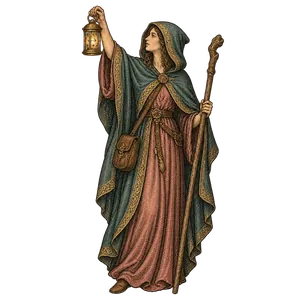
 The Road of AgesSee the turning points of your whole life, from your birth date
See your road's shape
The Road of AgesSee the turning points of your whole life, from your birth date
See your road's shape
Prefer to explore first?
 The Road of AgesThe turning points of your whole life, from your own chart
Walk my road
The Road of AgesThe turning points of your whole life, from your own chart
Walk my road
Free, by email
Your daily Almanac letter
One short letter at 7 each morning: the day’s theme read for your own chart, and one thing to do with it.
What counts as a palindrome date?
A palindrome is a sequence that is identical when read from left to right or right to left. For dates, the sequence is created by notation. The same civil day can be written as 2020-02-02, 02/02/2020, 2 February 2020, or another local form. Only after a format and normalization rule are chosen does “palindrome” become a testable statement.
Most popular palindrome-date lists use eight digits: four for the year and two each for month and day. They remove hyphens, slashes, or periods but preserve leading zeros. Omitting a zero changes the string and can create or destroy a palindrome, so a list that mixes padded and unpadded dates is not internally consistent.
A one-minute story
The Music of Number
From a blacksmith's hammers to your Life Path: the story of number.

A reliable five-step test
- Declare the component order: YYYY-MM-DD, DD/MM/YYYY, MM/DD/YYYY, or another explicit convention.
- Validate that the date exists in the chosen calendar. Reject impossible dates before testing their appearance.
- Format each component at its required fixed width. In an eight-digit scheme, February is 02 and the second day is 02.
- Remove only the declared separator characters, leaving a digit string.
- Reverse the complete string and compare it character for character with the original. Equality means it is palindromic under that format.
Why format changes the answer
In YYYYMMDD order, the final digits of the year constrain the month and day when reflected. In DDMMYYYY or MMDDYYYY order, the first day or month digits mirror the end of the year. Calendar-validity rules then eliminate many symmetrical strings because a month cannot exceed 12 and a day must fit its month.
Regional ambiguity matters. The string 02/12/2021 can mean February 12 in month-first notation or 2 December in day-first notation. A visually interesting date announcement should therefore print the format name, not assume every reader interprets slashes the same way. ISO 8601’s descending order, YYYY-MM-DD, is especially useful for unambiguous international communication.
A common invalid example
The date 02/20/2022 can look almost symmetrical because it contains repeated twos and zeros. Under MM/DD/YYYY formatting, removing the slashes produces 02202022. Reversing that string gives 22020220, so the two strings are not equal. Repeated digits alone do not make a palindrome.
By contrast, 22/02/2022 in DD/MM/YYYY becomes 22022022, which reverses to the same digits. The distinction is easy to verify mechanically and should be shown rather than asserted.
How to generate palindrome dates without guessing

For an eight-digit format, generate candidate strings by choosing the first four digits and reflecting them to create the last four. Split the result according to the target order, then run an actual calendar-validity check that includes month length and leap-year rules. This is faster and safer than testing every date in a range.
Counting results requires a stated calendar interval and format. Counts for 2000-2099 in MM/DD/YYYY cannot be compared directly with counts in DD/MM/YYYY, and a proleptic Gregorian calculation may differ from the historical calendar actually used in a place. A year written with fewer or more than four digits changes the symmetry again.
Pattern, celebration, and numerology
Palindrome dates are popular for weddings, launches, headlines, and classroom exercises because visual symmetry is memorable. That cultural appeal is real even though the arithmetic pattern does not change the physical day.
Numerological traditions may assign symbolic meaning to repeated digits or reduce the date to another number. Such readings are belief-based interpretations, not properties established by calendar mathematics or evidence that events on the date will have a particular outcome. Keeping the string test and symbolic reflection in separate sections lets readers understand both without confusing them.
Every palindrome date from 2000 to 2100
Between 1 January 2000 and 31 December 2100 there are 29 palindrome dates written day-first (dd/mm/yyyy), 12 written month-first (mm/dd/yyyy, the American order) and 12 written year-first (yyyy-mm-dd, the ISO order). One date, 2 February 2020, reads the same backwards in every order, and it is the only one in the span. In all, 40 different days out of 36,890 are a palindrome in at least one order.
Day-first (dd/mm/yyyy), every one in February:
- 2000 to 2009: 10 February 2001 (10022001), 20 February 2002 (20022002)
- 2010 to 2019: 1 February 2010 (01022010), 11 February 2011 (11022011), 21 February 2012 (21022012)
- 2020 to 2029: 2 February 2020 (02022020), 12 February 2021 (12022021), 22 February 2022 (22022022)
- 2030 to 2039: 3 February 2030 (03022030), 13 February 2031 (13022031), 23 February 2032 (23022032)
- 2040 to 2049: 4 February 2040 (04022040), 14 February 2041 (14022041), 24 February 2042 (24022042)
- 2050 to 2059: 5 February 2050 (05022050), 15 February 2051 (15022051), 25 February 2052 (25022052)
- 2060 to 2069: 6 February 2060 (06022060), 16 February 2061 (16022061), 26 February 2062 (26022062)
- 2070 to 2079: 7 February 2070 (07022070), 17 February 2071 (17022071), 27 February 2072 (27022072)
- 2080 to 2089: 8 February 2080 (08022080), 18 February 2081 (18022081), 28 February 2082 (28022082)
- 2090 to 2099: 9 February 2090 (09022090), 19 February 2091 (19022091), 29 February 2092 (29022092)
Month-first (mm/dd/yyyy), every one on the 2nd of a month:
- 2000 to 2009: 2 October 2001 (10022001)
- 2010 to 2019: 2 January 2010 (01022010), 2 November 2011 (11022011)
- 2020 to 2029: 2 February 2020 (02022020), 2 December 2021 (12022021)
- 2030 to 2039: 2 March 2030 (03022030)
- 2040 to 2049: 2 April 2040 (04022040)
- 2050 to 2059: 2 May 2050 (05022050)
- 2060 to 2069: 2 June 2060 (06022060)
- 2070 to 2079: 2 July 2070 (07022070)
- 2080 to 2089: 2 August 2080 (08022080)
- 2090 to 2099: 2 September 2090 (09022090)
Year-first gives exactly the same 12 days as month-first. Moving the four-digit year from the front of an eight-digit palindrome to the back leaves a palindrome, so the two orders can never disagree.
The early 2020s were unusually crowded. 2 February 2020, 12 February 2021, 2 December 2021 and 22 February 2022 all fell within just over two years, and after 22 February 2022 the day-first calendar goes quiet for very nearly eight years, until 3 February 2030.
Why the date format decides which dates count
An eight-digit date is a palindrome when its first digit matches its last, its second matches its seventh, and so on inward. Written day-first that means the day's first digit has to equal the year's last, the day's second has to equal the year's third, the month's first has to equal the year's second, and the month's second has to equal the year's first.
Every year from 2000 to 2099 begins with the digits two and zero. Those two digits are forced back onto the month, which can therefore only ever be 02. That is the entire reason every day-first palindrome date from 2000 to 2099 falls in February.
It does not hold for ever. A year beginning 21 forces the month to be 12, so the 31 day-first palindrome dates of the 2100s all fall in December, from 10 December 2101 to 29 December 2192. A year beginning 22 or higher would need a month of 22 or more, so there are none at all from 2200 to 2999, and the next one after 29 December 2192 is 10 March 3001.
The month-first order pushes the same constraint onto the day instead. Every month-first palindrome date from 2000 to 2099 lands on the 2nd of a month, those of the 2100s on the 12th and those of the 2200s on the 22nd.
The 12 month-first dates are exactly the day-first ones whose day is 12 or less, so their eight digits read as a date both ways: 03022030 is 3 February 2030 day-first and 2 March 2030 month-first. The pattern is not a property of time. It is a property of notation, and it moves when the notation moves.
What people mean by the spiritual meaning
The reading usually offered is that a mirrored date marks symmetry, reflection, or a threshold, and that it suits setting an intention or closing something out. That is worth understanding rather than dismissing. It rests on a real and old habit of mind: repeated or symmetrical form invites a pause, and a pause is often where honest thinking happens.
Where it goes wrong is in treating the mirror as a property of the day rather than of the writing. A date that is symmetrical in Amsterdam and unremarkable in Chicago cannot carry a meaning that holds everywhere at once. Notation is a human convention, it has changed repeatedly, and it will change again.
The honest use is the modest one. A palindrome date is a memorable peg, and memorable pegs do real work: they make a resolution easier to recall and a commitment easier to date. If a mirrored number prompts you to look back at one season and forward to the next, it has done what it can do. It has not told you anything the calendar did not already know.
Where the interest came from
Palindromes belong first to language and to recreational mathematics, where numbers reading the same in both directions have been a standing curiosity for a very long time. The calendar version is much younger, because it depends on writing dates as bare strings of digits, and that is a habit of the past century rather than an ancient one.
Two things made it visible. All-numeric dating spread with forms, filing systems and then screens, so a date became something you looked at as a number rather than read as words. And the conventions never converged: day-first and month-first both persisted, with the ISO ordering of year, month and day added alongside them, so the same day can be a mirror in one notation and nothing at all in another.
That divergence is why the question "is today a palindrome date?" has no single answer, and why any list of them has to say which convention it is using before it says anything else.
Sources and editorial method
Research and editorial references used for this page include:
- International Organization for Standardization: ISO 8601 Date and Time Format - Authoritative overview of the internationally standardized YYYY-MM-DD order used for unambiguous date strings.
These references support the factual, historical, textual, or interpretive claims on this page. Interpretive traditions are identified as such, and factual claims are kept separate from symbolic claims.
Related reading
Read your own numbers
A number in a book is one thing; the numbers in your own birth date are yours. The Oracle reads your numbers and your chart and tells you what they mean for your love, your work, and your year ahead, in conversation. It opens with the 7-day Seeker trial.
Speak with the OracleYour personal year and the numbers in your name are written once in the Cosmic Codex: your whole year, month by month. Open the Cosmic Codex
More in Numerology
- Pythagorean Numerology
- Vowel Number
- Capstone Letter
- Expression Total
- Karmic Debt Number 14
- Master Number 55
- Number 144 Meaning
- Number 8 Meaning
From the method to your own numbers
Your numbers,
worked out for you.
- A personal reading about love, work or purpose, written from your chart
- A practical next step to consider
- It opens with 7 days free, with the AI Oracle and daily guidance
$0 today, then $12/month after 7 days. Cancel anytime.
Common questions
How many palindrome dates are there between 2000 and 2100?
Written day-first (dd/mm/yyyy) there are 29, all in February, from 10 February 2001 to 29 February 2092. Written month-first (mm/dd/yyyy) there are 12, all on the 2nd of a month, from 2 October 2001 to 2 September 2090. Year-first (yyyy-mm-dd) gives the same 12 as month-first, and only 2 February 2020 is a palindrome in every order.
Is 02/20/2022 a palindrome?
No. It normalizes to 02202022, whose reverse is 22020220. The sequence does not match.
Do slashes and hyphens count?
Usually they are removed, but the rule must be stated. A strict character palindrome including separators is a different test.
Does 2/2/2020 count?
Not under the common fixed-width eight-digit rule, because month and day should be written 02. Under another declared convention it can be tested, but results cannot be mixed across conventions.
Are palindrome dates rare?
They are uncommon in any one fixed format. Of the 36,890 days from 2000 to 2100, 29 are palindromes day-first and 12 month-first, and the exact count always depends on the format, the year range, the calendar and the zero-padding rules.
Free, by email
The Almanac, in your inbox at 7
One short letter at 7 each morning: the day’s theme read for your own chart, and one thing to do with it.
