
Tarot structure and history
Minor Arcana
Direct answer
Read a Minor Arcana card through its suit, number or court rank, deck image, spread position, and neighboring cards. Suit names and correspondences vary: Wands, Cups, Swords, and Pentacles are common in occult decks, while historical packs use forms such as Batons, Cups, Swords, and Coins.
The Minor Arcana are the 56 suited cards in a standard 78-card tarot deck: four suits, each containing ten numbered or pip cards and four court cards. The label distinguishes them from the 22 trumps now called the Major Arcana.
$0 today, then $12/month after 7 days. Cancel anytime.
Quick facts
| Component | Count and common form |
|---|---|
| Suits | Four: often Wands, Cups, Swords, and Pentacles or Coins. |
| Pip cards | Ten per suit, Ace through Ten, for forty total. |
| Court cards | Four per suit, usually Page, Knight, Queen, and King, for sixteen total. |
| Combined total | Fifty-six cards, alongside twenty-two Major Arcana in a standard modern deck. |
Minor Arcana are tarot's suit cards, focused on daily life rather than only major archetypes.
A lineage map for books and systems; it avoids presenting symbolic traditions as literal fact.
What does your own chart say about you?
Choose love, work or purpose. Your reading is written from your chart. Your reading uses your own birth details.
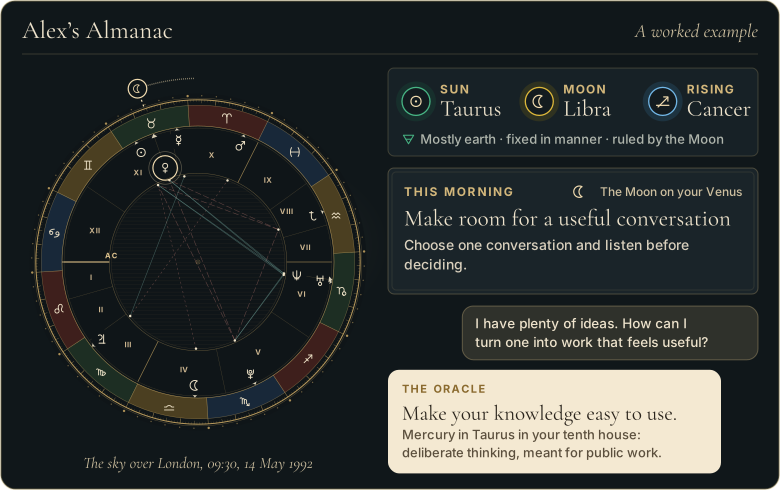
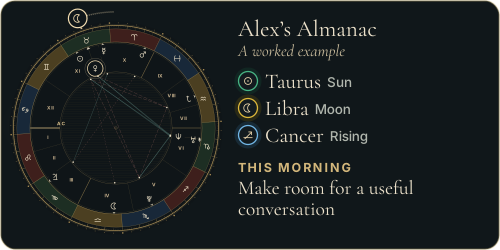
Walk through Alex’s whole example first
 The Road of AgesSee the turning points of your whole life, from your birth date
See your road's shape
The Road of AgesSee the turning points of your whole life, from your birth date
See your road's shape
Prefer to explore first?
 The Road of AgesThe turning points of your whole life, from your own chart
Walk my road
The Road of AgesThe turning points of your whole life, from your own chart
Walk my road
Free, by email
Your daily Almanac letter
One short letter at 7 each morning: the day’s theme read for your own chart, and one thing to do with it.
Suited playing cards before “Minor Arcana”
Tarot emerged in fifteenth-century Europe as a family of trick-taking card games. The suited cards were not originally subordinate occult lessons; they formed the ordinary card-play structure to which a special trump sequence was added. Regional decks used Italian, French, German, or other suit systems and varied court ranks. “Major” and “Minor Arcana” belong to later esoteric classification. Remembering the game history prevents illustrated twentieth-century meanings from being projected unchanged onto every early pip card.
Suits, elements, and fields of life
In a common modern system, Wands correspond with fire, initiative, enterprise, and desire; Cups with water, feeling, relation, and imagination; Swords with air, language, thought, and conflict; Pentacles with earth, body, work, and resources. Other orders and names exist, especially across Golden Dawn-derived, Marseille, Thoth, and independent decks. A suit association is a reading convention, not a universal law. The picture and deck guide can revise the default, and a difficult suit card should not be reduced to its element alone.
Pip progression and court-card roles
Readers often treat Ace as emergence, middle numbers as development, and Ten as completion or overflow, then combine that progression with the suit. Yet a Marseille-style pip offers geometry and number, while Rider-Waite-Smith scenes supply narrative cues that can dominate interpretation. Court cards may describe a person, role, mode of action, developmental stage, or social dynamic. Gendered titles need not map literally to the sitter’s gender. Rank, direction of gaze, elemental dignity, and neighboring cards help decide whether a court is internal, relational, or situational.
A clear method for reading a Minor Arcana card
First describe the image without interpretation. Add suit and number or rank, then apply the spread position and question. Offer two plausible expressions and use adjacent cards to narrow them. Reversals may show blockage, excess, inward expression, delay, or no special change depending on the chosen method; state that choice. Minor Arcana are often called everyday cards, but they can portray profound grief, labor, intimacy, or conflict. They do not confirm pregnancy, crime, diagnosis, or another person’s hidden intention without ordinary evidence.
What sets Minor Arcana apart
Fifty-six cards in four suits of fourteen: ace through ten, then page, knight, queen and king. In the Italian and Spanish tradition the suits are batons, cups, swords and coins, which became wands, cups, swords and pentacles in the English occult decks. The Marseille-pattern decks leave the number cards bare as pips; the Rider-Waite-Smith deck gave each a scene, a step already taken in the Sola Busca deck of about 1491.
- Suits: wands, cups, swords, pentacles (also called coins or discs)
- Cards per suit: 14: ace to ten, plus page, knight, queen, king
- Elements: Golden Dawn scheme: wands fire, cups water, swords air, pentacles earth
- Courts: four courts a suit; the knight takes the place of the French jack
- Illustrated pips: Sola Busca (about 1491) and, much later, Pamela Colman Smith's 1909 deck
Often mistaken for something else: The Major Arcana are the 22 triumph cards outside the suits; the Minor Arcana are the suited cards, the ones that also exist in ordinary playing decks.
Sources and editorial method
Research and editorial references used for this page include:
- The Metropolitan Museum of Art: Tarot: A Very Short History - Museum account of tarot’s development from card play to later divination.
- The Metropolitan Museum of Art: The World in Play - Scholarly catalog on early European card decks, suits, production, and play.
These references support the factual, historical, textual, or interpretive claims on this page. Interpretive traditions are identified as such, and factual claims are kept separate from symbolic claims.
Related reading
Read daily symbols with proportion
A definition tells you what it is; your own birth chart tells you what it means for you. The Oracle casts your real chart and answers for your love, your work, and your year ahead, in conversation. It opens with the 7-day Seeker trial.
Speak with the OracleYour year, written once from your chart alone: the Cosmic Codex reads the whole of it, month by month. Open the Cosmic Codex
More in Mystical Systems
From the reference page to your own chart
Every word here
is in your own chart.
- A personal reading about love, work or purpose, written from your chart
- A practical next step to consider
- It opens with 7 days free, with the AI Oracle and daily guidance
$0 today, then $12/month after 7 days. Cancel anytime.
Common questions
How many Minor Arcana cards are there?
Fifty-six: forty numbered cards and sixteen court cards across four suits.
Are Minor Arcana less important than Major Arcana?
Not necessarily. “Minor” distinguishes the suited sequence from the trumps; in a reading these cards often provide the concrete action, relationship, and resource detail.
Why do some decks use Coins instead of Pentacles?
Coins reflects historical Italian and playing-card suits. Pentacles became common in occult tarot and often carries broader ceremonial symbolism.
Free, by email
The Almanac, in your inbox at 7
One short letter at 7 each morning: the day’s theme read for your own chart, and one thing to do with it.
