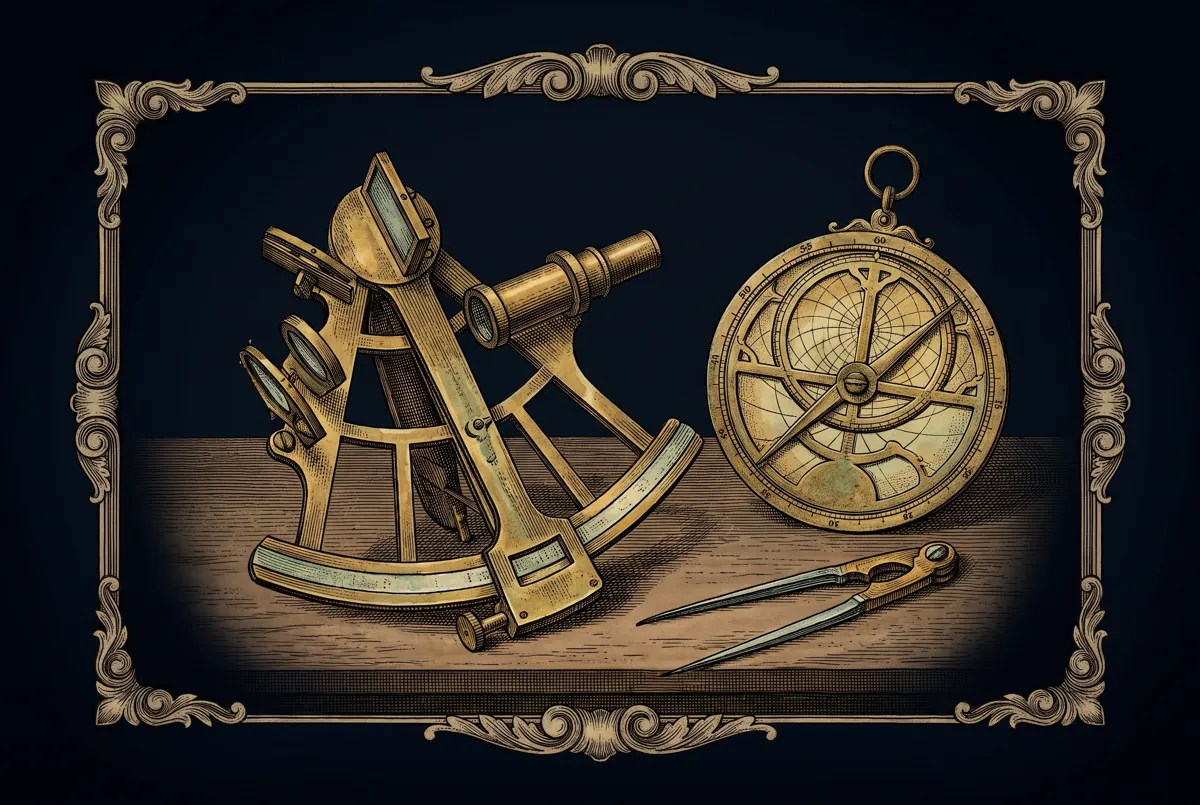
Old instruments
Astronomical Almanac
Direct answer
Astronomical Almanac: The Astronomical Almanac is an annual technical reference containing authoritative astronomical and geodetic data for use by observatories, navigators, surveyors, scientists, and software developers.
$0 today, then $12/month after 7 days. Cancel anytime.
At a glance
- Found in
- Historical Almanacs & Instruments
- Related
- Almanac, Nautical Almanac, Astrolabe, Armillary Sphere
The Astronomical Almanac is an annual authoritative reference for precise astronomical data.
An engraved functional orientation; the page explains the real instrument, method, or publication.
What does your own chart say about you?
Choose love, work or purpose. Your reading is written from your chart. Your reading uses your own birth details.
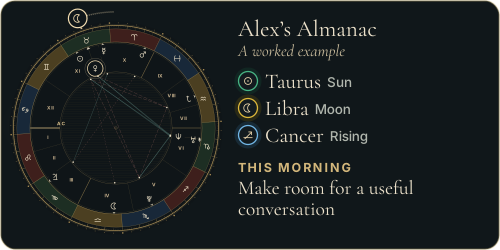
Walk through Alex’s whole example first
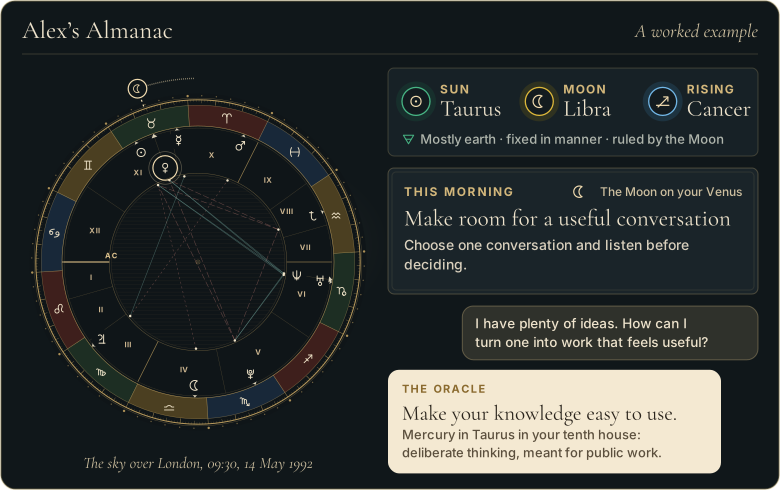
 The Road of AgesSee the turning points of your whole life, from your birth date
See your road's shape
The Road of AgesSee the turning points of your whole life, from your birth date
See your road's shape
Prefer to explore first?
 The Road of AgesThe turning points of your whole life, from your own chart
Walk my road
The Road of AgesThe turning points of your whole life, from your own chart
Walk my road
Free, by email
Your daily Almanac letter
One short letter at 7 each morning: the day’s theme read for your own chart, and one thing to do with it.
The story behind Astronomical Almanac
National observatories developed annual ephemerides for navigation and astronomy; the current publication continues a long collaboration between the U.S. and U.K. nautical almanac offices.
A one-minute story
The Book of the Sky
How people learned to read the sky, from Babylon to the day you were born.

Why Astronomical Almanac matters
Astronomical Almanac supplies documented positions, time scales, constants, and phenomena that allow independent calculations to share a common reference system.
How to read Astronomical Almanac
the Astronomical Almanac or its official data services speaks to precision work, citing the edition, table, time scale, coordinate frame, and any interpolation.
Astronomical Almanac in practice: an example
A researcher may consult the almanac for apparent positions, Earth-orientation quantities, or definitions used in an observing calculation.
Where readings of Astronomical Almanac go wrong
The usual misreading is to copy a value without its units, epoch, reference frame, and time scale or assume an older edition represents current standards.
Sources and editorial method
Research references used for this entry include:
- U.S. Naval Observatory: Astronomical and Navigational Almanacs - Official description of current Astronomical Almanac and Nautical Almanac publications.
- U.S. Naval Observatory: Astronomical Almanac Glossary - Reference definitions for astronomical coordinates, events, calendars, and time scales.
- Source
- The Great Almanac Dictionary
- Category
- Historical Almanacs & Instruments
- Last updated
- 2026-09-26
Consult official astronomical tables
A definition tells you what it is; your own birth chart tells you what it means for you. The Oracle casts your real chart and answers for your love, your work, and your year ahead, in conversation. It opens with the 7-day Seeker trial.
Speak with the OracleRelated terms
More in Historical Almanacs & Instruments
- Celestial Position Fix
- Dioptra
- Hourglass
- Marcq Saint-Hilaire Method
- Noon Sight
- Precession Table
- Star Atlas
- Zenith Sector
From the reference page to your own chart
Every word here
is in your own chart.
- A personal reading about love, work or purpose, written from your chart
- A practical next step to consider
- It opens with 7 days free, with the AI Oracle and daily guidance
$0 today, then $12/month after 7 days. Cancel anytime.
Common questions
What is the Astronomical Almanac?
The Astronomical Almanac is an annual technical reference containing authoritative astronomical and geodetic data for use by observatories, navigators, surveyors, scientists, and software developers.
What do people get wrong about the Astronomical Almanac?
The usual misreading is to copy a value without its units, epoch, reference frame, and time scale or assume an older edition represents current standards.
Free, by email
The Almanac, in your inbox at 7
One short letter at 7 each morning: the day’s theme read for your own chart, and one thing to do with it.