
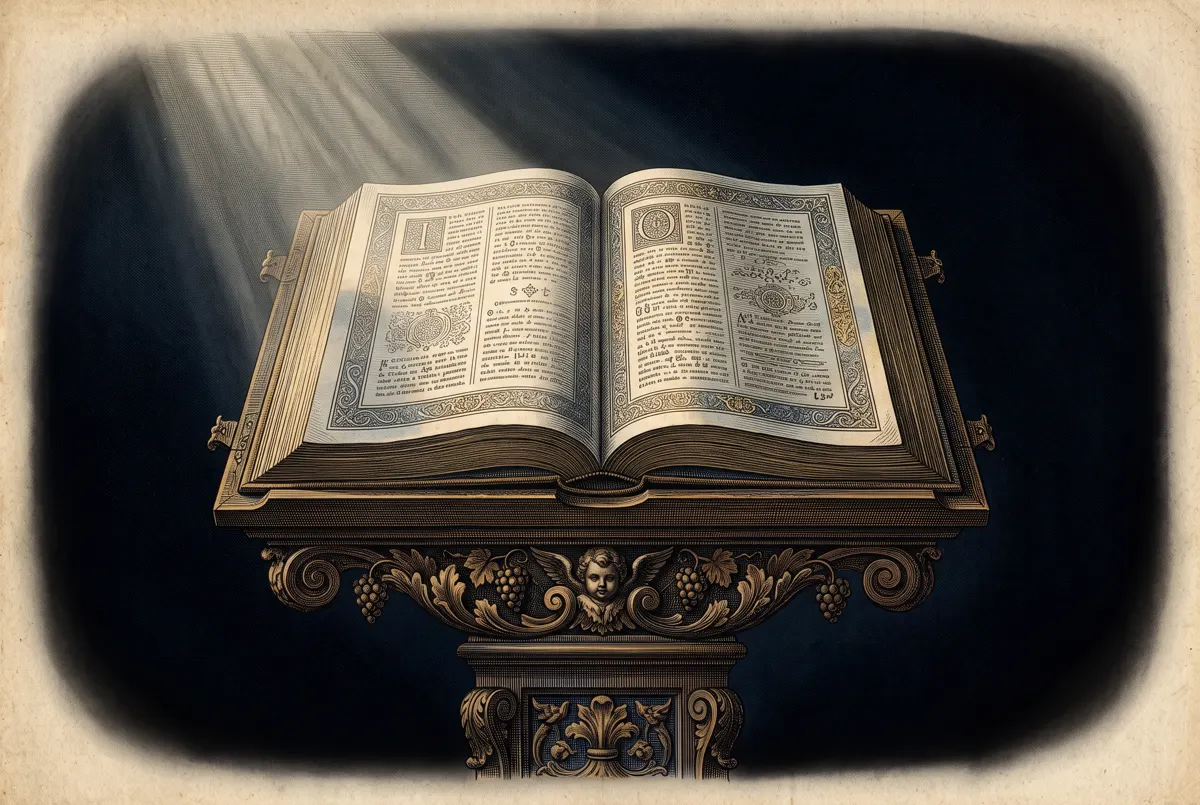
Revelation and apocalyptic imagery
Whore of Babylon
Direct answer
Many historians read the symbol as coded criticism of imperial Rome, drawing on Babylon as an older biblical image of oppressive empire. The passage is not a license to brand a disliked woman, denomination, city, nation, or political opponent with a sexualized insult.
The “Whore of Babylon,” more neutrally called Babylon the Great or the woman of Revelation 17, is an apocalyptic symbol of a wealthy, idolatrous, persecuting city-power. Revelation itself identifies the woman with a great city ruling earthly kings.
$0 today, then $12/month after 7 days. Cancel anytime.
Quick facts
| Image in Revelation | Narrative significance |
|---|---|
| Purple and scarlet | Luxury, royal display, wealth, and corrupt magnificence. |
| Seven-headed beast | A political-apocalyptic power whose heads and horns receive interpretations in the vision. |
| Golden cup | Outward splendor paired with corruption and abominations. |
| Drunk with saints’ blood | Complicity in persecution and violence against witnesses. |
| Great city | The text’s own interpretive identification of the woman in Revelation 17:18. |
Whore of Babylon symbolizes corrupt empire as seductive false communion.
A symbolic reading aid; dates, predictions, and supernatural certainty are deliberately excluded.
What does your own chart say about you?
Choose love, work or purpose. Your reading is written from your chart. Your reading uses your own birth details.
Walk through Alex’s whole example first


 The Road of AgesSee the turning points of your whole life, from your birth date
See your road's shape
The Road of AgesSee the turning points of your whole life, from your birth date
See your road's shape
Prefer to explore first?
 The Road of AgesThe turning points of your whole life, from your own chart
Walk my road
The Road of AgesThe turning points of your whole life, from your own chart
Walk my road
Free, by email
Your daily Almanac letter
One short letter at 7 each morning: the day’s theme read for your own chart, and one thing to do with it.
What Revelation 17-18 depicts
John’s vision shows a richly adorned woman seated on many waters and on a scarlet beast, holding a golden cup and bearing the name Babylon the Great. An interpreting angel explains waters, heads, horns, and the woman, while the following chapter laments the fall of Babylon through the voices of kings, merchants, and seafarers. The imagery connects sexual infidelity, idolatry, economic exploitation, imperial luxury, and violence. Reading both chapters together prevents the memorable female figure from eclipsing the detailed critique of a citywide commercial and political system.
Why Babylon can signify Rome
Biblical Babylon already represented conquest, exile, pride, and opposition to God. Early Jews and Christians could reuse that symbolic name for a newer imperial center. Revelation’s seven mountains, rule over kings, maritime wealth, and persecution have led many scholars to see Rome as the primary contemporary referent. That does not exhaust the symbol: apocalyptic writing can portray a historical empire while creating a reusable theological type of corrupt power. Responsible interpretation begins with the first-century setting before extending the critique to later systems.
Competing identifications through history
Later interpreters have identified Babylon with rival churches, specific cities, political regimes, economic orders, or a final end-times institution. Reformation polemics famously applied the image to papal Rome, while Catholic writers and many other groups developed counter-readings. Such uses often reveal the interpreter’s conflict as much as the text. A credible argument must explain all major features, identify its historical horizon, and acknowledge alternatives; selecting one color or number and ignoring the chapters’ economic and violent dimensions is not adequate exegesis.
Reading a sexualized symbol without weaponizing it
Translations vary between “whore” and “prostitute,” and contemporary discussion can foreground “Babylon the Great” or “the woman” when quoting the insult is unnecessary. The target within the vision is a city and imperial system, not women as a class. Applying the label to a living woman can reproduce misogyny and harassment; applying it casually to a religious minority can inflame sectarian hostility. The passage’s ethical force lies in exposing seduction by luxury, domination, exploitation, and bloodshed. Interpretation should scrutinize systems (including one’s own) rather than provide sacred vocabulary for abuse.
Sources and editorial method
Research and editorial references used for this page include:
- NRSVUE: Revelation 17-18 - Primary text for the woman, beast, interpretive angel, and fall of Babylon.
- Encyclopaedia Britannica: Revelation to John - Reference context for the book’s apocalyptic genre, setting, and interpretation.
These references support the factual, historical, textual, or interpretive claims on this page. Interpretive traditions are identified as such, and factual claims are kept separate from symbolic claims.
Related reading
Discern seductive empire
A definition tells you what it is; your own birth chart tells you what it means for you. The Oracle casts your real chart and answers for your love, your work, and your year ahead, in conversation. It opens with the 7-day Seeker trial.
Speak with the OracleThe Cosmic Codex offers a reflective map of your year, written from your chart, never a prediction. Open the Cosmic Codex
More in Prophecy & Apocalypse
- Armageddon
- Daniel's Statue
- Final Judgment
- Lamb's Book of Life
- Rapture
- Seven Spirits of God
- Tribulation
From the reference page to your own chart
Every word here
is in your own chart.
- A personal reading about love, work or purpose, written from your chart
- A practical next step to consider
- It opens with 7 days free, with the AI Oracle and daily guidance
$0 today, then $12/month after 7 days. Cancel anytime.
Common questions
Does Revelation identify the Whore of Babylon as a specific woman?
No. Revelation 17:18 interprets the woman as “the great city” with rule over earthly kings, making the figure a personification.
Is the symbol definitely Rome?
Rome is the leading historical interpretation because numerous details fit the first-century imperial setting. The symbol can also be read typologically, but later applications should not erase that context.
What are the “many waters”?
The interpreting angel identifies them as peoples, multitudes, nations, and languages, emphasizing the city-power’s broad reach.
Free, by email
The Almanac, in your inbox at 7
One short letter at 7 each morning: the day’s theme read for your own chart, and one thing to do with it.
