Occult lore
The Long Lost Friend
Direct answer
The Long Lost Friend is a Pennsylvania German folk-magic and charm book associated with healing, protection, household problems, and practical remedies.
The Long Lost Friend is a folk-charm book tied to Pennsylvania German powwow tradition.
$0 today, then $12/month after 7 days. Cancel anytime.
At a glance
- Found in
- Spells & Occult Terms
- Related
- Spell, Grimoire, Discernment, Spiritual Warfare
What does your own chart say about you?
Choose love, work or purpose. Your reading is written from your chart. Your reading uses your own birth details.
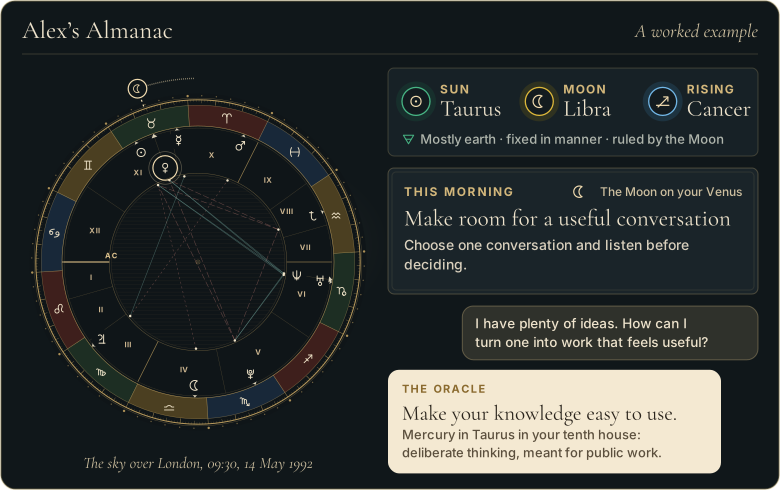
Walk through Alex’s whole example first
 The Road of AgesSee the turning points of your whole life, from your birth date
See your road's shape
The Road of AgesSee the turning points of your whole life, from your birth date
See your road's shape
Prefer to explore first?
 The Road of AgesThe turning points of your whole life, from your own chart
Walk my road
The Road of AgesThe turning points of your whole life, from your own chart
Walk my road
Free, by email
Your daily Almanac letter
One short letter at 7 each morning: the day’s theme read for your own chart, and one thing to do with it.
The story behind The Long Lost Friend
The book was printed in the nineteenth century and became influential in Pennsylvania German and American folk-magic contexts.
The spiritual meaning of The Long Lost Friend
Spiritually, The Long Lost Friend asks whether comfort is being sought through faith or formula.
The Long Lost Friend in the Bible
Christian care should not make prayer or Scripture into a mechanical charm for healing, luck, or protection.
Why The Long Lost Friend matters
The Long Lost Friend matters because it strongly shaped American folk-magic lore while mixing Christian language with charm practice.
Sources and editorial method
This entry summarizes the tradition in the Almanac's own words; where no source is listed, it is an editorial summary rather than a primary text, and symbolic readings are named as the tradition's, not as fact.
Recorded here as history and lore. No rite is taught on this page.
- Source
- The Great Almanac Dictionary
- Category
- Spells & Occult Terms
- Last updated
- 2026-09-26
Read charm books as culture
A definition tells you what it is; your own birth chart tells you what it means for you. The Oracle casts your real chart and answers for your love, your work, and your year ahead, in conversation. It opens with the 7-day Seeker trial.
Speak with the OracleYour year, written once from your chart alone: the Cosmic Codex reads the whole of it, month by month. Open the Cosmic Codex
Related terms
More in Spells & Occult Terms
- Ars Almadel
- Ceremonial Circle
- Dirt Magic
- Glamour Spell
- Jinx Spell
- Munich Manual of Demonic Magic
- Poppet Magic
- Sixth and Seventh Books of Moses
From the reference page to your own chart
Every word here
is in your own chart.
- A personal reading about love, work or purpose, written from your chart
- A practical next step to consider
- It opens with 7 days free, with the AI Oracle and daily guidance
$0 today, then $12/month after 7 days. Cancel anytime.
Common questions
What is The Long Lost Friend?
The Long Lost Friend is a Pennsylvania German folk-magic and charm book associated with healing, protection, household problems, and practical remedies.
Where does The Long Lost Friend come from?
The book was printed in the nineteenth century and became influential in Pennsylvania German and American folk-magic contexts.
What does The Long Lost Friend mean spiritually?
Spiritually, The Long Lost Friend asks whether comfort is being sought through faith or formula.
Free, by email
The Almanac, in your inbox at 7
One short letter at 7 each morning: the day’s theme read for your own chart, and one thing to do with it.