Star lore
Telescopium
Direct answer
Telescopium is a faint southern constellation named for the telescope and situated between Ara, Pavo, Sagittarius, and Corona Australis.
Telescopium is Lacaille's Telescope, an inconspicuous southern instrument constellation.
$0 today, then $12/month after 7 days. Cancel anytime.
At a glance
- Found in
- Constellations & Star Lore
- Related
- Sextans, Taurus Constellation, Triangulum, Triangulum Australe

What does your own chart say about you?
Choose love, work or purpose. Your reading is written from your chart. Your reading uses your own birth details.
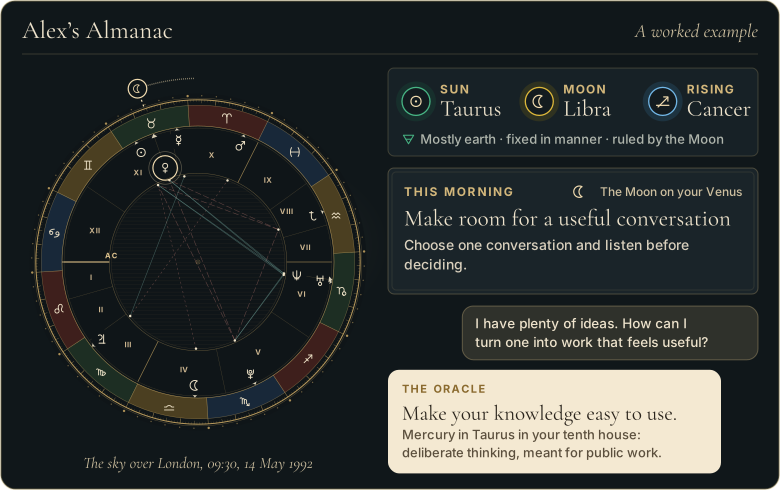
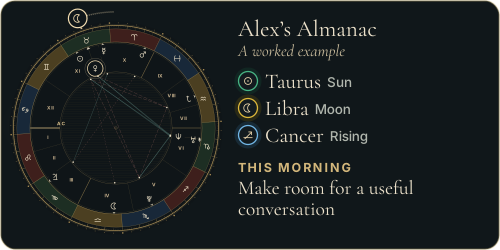
Walk through Alex’s whole example first
 The Road of AgesSee the turning points of your whole life, from your birth date
See your road's shape
The Road of AgesSee the turning points of your whole life, from your birth date
See your road's shape
Prefer to explore first?
 The Road of AgesThe turning points of your whole life, from your own chart
Walk my road
The Road of AgesThe turning points of your whole life, from your own chart
Walk my road
Free, by email
Your daily Almanac letter
One short letter at 7 each morning: the day’s theme read for your own chart, and one thing to do with it.
The story behind Telescopium
Lacaille introduced Telescopium in the eighteenth century; later boundaries reduced the long instrument shown on his map.
A one-minute story
The Road of the Sun
Where the twelve signs came from, and why they carry the names they do.

Why Telescopium matters
Telescopium’s name honors the instrument that extended astronomy beyond naked-eye limits, even though its own stars are modest.
Telescopium in practice: an example
Alpha Telescopii is the brightest remaining star and confirms the center of the modern region.
Where readings of Telescopium go wrong
Some stars once drawn as part of Lacaille's telescope now belong to neighboring constellations.
Sources and editorial method
Research references used for this entry include:
- International Astronomical Union: The Constellations - Official names, abbreviations, and boundaries for the 88 modern constellations.
- NASA Space Place: What Are Constellations? - NASA introduction to constellation regions, patterns, visibility, and seasonal sky changes.
- Source
- The Great Almanac Dictionary
- Category
- Constellations & Star Lore
- Last updated
- 2026-09-26
Aim Lacaille's Telescope southward
A definition tells you what it is; your own birth chart tells you what it means for you. The Oracle casts your real chart and answers for your love, your work, and your year ahead, in conversation. It opens with the 7-day Seeker trial.
Speak with the OracleRelated terms
More in Constellations & Star Lore
From the reference page to your own chart
Every word here
is in your own chart.
- A personal reading about love, work or purpose, written from your chart
- A practical next step to consider
- It opens with 7 days free, with the AI Oracle and daily guidance
$0 today, then $12/month after 7 days. Cancel anytime.
Common questions
What is Telescopium?
Telescopium is a faint southern constellation named for the telescope and situated between Ara, Pavo, Sagittarius, and Corona Australis.
What do people get wrong about Telescopium?
Some stars once drawn as part of Lacaille's telescope now belong to neighboring constellations.
Free, by email
The Almanac, in your inbox at 7
One short letter at 7 each morning: the day’s theme read for your own chart, and one thing to do with it.