Folk-magic terminology
Taglock
Direct answer
The word is modern occult vocabulary rather than one universally defined historical category. Hair, handwriting, photographs, clothing, names, or soil may be called taglocks, but traditions differ and there is no scientific evidence that such objects transmit magical influence.
A taglock is an object, trace, name, image, or piece of personal material believed by some magical traditions to create a symbolic link to a particular person or target.
$0 today, then $12/month after 7 days. Cancel anytime.
Quick facts
| Question | Direct answer |
|---|---|
| Underlying idea | Sympathetic connection: something associated with a person is treated as representing that person. |
| Related term | “Personal concern” in some African American folk-magic and rootwork discussions. |
| Is every keepsake a taglock? | No. The label depends on intended use and the vocabulary of a specific community. |
| Primary ethical concern | Consent, privacy, theft, biological material, and coercive targeting. |
What does your own chart say about you?
Choose love, work or purpose. Your reading is written from your chart. Your reading uses your own birth details.
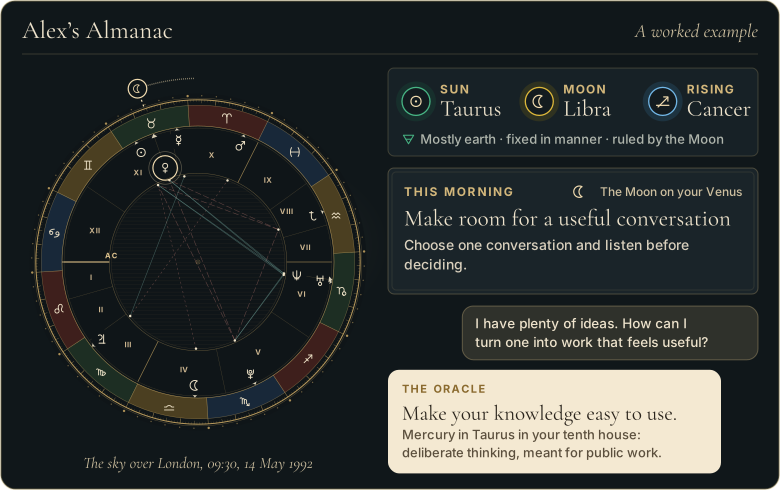
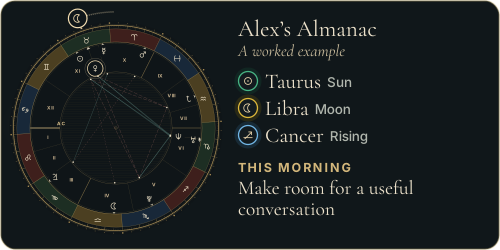
Walk through Alex’s whole example first
 The Road of AgesSee the turning points of your whole life, from your birth date
See your road's shape
The Road of AgesSee the turning points of your whole life, from your birth date
See your road's shape
Prefer to explore first?
 The Road of AgesThe turning points of your whole life, from your own chart
Walk my road
The Road of AgesThe turning points of your whole life, from your own chart
Walk my road
Free, by email
Your daily Almanac letter
One short letter at 7 each morning: the day’s theme read for your own chart, and one thing to do with it.
What modern practitioners call a taglock
The term commonly denotes a physical or informational link selected to stand for a person, animal, place, or object in sympathetic magic. Examples discussed in ethnographic and practitioner literature range from a written name or photograph to an item that has been worn. The perceived strength of a link often follows proximity: bodily material is treated as more personal than a printed name. Those rankings are internal beliefs, not measured properties. “Taglock” also appears in fiction and internet occultism, where its meaning may be broadened far beyond any documented folk practice.
Personal links in the history of magic
The idea that contact or resemblance creates an enduring connection is much older than the particular word. Anthropologists have described contagious magic, in which something once touching a person remains symbolically linked, and homeopathic or imitative magic, in which likeness represents likeness. European witchcraft accusations, healing charms, love magic, and curse traditions sometimes involved clothing, hair, footprints, or images. African American rootwork sources use their own culturally specific language of personal concerns. Similarity across these examples does not make them one secret universal system; each practice needs its own historical setting.
What an object can and cannot establish
A strand of hair can contain biological information; a photograph can reveal location; handwriting and account details can identify someone. Those real privacy risks do not show that the object carries an invisible magical channel. Finding a tied bundle or unfamiliar object may have ordinary explanations and does not prove who placed it or why. Avoid handling unknown powders, sharps, or biological material with bare hands, but respond as a safety and evidence question. Photograph the scene, protect privacy, and involve property managers or authorities when there is trespass, threat, or hazardous material.
Consent and respectful research
Taking hair, clothing, private images, location data, or intimate messages without permission is an ethical breach even if no supernatural effect exists. Using such material to frighten, blackmail, stalk, or imply control can be abusive. Historical collections also require care: descriptions made by hostile observers may sensationalize minority religions, while commercial websites may detach “personal concern” from African American history. A responsible account identifies its source community, avoids procedural targeting instructions, and treats living traditions as more than a supply of exotic techniques. Curiosity never overrides another person’s bodily autonomy or privacy.
How to study Taglock as history
The safest and most accurate way to approach Taglock is as a textual, artistic, or social-history subject. Manuscripts and later printed editions often disagree, while modern websites freely combine material from unrelated periods. Check the date, language, manuscript family, editor, and provenance before repeating a claim. A description in a grimoire records what a text says; it does not establish that the named being or promised effect exists. This article therefore explains vocabulary, transmission, imagery, and reception without providing invocations, seals for use, coercive procedures, or instructions aimed at another person. Anyone experiencing fear, threats, stalking, coercion, or distress should address the observable situation and seek appropriate practical or professional support rather than escalating an occult explanation.
Sources and editorial method
Research and editorial references used for this page include:
- Encyclopaedia Britannica: Magic - Historical overview including sympathetic and contagious theories of magic.
- Library of Congress: Voices Remembering Slavery and Folk Belief Collections - Primary-source collection portal for documented American folklore and cultural history.
These references support the factual, historical, textual, or interpretive claims on this page. Interpretive traditions are identified as such, and factual claims are kept separate from symbolic claims.
Related reading
Respect privacy and consent
A definition tells you what it is; your own birth chart tells you what it means for you. The Oracle casts your real chart and answers for your love, your work, and your year ahead, in conversation. It opens with the 7-day Seeker trial.
Speak with the OracleYour year, written once from your chart alone: the Cosmic Codex reads the whole of it, month by month. Open the Cosmic Codex
More in Spells & Occult Terms
- Abramelin Operation
- Book of Saint Cyprian
- Crossroads Magic
- Folk Magic
- Hoodoo
- Mediumship
- Planchette
- Seance
From the reference page to your own chart
Every word here
is in your own chart.
- A personal reading about love, work or purpose, written from your chart
- A practical next step to consider
- It opens with 7 days free, with the AI Oracle and daily guidance
$0 today, then $12/month after 7 days. Cancel anytime.
Common questions
Is a photograph a taglock?
Some modern practitioners use it that way, but the term and claimed strength vary by tradition.
Can someone harm me through a stolen object?
There is no reliable evidence of magical transmission, though theft, stalking, and privacy violations are real and should be addressed.
Is taglock an ancient word?
No. It is modern vocabulary applied to a much older family of sympathetic-link ideas.
Free, by email
The Almanac, in your inbox at 7
One short letter at 7 each morning: the day’s theme read for your own chart, and one thing to do with it.
