
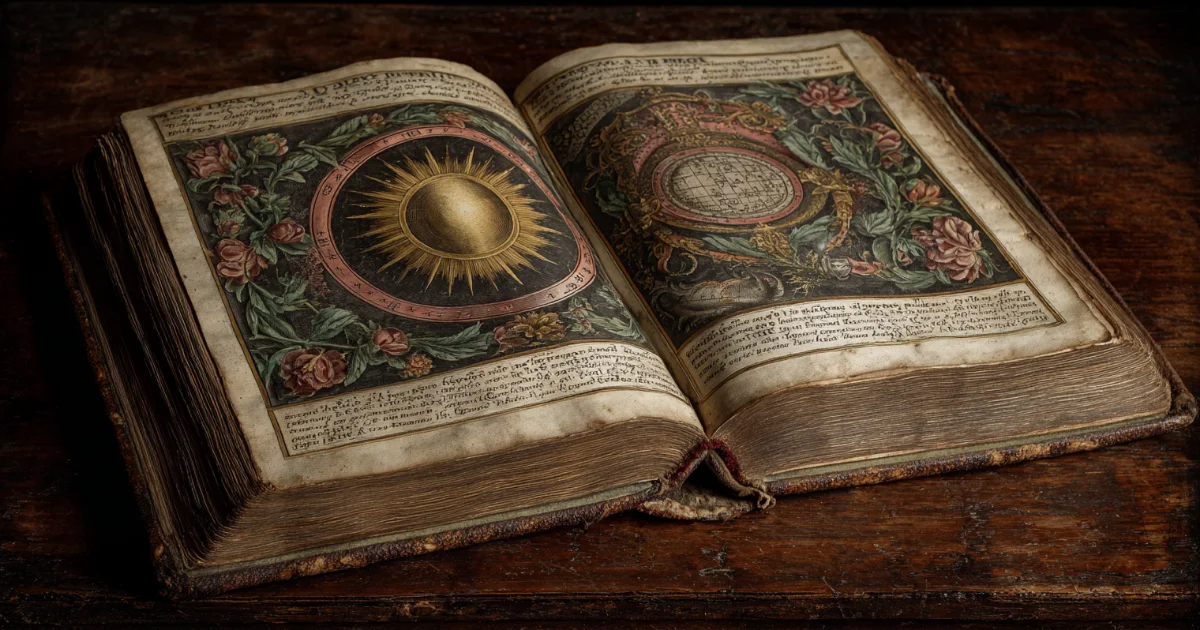
Grimoires and textual history
Stolas
Direct answer
Stolas should be discussed as a character described by a historical magical text, not as a verified entity or a source of astronomical knowledge. The familiar owl image is largely a later visual convention; the principal English textual tradition says “a mighty raven.”
Stolas is a figure in the early modern grimoire text known as the Ars Goetia. The text lists Stolas or Stolos as its thirty-sixth spirit, describes a raven-like first appearance followed by human form, and associates the figure with astronomy, herbs, and precious stones.
$0 today, then $12/month after 7 days. Cancel anytime.
Quick facts
| Textual feature | What the Ars Goetia tradition states |
|---|---|
| Number in the list | Thirty-sixth spirit |
| Name variants | Stolas and Stolos |
| Rank | A great and powerful prince |
| Appearance | First as a mighty raven, then in human form |
| Attributed teaching | Astronomy and the properties or virtues of herbs and precious stones |
| Command | Twenty-six legions, according to the text |

What does your own chart say about you?
Choose love, work or purpose. Your reading is written from your chart. Your reading uses your own birth details.
Walk through Alex’s whole example first


 The Road of AgesSee the turning points of your whole life, from your birth date
See your road's shape
The Road of AgesSee the turning points of your whole life, from your birth date
See your road's shape
Prefer to explore first?
 The Road of AgesThe turning points of your whole life, from your own chart
Walk my road
The Road of AgesThe turning points of your whole life, from your own chart
Walk my road
Free, by email
Your daily Almanac letter
One short letter at 7 each morning: the day’s theme read for your own chart, and one thing to do with it.
What the source actually says
The Ars Goetia is the first book of the composite work commonly called the Lesser Key of Solomon or Lemegeton. In its catalogue, Stolas appears as number thirty-six and is given the rank of prince. Edited English transcriptions based on seventeenth-century manuscripts describe an initial appearance as a mighty raven, followed by human form. The entry attributes instruction in astronomy and knowledge of herbs and precious stones to the figure.
These statements report the contents of a grimoire. Historical wording such as “governs twenty-six legions” belongs to the text’s demonological world and should be introduced with verbs such as “lists,” “describes,” or “claims.” Presenting it without attribution turns a textual fact (what a manuscript says) into an unsupported claim about reality.
Manuscripts and publication history
The Lemegeton survives in early modern manuscript copies rather than an original ancient book written by King Solomon. Important witnesses include British Library Sloane manuscripts, and their spellings, punctuation, drawings, and details can differ. The title’s attribution to Solomon is part of the work’s authority-building literary tradition, not accepted proof of Solomonic authorship.
Samuel Liddell MacGregor Mathers prepared an English edition that Aleister Crowley published in 1904. That edition helped shape twentieth-century occult reception and later internet summaries. A responsible article distinguishes manuscript evidence, an editor’s reconstruction, and subsequent adaptations instead of treating every modern list as an independent ancient source.
Raven in the text, owl in later imagery
Many current illustrations portray Stolas as a long-legged or crowned owl. The influential English Goetia wording, however, says “mighty raven.” Raven, crow, and owl imagery can blur as artists reinterpret a nocturnal bird figure, and later demonological illustration has its own transmission history. An image caption should name its edition and date instead of claiming that one modern design is the original appearance.
This difference is a useful lesson in source criticism. A visual search tends to rank recent games, animation, fan art, tattoos, and commercial occult designs above manuscript scans. Popularity does not establish textual priority.
What “teaches astronomy” meant
Astronomy in early modern Europe overlapped in vocabulary and practice with astrology, calendrical calculation, celestial navigation, natural philosophy, and learned magic. The short catalogue entry does not provide a scientific lesson, observational method, or star catalogue. It merely assigns a field of supposed knowledge to the spirit.
For accurate information about planets, stars, or the history of astronomy, use modern observatories and scholarly histories. The attribution is valuable for studying how grimoire authors organized knowledge and authority, not as evidence that ritual texts can replace astronomical observation.
Modern adaptations
Stolas now appears in fiction, games, animation, music, visual art, and online occult culture. Adaptations may change gender, personality, family relationships, powers, costume, or species. Those creative versions can be studied on their own terms but should not be back-projected into the seventeenth-century manuscripts.
When comparing a fictional Stolas with the grimoire entry, use a simple source ladder: identify what appears in a dated manuscript or critical transcription, what an edition added, what later demonological art depicts, and what the modern work invented. This preserves both historical accuracy and creative freedom.
Safety and scope
This entry is historical and literary. It does not provide seals, conjurations, offerings, coercive instructions, or claims that unusual experiences prove supernatural contact. Readers dealing with fear, intrusive experiences, or a sense of being commanded should seek grounded support from someone trustworthy and, when distress is persistent or affects daily functioning, a qualified health professional.
Sources and editorial method
Research and editorial references used for this page include:
- Esoteric Archives: The Lesser Key of Solomon - Edited transcription identifying manuscript witnesses and giving the Stolas/Stolos entry in context.
- Project Gutenberg: The Book of the Goetia of Solomon the King - Public-domain text of the Mathers/Crowley publication, useful for checking number, wording, rank, attributes, and legions.
These references support the factual, historical, textual, or interpretive claims on this page. Interpretive traditions are identified as such, and factual claims are kept separate from symbolic claims.
Related reading
Study nature with humility
A definition tells you what it is; your own birth chart tells you what it means for you. The Oracle casts your real chart and answers for your love, your work, and your year ahead, in conversation. It opens with the 7-day Seeker trial.
Speak with the OracleThe Cosmic Codex offers a reflective map of your year, written from your chart, never a prediction. Open the Cosmic Codex
More in Demons & Fallen Beings
From the reference page to your own chart
Every word here
is in your own chart.
- A personal reading about love, work or purpose, written from your chart
- A practical next step to consider
- It opens with 7 days free, with the AI Oracle and daily guidance
$0 today, then $12/month after 7 days. Cancel anytime.
Common questions
Is Stolas an owl?
Many later images use an owl, but the principal English Ars Goetia wording describes a mighty raven before a human form. Always attribute an image to its particular edition or adaptation.
Is Stolas from ancient Solomon?
The work claims Solomonic authority, but the surviving Lemegeton manuscripts are early modern. Historians do not treat the attribution as proof that Solomon wrote the text.
Why is Stolas associated with astronomy?
The catalogue assigns astronomy, herbs, and precious stones as fields of supposed instruction. It does not supply an astronomical theory or observational evidence.
Are Stolas and Stolos different figures?
They are spelling variants used for the same numbered entry in the textual tradition.
Free, by email
The Almanac, in your inbox at 7
One short letter at 7 each morning: the day’s theme read for your own chart, and one thing to do with it.
