

Biblical language and pastoral care
Spirit of Heaviness
Direct answer
Read the phrase inside Isaiah 61’s movement from mourning toward restoration. It can name a real experience of sorrow in faith language, but it should not be used to blame suffering people, deny medical care, or declare every case of depression a supernatural attack.
“Spirit of heaviness” is the King James Version’s wording in Isaiah 61:3 for profound faintness, despair, or a burdened inner state. In context, it belongs to a poetic promise of comfort for mourners; the verse does not introduce a named demon or offer a clinical diagnosis.
$0 today, then $12/month after 7 days. Cancel anytime.
Quick facts
| Question | Careful answer |
|---|---|
| Where does the phrase appear? | Isaiah 61:3 in the King James Version |
| What is the context? | Comfort, restoration, praise, and renewed identity for people who mourn |
| Do all translations use the phrase? | No. Modern translations use wording such as a faint spirit or a spirit of despair |
| Is it a named demon in the verse? | No. The passage describes a condition or disposition; it does not introduce a proper name |
| Is it the same as depression? | No. Spiritual language and clinical diagnosis answer different questions, though one person may use both |

What does your own chart say about you?
Choose love, work or purpose. Your reading is written from your chart. Your reading uses your own birth details.
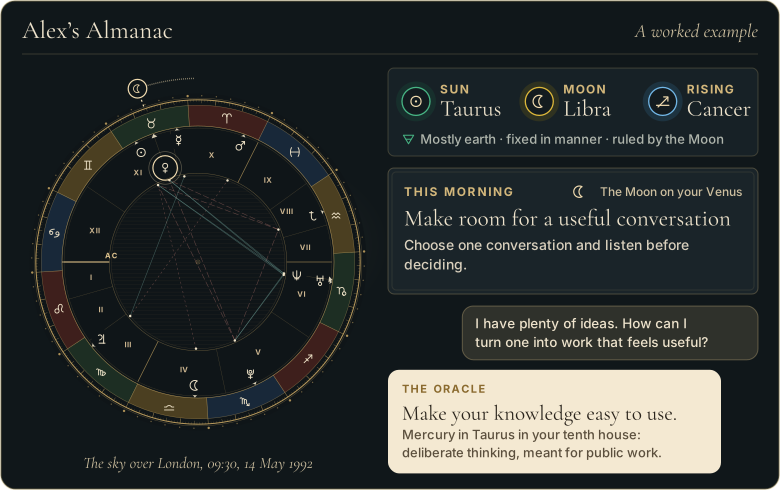
Walk through Alex’s whole example first
 The Road of AgesSee the turning points of your whole life, from your birth date
See your road's shape
The Road of AgesSee the turning points of your whole life, from your birth date
See your road's shape
Prefer to explore first?
 The Road of AgesThe turning points of your whole life, from your own chart
Walk my road
The Road of AgesThe turning points of your whole life, from your own chart
Walk my road
Free, by email
Your daily Almanac letter
One short letter at 7 each morning: the day’s theme read for your own chart, and one thing to do with it.
Meaning in Isaiah 61
Isaiah 61 opens with a proclamation of good news, liberty, comfort, and restoration. Verse 3 addresses those who mourn in Zion through a series of poetic exchanges: beauty instead of ashes, joy instead of mourning, and praise instead of heaviness. The images describe reversal and renewed communal life after devastation.
In the King James Version, “spirit” can refer to the inward disposition or condition of a person, while “heaviness” conveys faintness, dimness, or despair. The grammar does not name an individual being called Heaviness. Reading the phrase as a proper demon goes beyond what this verse itself says.
Why translations differ
English translations choose different words because no single English phrase captures every shade of the Hebrew. Readers may encounter “faint spirit,” “spirit of despair,” or similar language where the KJV has “spirit of heaviness.” Comparing translations makes the emotional condition clearer and prevents an older English expression from being treated as a technical classification.
The contrast with a garment of praise is poetic and communal. It is not a command to perform cheerfulness until symptoms disappear. Lament and comfort coexist throughout biblical literature, and the surrounding passage speaks of binding wounds and rebuilding ruined places as well as praise.
Later Christian use
Pastors and worship communities often use “spirit of heaviness” to describe grief, discouragement, oppression, emotional exhaustion, or a season in which prayer feels difficult. In some charismatic settings it is interpreted as spiritual attack. Those uses should be identified as later pastoral or denominational interpretations rather than silently inserted into Isaiah’s wording.
Helpful care listens before assigning a cause. Prayer, worship, lament, rest, friendship, sacramental life, and practical assistance can be meaningful supports. They should not become tests of faith or substitutes for safety planning, trauma-informed care, medication, or therapy when those are needed.
Grief, heaviness, and clinical depression

Sadness and grief are human responses, while depressive disorders are health conditions evaluated through patterns of symptoms, duration, severity, impairment, medical context, and risk. Possible signs include persistent low mood, loss of interest, hopelessness, fatigue, sleep or appetite changes, difficulty concentrating, irritability, physical complaints, and thoughts of death. No dictionary page can diagnose a reader.
Spiritual belief and clinical care are compatible. A person may describe suffering in biblical language and receive evidence-based treatment. Telling someone that depression proves weak faith, hidden sin, possession, or failure to praise can increase shame and delay help. Ask what the person is experiencing, how long it has lasted, whether daily life is affected, and what support is available.
How to respond to someone who feels heavy
- Listen without immediately correcting theology or forcing an explanation.
- Ask about sleep, food, safety, isolation, recent loss, physical health, and ability to manage ordinary responsibilities.
- Offer concrete help such as company, transport, meals, childcare, an appointment, or contact with a trusted pastor or clinician.
- Do not promise confidentiality if someone is in immediate danger; involve emergency or crisis support.
- Continue contact. Severe distress often reduces the energy needed to ask for help again.
When urgent help is needed
Take talk of suicide, self-harm, inability to stay safe, command experiences, or imminent harm seriously. In the United States, call or text 988 for the Suicide & Crisis Lifeline; call emergency services when danger is immediate. Outside the United States, use the local emergency number or an established crisis service in the person’s country.
If possible, stay with the person, reduce access to means of harm, and connect them directly with help. This is not a failure of prayer or pastoral care. Protecting life comes first.
Sources and editorial method
Research and editorial references used for this page include:
- Bible Gateway: Isaiah 61:1,3, King James Version - Primary biblical context for the KJV phrase and its surrounding restoration imagery.
- National Institute of Mental Health: Depression - Evidence-based overview of depressive symptoms, risk, diagnosis, and treatment.
- National Institute of Mental Health: My Mental Health, Do I Need Help? - Practical guidance for matching symptom severity with self-care, professional care, or urgent help.
- 988 Suicide & Crisis Lifeline - United States call, text, and chat crisis support; readers elsewhere should use their local service.
These references support the factual, historical, textual, or interpretive claims on this page. Interpretive traditions are identified as such, and factual claims are kept separate from symbolic claims.
Related reading
Bring heaviness into support
A definition tells you what it is; your own birth chart tells you what it means for you. The Oracle casts your real chart and answers for your love, your work, and your year ahead, in conversation. It opens with the 7-day Seeker trial.
Speak with the OracleThe Cosmic Codex offers a reflective map of your year, written from your chart, never a prediction. Open the Cosmic Codex
More in Curses & Spiritual Warfare
- Succubus
- Belt of Truth
- Curse of Cain
- Demonic Harassment
- Haunted Object
- Legal Right
- Prayer Against Evil
- Sickness Curse
From the reference page to your own chart
Every word here
is in your own chart.
- A personal reading about love, work or purpose, written from your chart
- A practical next step to consider
- It opens with 7 days free, with the AI Oracle and daily guidance
$0 today, then $12/month after 7 days. Cancel anytime.
Common questions
Is the spirit of heaviness a demon?
Isaiah 61:3 does not introduce a named demon. It uses poetic language for an inward state of faintness, despair, or mourning. Some later ministries interpret it differently, but that should be labeled as interpretation.
Does praise cure depression?
Praise may be meaningful spiritual support, but depression can require professional assessment and treatment. Worship should not be used to blame a person or delay needed care.
Which Bible translation says “spirit of heaviness”?
The phrase is especially associated with the King James Version of Isaiah 61:3. Other translations often use “faint spirit” or “spirit of despair.”
Can Christians use therapy or medication?
Yes. Many Christians understand skilled health care, pastoral support, prayer, and community care as compatible rather than competing responses. Treatment decisions should be made with qualified clinicians.
Free, by email
The Almanac, in your inbox at 7
One short letter at 7 each morning: the day’s theme read for your own chart, and one thing to do with it.
