
Illness beliefs and safety
Sickness Curse
Direct answer
New, severe, or worsening symptoms require medical assessment whether or not a curse is feared. Do not stop prescribed treatment, ingest an unknown remedy, or accuse someone based on dreams, divination, coincidence, or another person’s paid diagnosis.
A sickness curse is a belief that hostile supernatural action caused physical or mental symptoms. Such explanations occur in many cultures and can shape real distress and help-seeking, but they cannot identify a medical cause or a responsible person.
$0 today, then $12/month after 7 days. Cancel anytime.
Quick facts
| Situation | Safer response |
|---|---|
| Emergency symptoms | Use local emergency services for severe breathing difficulty, chest pain, stroke signs, major bleeding, seizure, or immediate danger. |
| Persistent symptoms | Arrange evaluation with a licensed clinician and describe onset, duration, medications, exposures, and changes. |
| Suspected perpetrator | Do not confront or retaliate without evidence of real-world threatening conduct. |
| Spiritual support | Use non-harmful practices only alongside (not instead of) needed medical or mental-health care. |

What does your own chart say about you?
Choose love, work or purpose. Your reading is written from your chart. Your reading uses your own birth details.
Walk through Alex’s whole example first
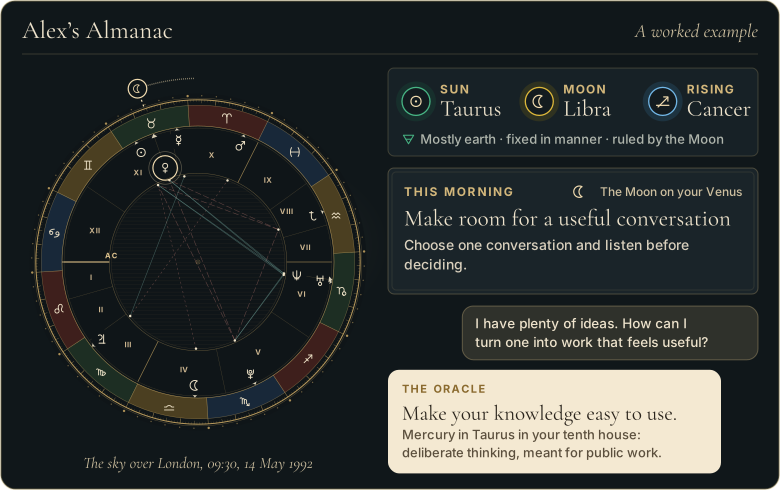
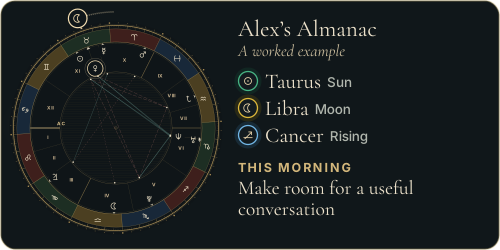
 The Road of AgesSee the turning points of your whole life, from your birth date
See your road's shape
The Road of AgesSee the turning points of your whole life, from your birth date
See your road's shape
Prefer to explore first?
 The Road of AgesThe turning points of your whole life, from your own chart
Walk my road
The Road of AgesThe turning points of your whole life, from your own chart
Walk my road
Free, by email
Your daily Almanac letter
One short letter at 7 each morning: the day’s theme read for your own chart, and one thing to do with it.
Why curse explanations appear around illness
Illness can be frightening, unpredictable, and socially disruptive. Communities have explained it through infection, imbalance, divine judgment, spirit intrusion, envy, broken taboo, ancestral conflict, witchcraft, or combinations of natural and supernatural causes. These explanatory models influence whom a person consults and what treatment feels acceptable. Respectful care listens to the belief without endorsing an unverified cause. A cultural tradition is not itself a pathology, and a clinician can discuss it while still testing for disease, medication effects, trauma, sleep disruption, and environmental exposure.
Why ordinary diagnosis must come first
Many treatable conditions initially produce vague fatigue, pain, nausea, nightmares, palpitations, or mood change. Waiting for supernatural confirmation can allow infection, neurological disease, poisoning, endocrine problems, medication interactions, or mental-health crises to worsen. Keep a symptom timeline, record substances and prescriptions, and tell the clinician what you fear; concealment makes assessment harder. If an initial evaluation is inconclusive, ask about follow-up and appropriate second opinion rather than assuming absence of an immediate answer proves a curse.
How fear can intensify genuine symptoms
Expectation of harm can increase attention to bodily sensations and contribute to a nocebo response, while chronic fear affects sleep, pain, appetite, concentration, and autonomic arousal. This does not mean symptoms are imaginary. It means belief and physiology can interact, making reassurance, accurate information, and stress support clinically relevant. Repeated readings, checking for signs, and consuming frightening stories may create a feedback loop. Reduce exposure, maintain food and sleep routines where possible, and involve a trusted person who will not reinforce accusations.
Recognizing exploitation and choosing safe support
Warning signs include a stranger declaring a curse from a photo, insisting only they can remove it, demanding escalating money, providing unknown powders or drinks, discouraging doctors, or naming a family member as the attacker. These tactics exploit fear and can cause poisoning, debt, isolation, or violence. Non-harmful prayer, pastoral care, or culturally familiar comfort can coexist with treatment if freely chosen. When there are actual threats, preserve evidence and contact appropriate safeguarding or legal resources. When fear becomes fixed, disabling, or includes commands, seek urgent mental-health support with compassion rather than shame.
Sources and editorial method
Research and editorial references used for this page include:
- World Health Organization: Disinformation and public health - Guidance on health misinformation and the harms of unsupported medical claims.
- U.S. Surgeon General: Health misinformation - Evidence-based resource on evaluating claims that can interfere with health decisions.
These references support the factual, historical, textual, or interpretive claims on this page. Interpretive traditions are identified as such, and factual claims are kept separate from symbolic claims.
Related reading
Seek care without shame
A definition tells you what it is; your own birth chart tells you what it means for you. The Oracle casts your real chart and answers for your love, your work, and your year ahead, in conversation. It opens with the 7-day Seeker trial.
Speak with the OracleThe Cosmic Codex offers a reflective map of your year, written from your chart, never a prediction. Open the Cosmic Codex
More in Curses & Spiritual Warfare
- Spirit of Heaviness
- Sword of the Spirit
- Belt of Truth
- Curse of Cain
- Demonic Torment
- Haunted Object
- Legal Right
- Prayer Against Fear
From the reference page to your own chart
Every word here
is in your own chart.
- A personal reading about love, work or purpose, written from your chart
- A practical next step to consider
- It opens with 7 days free, with the AI Oracle and daily guidance
$0 today, then $12/month after 7 days. Cancel anytime.
Common questions
Can a healer prove that someone cursed my health?
There is no reliable diagnostic test that identifies a supernatural curse or culprit. Medical evaluation can test specific physical and psychological causes.
Can I combine spiritual care with medical treatment?
Often yes, if the practice is non-harmful, consensual, and does not delay care or interfere with prescribed treatment. Tell clinicians about any substances taken.
What if tests are normal but I still feel ill?
Symptoms still deserve follow-up. Ask about next steps, symptom management, relevant specialties, sleep and stress factors, and a second opinion when appropriate.
Free, by email
The Almanac, in your inbox at 7
One short letter at 7 each morning: the day’s theme read for your own chart, and one thing to do with it.
