

Prayer and blessing traditions
Protection Blessing
Direct answer
A blessing expresses trust and care; it is not a guarantee that no harm will occur. In responsible religious practice, prayer accompanies prudent action, safeguarding, medicine, emergency planning, and respect for another person’s consent.
A protection blessing is a prayer or benediction asking that a person, household, journey, or community be guarded from harm and sustained with courage and wisdom.
$0 today, then $12/month after 7 days. Cancel anytime.
Quick facts
| Question | Direct answer |
|---|---|
| Biblical examples | Psalm 121, the priestly blessing in Numbers 6, and prayers for deliverance and keeping. |
| Common settings | Travel, illness, household life, public worship, danger, work, and transitions. |
| What may it ask for? | Safety, wisdom, courage, trustworthy help, endurance, and peace. |
| What can it not promise? | Immunity from accident, illness, abuse, loss, or consequences. |
Protection Blessing asks for guarding and guidance while staying grounded and responsible.
A symbolic reading aid; dates, predictions, and supernatural certainty are deliberately excluded.
What does your own chart say about you?
Choose love, work or purpose. Your reading is written from your chart. Your reading uses your own birth details.
Walk through Alex’s whole example first
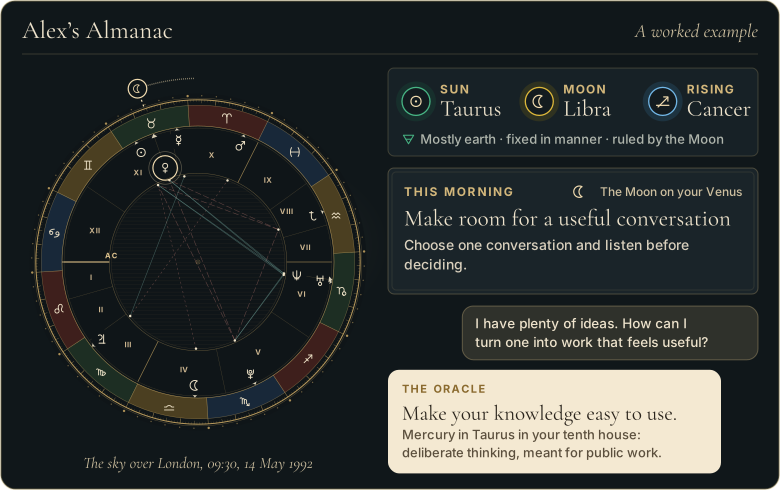
 The Road of AgesSee the turning points of your whole life, from your birth date
See your road's shape
The Road of AgesSee the turning points of your whole life, from your birth date
See your road's shape
Prefer to explore first?
 The Road of AgesThe turning points of your whole life, from your own chart
Walk my road
The Road of AgesThe turning points of your whole life, from your own chart
Walk my road
Free, by email
Your daily Almanac letter
One short letter at 7 each morning: the day’s theme read for your own chart, and one thing to do with it.
Protection as keeping, presence, and wisdom
Religious protection language is broader than an invisible shield. Biblical prayers ask God to keep, shelter, guide, deliver, strengthen, and remain present. Sometimes protection means escape from danger; sometimes it means endurance, wise action, or faithful community within difficulty. A blessing can name concrete needs without claiming privileged knowledge of the outcome. “May you be guarded on the journey, alert to danger, and surrounded by trustworthy help” joins prayer with human responsibility. It is more honest than promising that a blessed traveler cannot be harmed.
Scriptural and liturgical sources
Psalm 121 speaks of divine keeping across departure and return. Numbers 6 asks for blessing, keeping, gracious presence, and peace. Other psalms use refuge imagery, while New Testament prayers seek strength, deliverance, and perseverance. Liturgical traditions adapt such texts for homes, travelers, the sick, workers, and congregations. Each passage should be read in context; poetry is not an insurance contract. A traditional prayer can be quoted or paraphrased with attribution, but invented formulas should not be marketed as ancient merely because they use archaic language.
Prayer should strengthen practical protection
Before travel, use seat belts, weather reports, medication plans, and emergency contacts. During illness, seek qualified care. In an abusive household, safety planning and professional support take priority over rituals intended to change the abuser. Account security, locks, smoke alarms, legal advice, and community checks are ordinary means of protection rather than signs of weak faith. A blessing can affirm the people taking those actions. Refusing practical help because protection was prayed for turns a devotional act into a dangerous test the prayer itself does not require.
Consent, fear, and exploitative claims
Ask permission before touching, anointing, or entering someone’s home for a blessing. Respect people who prefer silent prayer or no religious act. Do not tell a frightened person that ordinary misfortune proves a curse or that only an expensive cleansing can protect them. Threats of worsening danger, escalating fees, demands for secrecy, and pressure to cut off family are warning signs of exploitation. A trustworthy blessing reduces coercion: it supports clear judgment, community, and appropriate care. It never licenses control over the recipient or blame when suffering occurs.
Reading Protection Blessing with textual care
A sound account of Protection Blessing distinguishes the wording of the relevant ancient text from later interpretation, popular preaching, fiction, and internet folklore. Translation choices, genre, historical setting, and differences among Jewish and Christian canons can materially change what a passage appears to say. The text should be read in context rather than converted into a code for identifying strangers, predicting a date, or diagnosing an unseen attack. Churches and scholars may disagree in good faith, so major interpretations should be named rather than presented as the only possible reading. Spiritual concern does not cancel ordinary evidence: immediate danger, abuse, illness, or severe distress calls for qualified help and concrete safeguarding.
Sources and editorial method
Research and editorial references used for this page include:
- Bible Gateway: Psalm 121 - Primary biblical text centered on divine keeping.
- Church of England: Book of Common Prayer - Authoritative liturgical resource for blessings and pastoral prayer.
These references support the factual, historical, textual, or interpretive claims on this page. Interpretive traditions are identified as such, and factual claims are kept separate from symbolic claims.
Related reading
Ask for protection without panic
A definition tells you what it is; your own birth chart tells you what it means for you. The Oracle casts your real chart and answers for your love, your work, and your year ahead, in conversation. It opens with the 7-day Seeker trial.
Speak with the OracleThe Cosmic Codex offers a reflective map of your year, written from your chart, never a prediction. Open the Cosmic Codex
More in Blessings & Christian Protection
- Psalm 46
- Spiritual Covering
- Anointing with Oil
- Child Blessing
- Ephesians 6
- House Blessing
- Peace Blessing
- Prayer for Forgiveness
From the reference page to your own chart
Every word here
is in your own chart.
- A personal reading about love, work or purpose, written from your chart
- A practical next step to consider
- It opens with 7 days free, with the AI Oracle and daily guidance
$0 today, then $12/month after 7 days. Cancel anytime.
Common questions
What Bible passage is used for protection?
Psalm 121 and Numbers 6:24-26 are common, alongside other psalms and prayers interpreted in context.
Can I bless a home?
Many traditions do, but obtain occupants’ consent and combine prayer with ordinary home safety.
Does a protection blessing prevent all harm?
No. It is a prayer of trust and care, not a guarantee or substitute for practical safeguards.
Free, by email
The Almanac, in your inbox at 7
One short letter at 7 each morning: the day’s theme read for your own chart, and one thing to do with it.
