

Prayer and blessing traditions
Peace Blessing
Direct answer
In Jewish and Christian scripture, peace often carries the broad sense of shalom: well-being, right relationship, justice, and completeness, not merely the absence of conflict. A blessing asks for that good; it does not guarantee an outcome or replace repair.
A peace blessing is a prayer or spoken benediction asking for wholeness, reconciliation, protection, or freedom from fear for a person or community.
$0 today, then $12/month after 7 days. Cancel anytime.
Quick facts
| Question | Direct answer |
|---|---|
| Biblical example | The priestly blessing in Numbers 6 ends with God giving peace. |
| Common liturgical form | A benediction spoken over a congregation at the close of worship. |
| What does peace include? | Wholeness, safety, restored relationship, justice, and inward steadiness. |
| What is it not? | A magical formula that controls another person or erases accountability. |
Peace Blessing asks for shalom, not merely quiet: wholeness, safety, and reconciled life.
A symbolic reading aid; dates, predictions, and supernatural certainty are deliberately excluded.
What does your own chart say about you?
Choose love, work or purpose. Your reading is written from your chart. Your reading uses your own birth details.
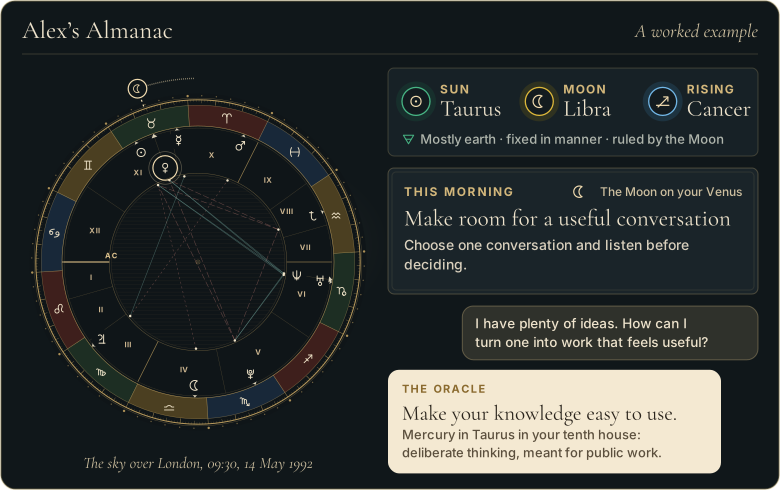
Walk through Alex’s whole example first
 The Road of AgesSee the turning points of your whole life, from your birth date
See your road's shape
The Road of AgesSee the turning points of your whole life, from your birth date
See your road's shape
Prefer to explore first?
 The Road of AgesThe turning points of your whole life, from your own chart
Walk my road
The Road of AgesThe turning points of your whole life, from your own chart
Walk my road
Free, by email
Your daily Almanac letter
One short letter at 7 each morning: the day’s theme read for your own chart, and one thing to do with it.
Blessing peace rather than merely wishing quiet
A peace blessing directs goodwill toward another person and, in religious use, asks God to establish well-being. The Hebrew shalom can carry meanings of completeness, welfare, and sound relationship, while New Testament language of peace is often tied to reconciliation and communal life. This makes a peace blessing deeper than “may nobody argue.” Silence imposed on an injured person is not peace, and avoiding a necessary conversation can preserve harm. The blessing becomes ethically serious when it includes truth, safety, justice, mercy, and the patient work required to repair trust.
Major biblical forms
Numbers 6:24-26 gives the priestly or Aaronic blessing: divine keeping, gracious presence, and peace. Psalms pray for the peace of Jerusalem; prophetic texts imagine peace joined with justice; the Gospels include greetings and commissions of peace; New Testament letters frequently close with grace and peace. These passages differ in genre and audience. A household blessing, congregational benediction, and prayer during war should not be treated as one ritual technology. Their common thread is dependence on divine gift expressed through words that also shape the community’s obligations.
What makes a peace blessing responsible
Use language that honors the recipient’s freedom and circumstances. A blessing can ask for courage to tell the truth, protection for those at risk, wisdom for decision-makers, comfort for the bereaved, and willingness to make restitution. It should not pressure an abused person to reconcile before safety, confidentiality, accountability, and genuine change exist. In interfaith or public settings, ask whether explicitly confessional wording is welcome. A short blessing can be sincere without claiming prophetic certainty. The speaker’s later conduct should align with the peace being invoked.
Prayer alongside concrete peacemaking
Words matter, but peace also requires action: listening, mediation, fair procedures, material support, boundaries, and sometimes legal protection. In a crisis, a blessing should accompany accurate information and practical help rather than replace them. Forgiveness, reconciliation, and restored access are different decisions; a person can release vengeance without returning to an unsafe relationship. When conflict involves violence or coercion, use trained safeguarding and emergency resources. A peace blessing is most credible when it refuses denial and strengthens the people doing the difficult work of making peace.
Reading Peace Blessing with textual care
A sound account of Peace Blessing distinguishes the wording of the relevant ancient text from later interpretation, popular preaching, fiction, and internet folklore. Translation choices, genre, historical setting, and differences among Jewish and Christian canons can materially change what a passage appears to say. The text should be read in context rather than converted into a code for identifying strangers, predicting a date, or diagnosing an unseen attack. Churches and scholars may disagree in good faith, so major interpretations should be named rather than presented as the only possible reading. Spiritual concern does not cancel ordinary evidence: immediate danger, abuse, illness, or severe distress calls for qualified help and concrete safeguarding.
Sources and editorial method
Research and editorial references used for this page include:
- Bible Gateway: Numbers 6:22-27 - Primary text of the priestly blessing.
- Church of England: Book of Common Prayer - Authoritative liturgical source containing blessings and services shaped around peace.
These references support the factual, historical, textual, or interpretive claims on this page. Interpretive traditions are identified as such, and factual claims are kept separate from symbolic claims.
Related reading
Let peace become practice
A definition tells you what it is; your own birth chart tells you what it means for you. The Oracle casts your real chart and answers for your love, your work, and your year ahead, in conversation. It opens with the 7-day Seeker trial.
Speak with the OracleThe Cosmic Codex offers a reflective map of your year, written from your chart, never a prediction. Open the Cosmic Codex
More in Blessings & Christian Protection
- Prayer for Mercy
- Protection Blessing
- Psalm 46
- Spiritual Refuge
- Anointing with Oil
- Child Blessing
- Evening Prayer
- House Blessing
From the reference page to your own chart
Every word here
is in your own chart.
- A personal reading about love, work or purpose, written from your chart
- A practical next step to consider
- It opens with 7 days free, with the AI Oracle and daily guidance
$0 today, then $12/month after 7 days. Cancel anytime.
Common questions
What is the best-known biblical peace blessing?
Numbers 6:24-26, the priestly blessing, ends with the petition that God give peace.
Can I bless someone who does not share my faith?
You can offer goodwill, but respect consent and use language appropriate to the relationship and setting.
Does blessing peace require immediate reconciliation?
No. Safety, truth, accountability, and consent may require distance even while someone prays for peace.
Free, by email
The Almanac, in your inbox at 7
One short letter at 7 each morning: the day’s theme read for your own chart, and one thing to do with it.
