Sky science
Primary Mirror
Direct answer
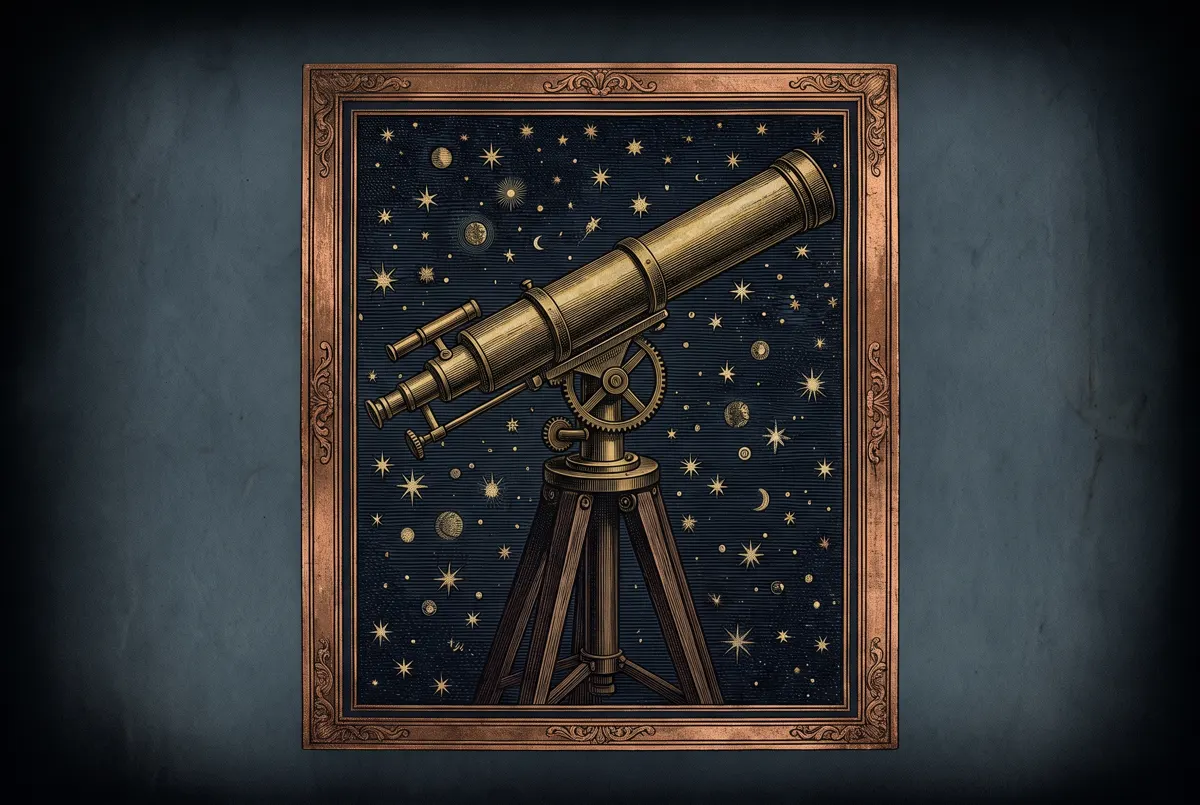
Primary Mirror: A Primary Mirror is the main reflecting surface that gathers and focuses light in a reflecting or compound telescope.
It is a reflector’s principal light collector.
$0 today, then $12/month after 7 days. Cancel anytime.
At a glance
- Found in
- Astronomy & Skywatching
- Related
- Eyepiece, Objective Lens, Secondary Mirror, Refracting Telescope
It is a reflector’s principal light collector.
A scientific orientation to scale, light, or motion; the article supplies the precise definition.
What does your own chart say about you?
Choose love, work or purpose. Your reading is written from your chart. Your reading uses your own birth details.
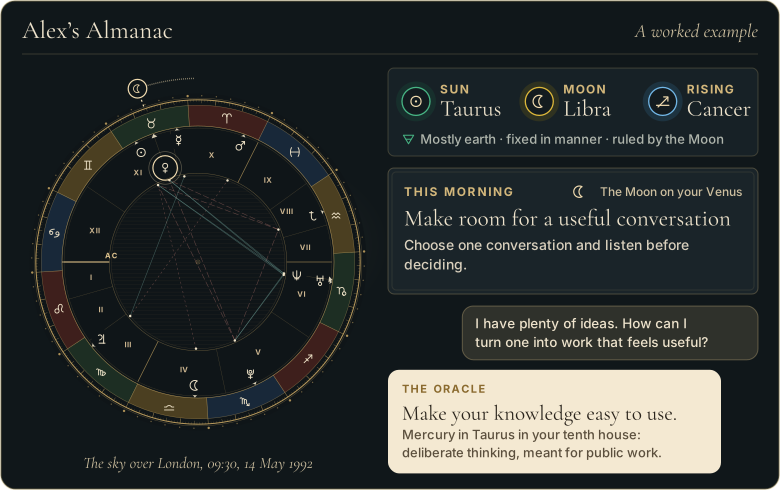
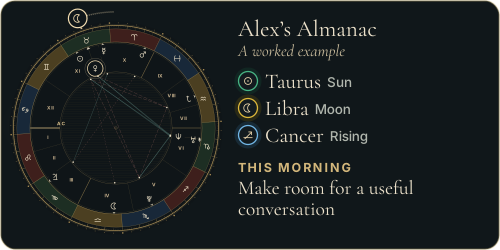
Walk through Alex’s whole example first
 The Road of AgesSee the turning points of your whole life, from your birth date
See your road's shape
The Road of AgesSee the turning points of your whole life, from your birth date
See your road's shape
Prefer to explore first?
 The Road of AgesThe turning points of your whole life, from your own chart
Walk my road
The Road of AgesThe turning points of your whole life, from your own chart
Walk my road
Free, by email
Your daily Almanac letter
One short letter at 7 each morning: the day’s theme read for your own chart, and one thing to do with it.
The story behind Primary Mirror
Metal and later glass mirrors enabled apertures beyond practical refracting lenses.
A one-minute story
The Wandering Stars
How the moving planets were watched, named and found, and what a transit is.

Why Primary Mirror matters
Primary Mirror’s aperture and figure set light gathering and ideal image quality.
How to read Primary Mirror
Maintain collimation, thermal equilibrium, clean coatings, and proper support.
Primary Mirror in practice: an example
A parabolic primary brings on-axis parallel rays to a common focus.
Where readings of Primary Mirror go wrong
It is a mistake to expose an unfiltered solar image at the focus or inspect the Sun through the system.
Sources and editorial method
Research references used for this entry include:
- European Southern Observatory: Technology for Telescopes - Observatory reference for aperture, angular resolution, atmospheric seeing, mirrors, and telescope technology.
- NASA Science: Eclipse Viewing Safety - Official solar-viewing guidance for eyes, cameras, binoculars, and telescopes.
- Source
- The Great Almanac Dictionary
- Category
- Astronomy & Skywatching
- Last updated
- 2026-09-26
Understand the telescope’s main mirror
A definition tells you what it is; your own birth chart tells you what it means for you. The Oracle casts your real chart and answers for your love, your work, and your year ahead, in conversation. It opens with the 7-day Seeker trial.
Speak with the OracleRelated terms
More in Astronomy & Skywatching
- Stellar Parallax
- Active Galactic Nucleus
- Astronomical Spectroscopy
- Center of Mass Orbit
- Focal Ratio
- Keplerian Orbit
- Open Star Cluster
From the reference page to your own chart
Every word here
is in your own chart.
- A personal reading about love, work or purpose, written from your chart
- A practical next step to consider
- It opens with 7 days free, with the AI Oracle and daily guidance
$0 today, then $12/month after 7 days. Cancel anytime.
Common questions
What is a Primary Mirror?
A Primary Mirror is the main reflecting surface that gathers and focuses light in a reflecting or compound telescope.
What do people get wrong about a Primary Mirror?
It is a mistake to expose an unfiltered solar image at the focus or inspect the Sun through the system.
Free, by email
The Almanac, in your inbox at 7
One short letter at 7 each morning: the day’s theme read for your own chart, and one thing to do with it.