History and ethics of coercive magic
Obsession Spell
Direct answer
The term describes a coercive intention, not a verified mechanism. Historical analogues appear in binding spells and erotic magic, but claims that a ritual can override another person’s mind are unsupported and can conceal stalking, manipulation, or confirmation bias.
“Obsession spell” is a modern label for alleged magic intended to make another person think about, desire, or pursue the operator compulsively.
$0 today, then $12/month after 7 days. Cancel anytime.
Quick facts
| Question | Direct answer |
|---|---|
| Is it a standard ancient category? | No. The phrase is modern, although coercive erotic and binding texts are historically documented. |
| Does it prove supernatural control? | No. There is no reliable evidence that a spell can compel another person’s thoughts or consent. |
| What is the central ethical issue? | It imagines bypassing autonomy rather than seeking freely given affection. |
| What should real harassment trigger? | Documentation, boundaries, platform or workplace reporting, and professional or legal help when appropriate. |
What does your own chart say about you?
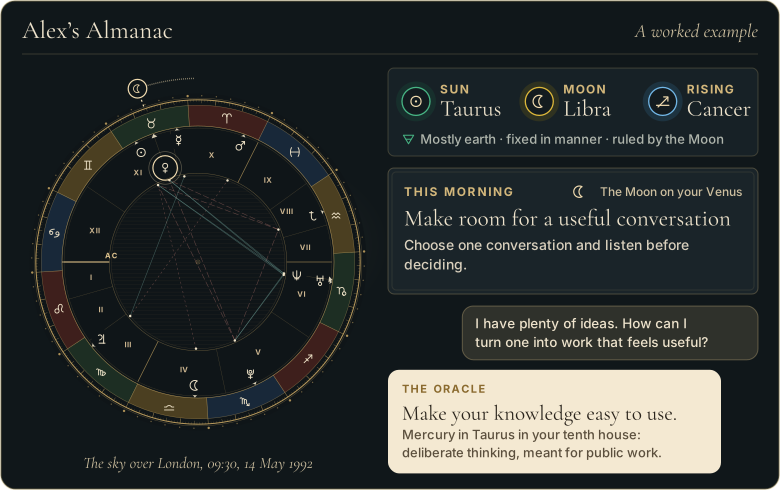
Choose love, work or purpose. Your reading is written from your chart. Your reading uses your own birth details.
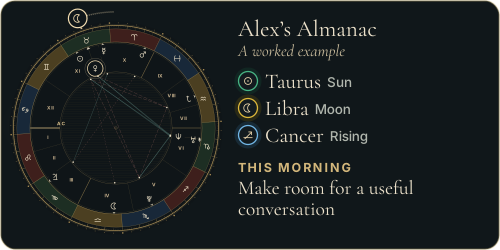
Walk through Alex’s whole example first
 The Road of AgesSee the turning points of your whole life, from your birth date
See your road's shape
The Road of AgesSee the turning points of your whole life, from your birth date
See your road's shape
Prefer to explore first?
 The Road of AgesThe turning points of your whole life, from your own chart
Walk my road
The Road of AgesThe turning points of your whole life, from your own chart
Walk my road
Free, by email
Your daily Almanac letter
One short letter at 7 each morning: the day’s theme read for your own chart, and one thing to do with it.
What the modern phrase usually means
Online occult communities use “obsession spell” for alleged workings intended to produce intrusive attention, romantic fixation, sexual pursuit, or emotional dependence in a named target. That wording is not a stable category from one historical tradition. Sellers may apply it to candles, petitions, bindings, or invented “ancient” rites without provenance. The common feature is coercive intent. Describing the term accurately does not require accepting its supernatural claim: the observable effects often involve suggestion, repeated contact, selective interpretation of ordinary behavior, or deliberate manipulation rather than evidence that another mind has been magically controlled.
Historical parallels in binding and erotic magic
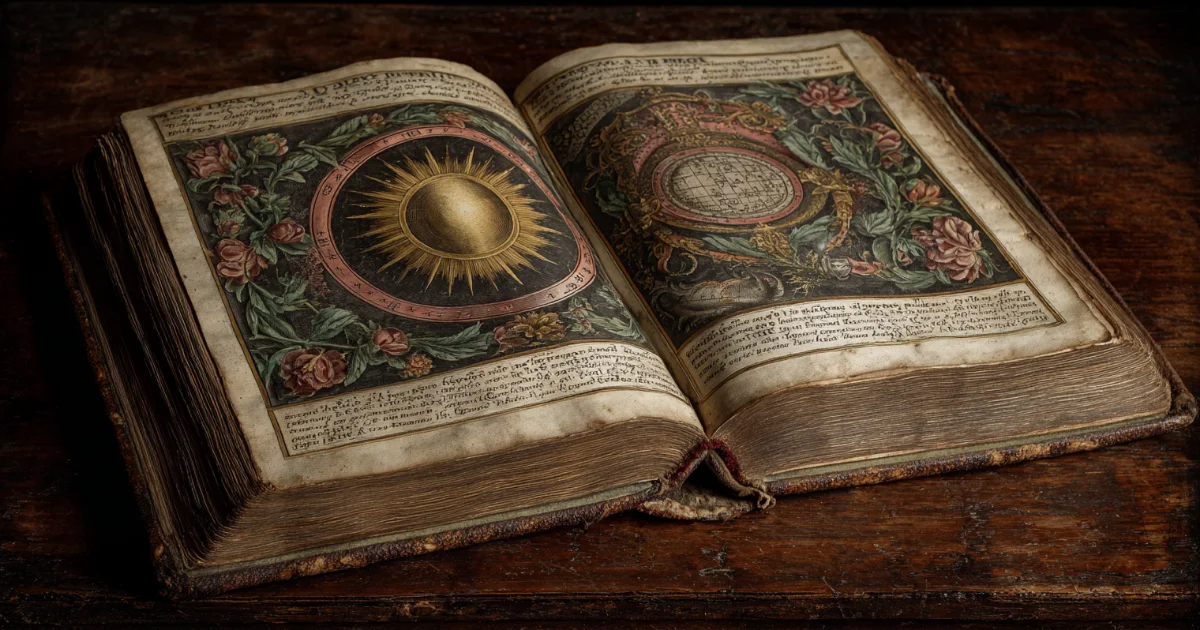
Greek and Roman-era magical papyri and curse tablets preserve texts that ask deities or spirits to bind, inflame, restrain, or draw another person. Scholars study these documents as evidence about religion, gender, law, desire, and social power in particular societies. They are not one uniform tradition, and translating an ancient erotic binding as an “obsession spell” can erase important differences in language and setting. Similar coercive wishes occur in later grimoires and folk accounts, but continuity must be demonstrated rather than assumed. Museum objects and critical editions provide better evidence than unattributed recipes circulating online.
Why consent changes the interpretation
A wish for mutual closeness differs fundamentally from a wish to make a specific person unable to refuse or disengage. Framing coercion as romance can normalize surveillance, repeated unwanted messages, threats, impersonation, or pressure. A respectful response centers the other person’s expressed boundaries and treats silence or ambiguity as a reason to pause, not as resistance to overcome. If the underlying need is grief after rejection, loneliness, or uncertainty, non-coercive options include direct communication once, accepting the answer, reducing contact, leaning on trusted support, and seeking counseling when rumination becomes difficult to manage.
If someone fears they are under an obsession spell
Start with concrete observations: unexpected contacts, account access, gifts, threats, sleep loss, medication changes, or escalating anxiety. Secure accounts, preserve evidence, tell a trusted person, and use safeguarding or legal resources when conduct crosses a boundary. Do not pay a stranger who claims to detect and remove an invisible attachment, especially if they demand secrecy or repeated fees. Feeling preoccupied can be distressing without proving an occult cause. Persistent intrusive thoughts, panic, or inability to function deserves compassionate clinical support; immediate danger warrants local emergency assistance.
How to study Obsession Spell as history
The safest and most accurate way to approach Obsession Spell is as a textual, artistic, or social-history subject. Manuscripts and later printed editions often disagree, while modern websites freely combine material from unrelated periods. Check the date, language, manuscript family, editor, and provenance before repeating a claim. A description in a grimoire records what a text says; it does not establish that the named being or promised effect exists. This article therefore explains vocabulary, transmission, imagery, and reception without providing invocations, seals for use, coercive procedures, or instructions aimed at another person. Anyone experiencing fear, threats, stalking, coercion, or distress should address the observable situation and seek appropriate practical or professional support rather than escalating an occult explanation.
Sources and editorial method
Research and editorial references used for this page include:
- The Metropolitan Museum of Art: Magic in the Ancient World - Museum context for ancient magical objects and practices.
- University of Chicago Press: Ancient Greek Love Magic - Scholarly study of attraction and coercion in ancient magical texts.
These references support the factual, historical, textual, or interpretive claims on this page. Interpretive traditions are identified as such, and factual claims are kept separate from symbolic claims.
Related reading
Let love remain free
A definition tells you what it is; your own birth chart tells you what it means for you. The Oracle casts your real chart and answers for your love, your work, and your year ahead, in conversation. It opens with the 7-day Seeker trial.
Speak with the OracleYour year, written once from your chart alone: the Cosmic Codex reads the whole of it, month by month. Open the Cosmic Codex
More in Spells & Occult Terms
From the reference page to your own chart
Every word here
is in your own chart.
- A personal reading about love, work or purpose, written from your chart
- A practical next step to consider
- It opens with 7 days free, with the AI Oracle and daily guidance
$0 today, then $12/month after 7 days. Cancel anytime.
Common questions
Are obsession spells historically proven to work?
No. Historical texts prove that people attempted coercive magic, not that it controlled another person’s mind.
Is a love spell automatically an obsession spell?
Not linguistically, but any practice aimed at overriding a named person’s consent raises the same ethical concern.
What if a practitioner demands money to remove one?
High-pressure claims, secrecy, escalating fees, and threats are fraud warning signs. Stop payment and seek trusted practical advice.
Free, by email
The Almanac, in your inbox at 7
One short letter at 7 each morning: the day’s theme read for your own chart, and one thing to do with it.
