Blessing and protection
Lordship of Christ
Direct answer
Lordship of Christ means Jesus is the rightful Lord over belief, desire, conduct, worship, relationships, time, and spiritual allegiance.
Lordship of Christ means Jesus governs the whole life, not only religious moments.
$0 today, then $12/month after 7 days. Cancel anytime.
At a glance
- Found in
- Blessings & Christian Protection
- Related
- Blessing, Name of Jesus, Blood of Jesus, Armor of God
Lordship of Christ means Jesus governs the whole life, not only religious moments.
A symbolic reading aid; dates, predictions, and supernatural certainty are deliberately excluded.
What does your own chart say about you?
Choose love, work or purpose. Your reading is written from your chart. Your reading uses your own birth details.
Walk through Alex’s whole example first
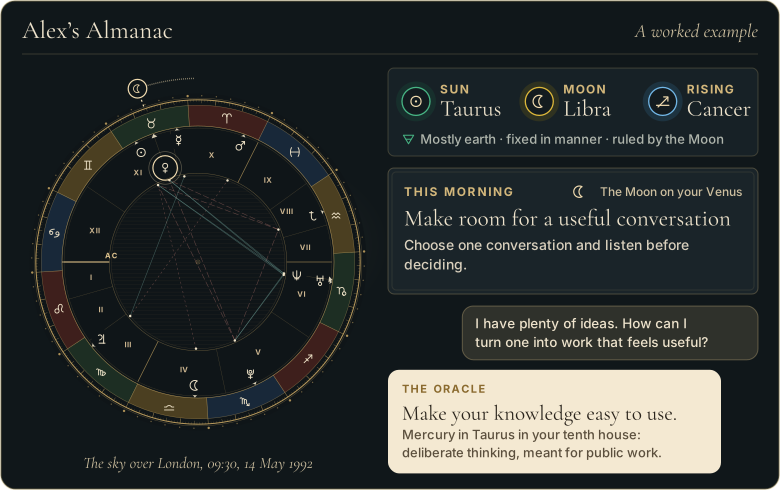
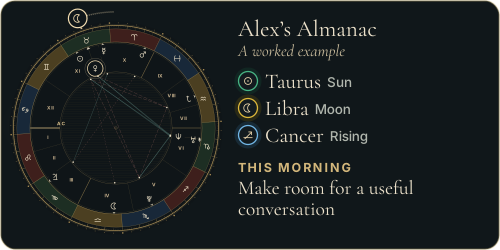
 The Road of AgesSee the turning points of your whole life, from your birth date
See your road's shape
The Road of AgesSee the turning points of your whole life, from your birth date
See your road's shape
Prefer to explore first?
 The Road of AgesThe turning points of your whole life, from your own chart
Walk my road
The Road of AgesThe turning points of your whole life, from your own chart
Walk my road
Free, by email
Your daily Almanac letter
One short letter at 7 each morning: the day’s theme read for your own chart, and one thing to do with it.
The story behind Lordship of Christ
Lordship language shaped creeds, baptismal confession, martyr witness, monastic vows, and everyday Christian discipleship.
The spiritual meaning of Lordship of Christ
Spiritually, Lordship of Christ asks what part of life still resists being loved and ruled by Christ.
Lordship of Christ in the Bible
The New Testament confesses Jesus as Lord and calls believers to obedience, worship, and life under his reign.
Why Lordship of Christ matters
Lordship of Christ matters because protection language becomes healthier when it includes obedience, repentance, and surrender.
Where readings of Lordship of Christ go wrong
A common error is to use lordship language to justify human authoritarianism or spiritual control.
Sources and editorial method
This entry summarizes the tradition in the Almanac's own words; where no source is listed, it is an editorial summary rather than a primary text, and symbolic readings are named as the tradition's, not as fact.
- Source
- The Great Almanac Dictionary
- Category
- Blessings & Christian Protection
- Last updated
- 2026-09-26
Bring the whole life under Christ
A definition tells you what it is; your own birth chart tells you what it means for you. The Oracle casts your real chart and answers for your love, your work, and your year ahead, in conversation. It opens with the 7-day Seeker trial.
Speak with the OracleThe Cosmic Codex offers a reflective map of your year, written from your chart, never a prediction. Open the Cosmic Codex
Related terms
More in Blessings & Christian Protection
- Prayer Before Sleep
- Prayer in Jesus Name
- Psalm 18
- Repentance Prayer
- Victory of Christ
- Bless Those Who Curse You
- Covering Prayer
- God as Refuge
From the reference page to your own chart
Every word here
is in your own chart.
- A personal reading about love, work or purpose, written from your chart
- A practical next step to consider
- It opens with 7 days free, with the AI Oracle and daily guidance
$0 today, then $12/month after 7 days. Cancel anytime.
Common questions
What is Lordship of Christ?
Lordship of Christ means Jesus is the rightful Lord over belief, desire, conduct, worship, relationships, time, and spiritual allegiance.
Where does Lordship of Christ come from?
Lordship language shaped creeds, baptismal confession, martyr witness, monastic vows, and everyday Christian discipleship.
What does Lordship of Christ mean spiritually?
Spiritually, Lordship of Christ asks what part of life still resists being loved and ruled by Christ.
What does the Bible say about Lordship of Christ?
The New Testament confesses Jesus as Lord and calls believers to obedience, worship, and life under his reign.
Free, by email
The Almanac, in your inbox at 7
One short letter at 7 each morning: the day’s theme read for your own chart, and one thing to do with it.