
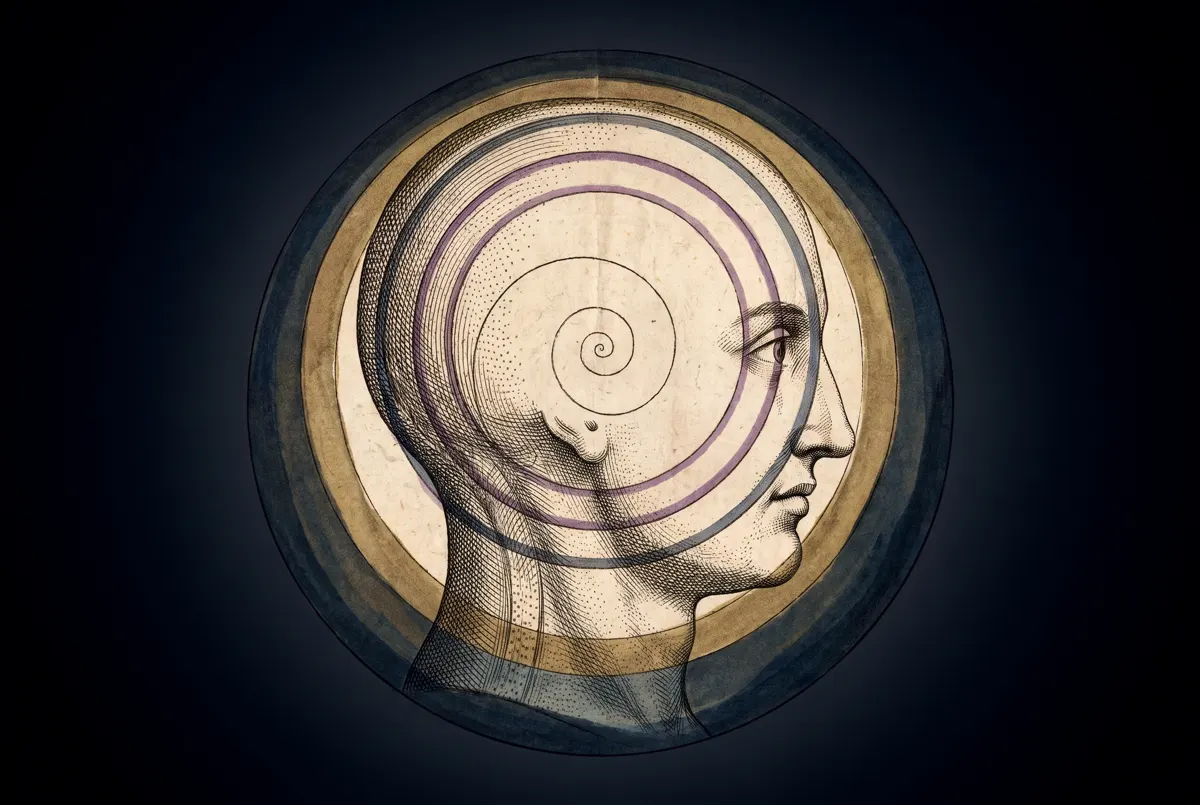
Judgment and inner knowing
Intuition
Direct answer
Treat intuition as a signal worth examining, not a verdict. Name the feeling, identify the domain and stakes, ask what cues may have produced it, look for disconfirming evidence, and choose a reversible test when possible. Expertise makes intuition more reliable only in environments with valid patterns and feedback.
Intuition is an immediate judgment or felt sense that arises without conscious access to every inferential step. It can reflect learned pattern recognition and subtle cues, but it can also reflect fear, wishful thinking, habit, stereotype, or random salience.
$0 today, then $12/month after 7 days. Cancel anytime.
Quick facts
| Situation | How much trust is reasonable |
|---|---|
| Practiced domain with fast feedback | Intuition may encode real expertise, though checks still help. |
| Novel or chaotic domain | Confidence can exceed accuracy because stable patterns are scarce. |
| High emotional arousal | Fear, attraction, anger, and urgency can narrow attention and mimic certainty. |
| High-stakes choice | Slow down, gather evidence, consult qualified people, and document assumptions. |
Intuition means felt knowing or rapid pattern recognition before conscious explanation.
A plain educational schematic; it does not diagnose a condition or replace professional care.
What does your own chart say about you?
Choose love, work or purpose. Your reading is written from your chart. Your reading uses your own birth details.
Walk through Alex’s whole example first
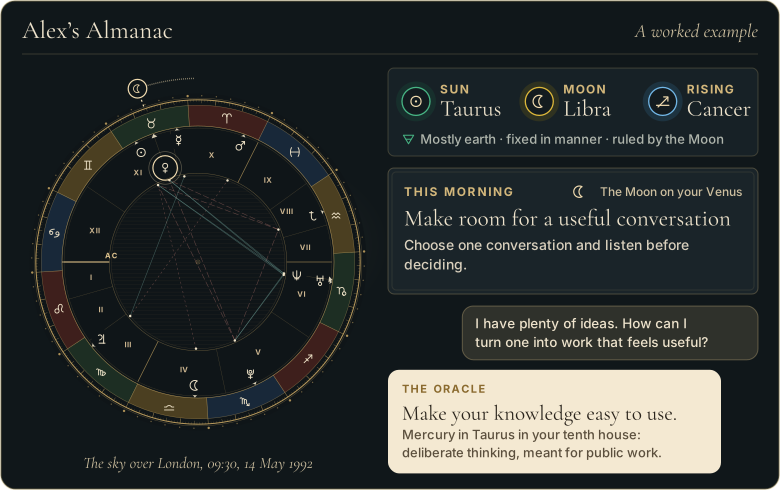
 The Road of AgesSee the turning points of your whole life, from your birth date
See your road's shape
The Road of AgesSee the turning points of your whole life, from your birth date
See your road's shape
Prefer to explore first?
 The Road of AgesThe turning points of your whole life, from your own chart
Walk my road
The Road of AgesThe turning points of your whole life, from your own chart
Walk my road
Free, by email
Your daily Almanac letter
One short letter at 7 each morning: the day’s theme read for your own chart, and one thing to do with it.
How a judgment can arrive before its explanation
Human cognition processes far more cues than can be narrated moment by moment. Familiar configurations may trigger rapid recognition: an experienced nurse senses deterioration, a musician anticipates a harmonic turn, or a friend notices a subtle change in tone. The conscious mind receives a conclusion or bodily marker before reconstructing reasons. Dual-process theories call this family of processing fast and automatic, but intuition is not one separate organ. Memory, perception, emotion, interoception, and learned associations all contribute.
When expert intuition becomes trustworthy
Practice alone is insufficient. A domain must contain recurring valid cues, and the learner needs timely, accurate feedback. Chess offers stable patterns and clear outcomes, allowing masters to recognize positions rapidly. Long-range market prediction or interpersonal mind-reading offers noisier feedback and many ways to rationalize a miss. Even experts face distribution shifts when conditions change. Ask whether the person has relevant experience, whether the environment is predictable, and whether past judgments were scored against outcomes rather than remembered selectively.
Bias, anxiety, and bodily warning signals
A gut feeling can be protective, especially when the mind has registered cues of danger before articulating them. Immediate safety does not require philosophical certainty: leave a situation and reassess from a secure place. Yet trauma and anxiety can also make neutral cues feel threatening, while attraction can make risk feel like destiny. Confirmation bias notices evidence supporting the feeling and discounts contrary facts. Respect the sensation without turning it into an accusation. “I feel unsafe and will step back” is different from “my feeling proves this person is evil.”
A practical intuition-checking sequence
Pause and record the first impression before discussion changes it. Rate emotion and bodily arousal, then list observable cues, alternative explanations, and evidence that would change your mind. Match verification to stakes: sample a small project, ask a direct consensual question, obtain a second medical opinion, or review the contract. Do not use intuition alone to diagnose, accuse, gamble essential funds, stop treatment, or override another person’s boundaries. Spiritual traditions may call some intuitions discernment or guidance; the ethical test still includes humility, reality checking, and the consequences for others.
Sources and editorial method
Research and editorial references used for this page include:
- American Psychological Association: Dual-process theory - Reference definition for fast automatic and slower deliberative modes of cognition.
- American Psychological Association: System 1 - Concise psychological definition of rapid, intuitive information processing.
These references support the factual, historical, textual, or interpretive claims on this page. Interpretive traditions are identified as such, and factual claims are kept separate from symbolic claims.
Related reading
Test the inner signal
A definition tells you what it is; your own birth chart tells you what it means for you. The Oracle casts your real chart and answers for your love, your work, and your year ahead, in conversation. It opens with the 7-day Seeker trial.
Speak with the OracleYour year, written once from your chart alone: the Cosmic Codex reads the whole of it, month by month. Open the Cosmic Codex
More in Consciousness & Spiritual Psychology
- Past Life
- Self-Observation
- Spiritual Awakening
- Transpersonal Psychology
- Attachment Wound
- Clairsentience
- Ego Death
- Glimmer
From the reference page to your own chart
Every word here
is in your own chart.
- A personal reading about love, work or purpose, written from your chart
- A practical next step to consider
- It opens with 7 days free, with the AI Oracle and daily guidance
$0 today, then $12/month after 7 days. Cancel anytime.
Common questions
Is intuition always unconscious pattern recognition?
That is an important explanation, but the felt experience can also include emotion, bodily state, memory, learned expectation, and culturally framed spiritual interpretation.
How can I tell intuition from anxiety?
No single sensation proves the difference. Lower arousal, write the claim precisely, compare it with evidence and past accuracy, and seek support when fear remains intense.
Should I trust my gut about danger?
Prioritize immediate safety when needed, then verify from a safe position. Acting cautiously does not require making unsupported accusations or permanent conclusions.
Free, by email
The Almanac, in your inbox at 7
One short letter at 7 each morning: the day’s theme read for your own chart, and one thing to do with it.
