Demonology
Fallen Angels
Direct answer
Fallen Angels are angelic beings understood in some traditions to have rebelled against God and become corrupt, hostile, or bound for judgment.
Fallen Angels are rebel angelic beings in biblical, apocalyptic, and theological tradition.
$0 today, then $12/month after 7 days. Cancel anytime.
At a glance
- Found in
- Demons & Fallen Beings
- Related
- Demon, Fallen Angel, Spiritual Warfare, Discernment

What does your own chart say about you?
Choose love, work or purpose. Your reading is written from your chart. Your reading uses your own birth details.
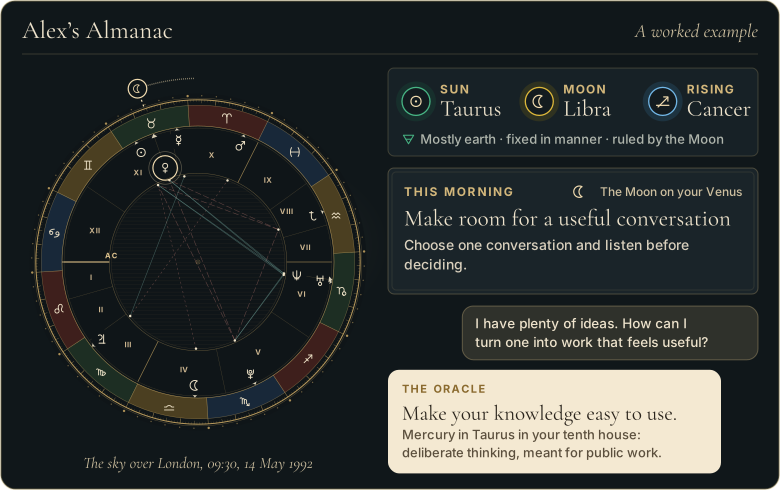
Walk through Alex’s whole example first
 The Road of AgesSee the turning points of your whole life, from your birth date
See your road's shape
The Road of AgesSee the turning points of your whole life, from your birth date
See your road's shape
Prefer to explore first?
 The Road of AgesThe turning points of your whole life, from your own chart
Walk my road
The Road of AgesThe turning points of your whole life, from your own chart
Walk my road
Free, by email
Your daily Almanac letter
One short letter at 7 each morning: the day’s theme read for your own chart, and one thing to do with it.
The story behind Fallen Angels
Fallen-angel ideas developed through Second Temple Jewish literature, Christian theology, medieval demonology, and later occult catalogues.
The spiritual meaning of Fallen Angels
Spiritually, Fallen Angels ask what happens when gifted power separates from obedience.
Fallen Angels in the Bible
Relevant passages include Genesis 6 debates, 2 Peter, Jude, Revelation, and Enochic traditions, but interpretations vary.
Why Fallen Angels matters
Fallen Angels matter because traditions connect them with demons in different ways, and the overlap is not explained identically everywhere.
How to read Fallen Angels
Fallen Angels come up when studying rebellion, pride, Watcher traditions, spiritual corruption, and later demonology with source awareness.
Fallen Angels in practice: an example
The Watchers tradition reads angelic fall as a warning about boundary violation and corrupted knowledge.
Where readings of Fallen Angels go wrong
A common error is to use fallen-angel lore to chase secret names, rituals, or fear-based speculation.
Sources and editorial method
This entry summarizes the tradition in the Almanac's own words; where no source is listed, it is an editorial summary rather than a primary text, and symbolic readings are named as the tradition's, not as fact.
Recorded here as history and lore. No rite is taught on this page.
- Source
- The Great Almanac Dictionary
- Category
- Demons & Fallen Beings
- Last updated
- 2026-09-26
Study fall traditions soberly
A definition tells you what it is; your own birth chart tells you what it means for you. The Oracle casts your real chart and answers for your love, your work, and your year ahead, in conversation. It opens with the 7-day Seeker trial.
Speak with the OracleThe Cosmic Codex offers a reflective map of your year, written from your chart, never a prediction. Open the Cosmic Codex
Related terms
More in Demons & Fallen Beings
From the reference page to your own chart
Every word here
is in your own chart.
- A personal reading about love, work or purpose, written from your chart
- A practical next step to consider
- It opens with 7 days free, with the AI Oracle and daily guidance
$0 today, then $12/month after 7 days. Cancel anytime.
Common questions
What are Fallen Angels?
Fallen Angels are angelic beings understood in some traditions to have rebelled against God and become corrupt, hostile, or bound for judgment.
Where do Fallen Angels come from?
Fallen-angel ideas developed through Second Temple Jewish literature, Christian theology, medieval demonology, and later occult catalogues.
What do Fallen Angels mean spiritually?
Spiritually, Fallen Angels ask what happens when gifted power separates from obedience.
What does the Bible say about Fallen Angels?
Relevant passages include Genesis 6 debates, 2 Peter, Jude, Revelation, and Enochic traditions, but interpretations vary.
Free, by email
The Almanac, in your inbox at 7
One short letter at 7 each morning: the day’s theme read for your own chart, and one thing to do with it.