Goetic spirit
Gaap
Direct answer
Gaap is a Goetic spirit listed as a prince and president, associated with philosophy, liberal sciences, emotional manipulation, and transport claims.
Gaap is a Goetic prince-president of knowledge, emotional influence, and movement.
$0 today, then $12/month after 7 days. Cancel anytime.
At a glance
- In the Goetia
- Spirit 33 of 72, a prince and a president
- Source text
- The Lesser Key of Solomon (Ars Goetia)
- Found in
- Demons & Fallen Beings
- Related
- Demon, Fallen Angel, Spiritual Warfare, Discernment

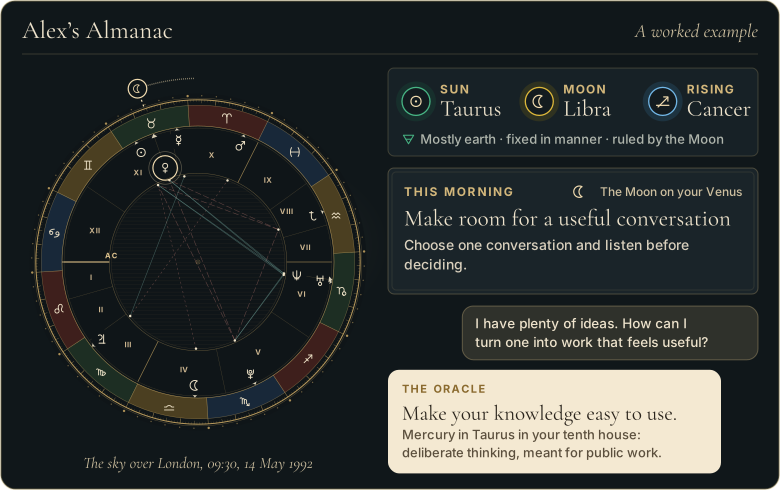
What does your own chart say about you?
Choose love, work or purpose. Your reading is written from your chart. Your reading uses your own birth details.
Walk through Alex’s whole example first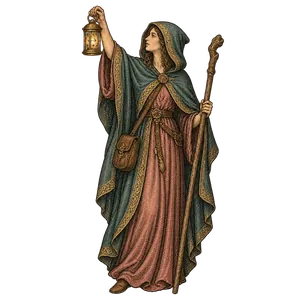
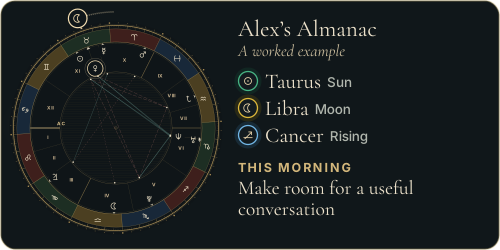
 The Road of AgesSee the turning points of your whole life, from your birth date
See your road's shape
The Road of AgesSee the turning points of your whole life, from your birth date
See your road's shape
Prefer to explore first?
 The Road of AgesThe turning points of your whole life, from your own chart
Walk my road
The Road of AgesThe turning points of your whole life, from your own chart
Walk my road
Free, by email
Your daily Almanac letter
One short letter at 7 each morning: the day’s theme read for your own chart, and one thing to do with it.
The story behind Gaap
The Ars Goetia lists Gaap among the more prominent spirits and connects him with teaching sciences and altering affections.
The spiritual meaning of Gaap
Spiritually, Gaap asks whether knowledge has become a lever against another person.
Gaap in practice: an example
Symbolically, Gaap can represent intelligence used to move people instead of understand them.
Where readings of Gaap go wrong
It is a mistake to use Gaap lore for emotional coercion or influence work.
Sources and editorial method
This entry summarizes the tradition in the Almanac's own words; where no source is listed, it is an editorial summary rather than a primary text, and symbolic readings are named as the tradition's, not as fact.
Recorded here as history and lore. No rite is taught on this page.
- Source
- The Great Almanac Dictionary
- Category
- Demons & Fallen Beings
- Last updated
- 2026-09-26
Reject emotional coercion
A definition tells you what it is; your own birth chart tells you what it means for you. The Oracle casts your real chart and answers for your love, your work, and your year ahead, in conversation. It opens with the 7-day Seeker trial.
Speak with the OracleThe Cosmic Codex offers a reflective map of your year, written from your chart, never a prediction. Open the Cosmic Codex
Related terms
More in Demons & Fallen Beings
From the reference page to your own chart
Every word here
is in your own chart.
- A personal reading about love, work or purpose, written from your chart
- A practical next step to consider
- It opens with 7 days free, with the AI Oracle and daily guidance
$0 today, then $12/month after 7 days. Cancel anytime.
Common questions
Who is Gaap?
Gaap is a Goetic spirit listed as a prince and president, associated with philosophy, liberal sciences, emotional manipulation, and transport claims.
What number is Gaap in the Goetia?
In the Ars Goetia, the first book of the Lesser Key of Solomon, Gaap is spirit number 33 of 72, ranked as a prince and a president. The Ars Goetia lists Gaap among the more prominent spirits and connects him with teaching sciences and altering affections.
What does Gaap mean spiritually?
Spiritually, Gaap asks whether knowledge has become a lever against another person.
Free, by email
The Almanac, in your inbox at 7
One short letter at 7 each morning: the day’s theme read for your own chart, and one thing to do with it.